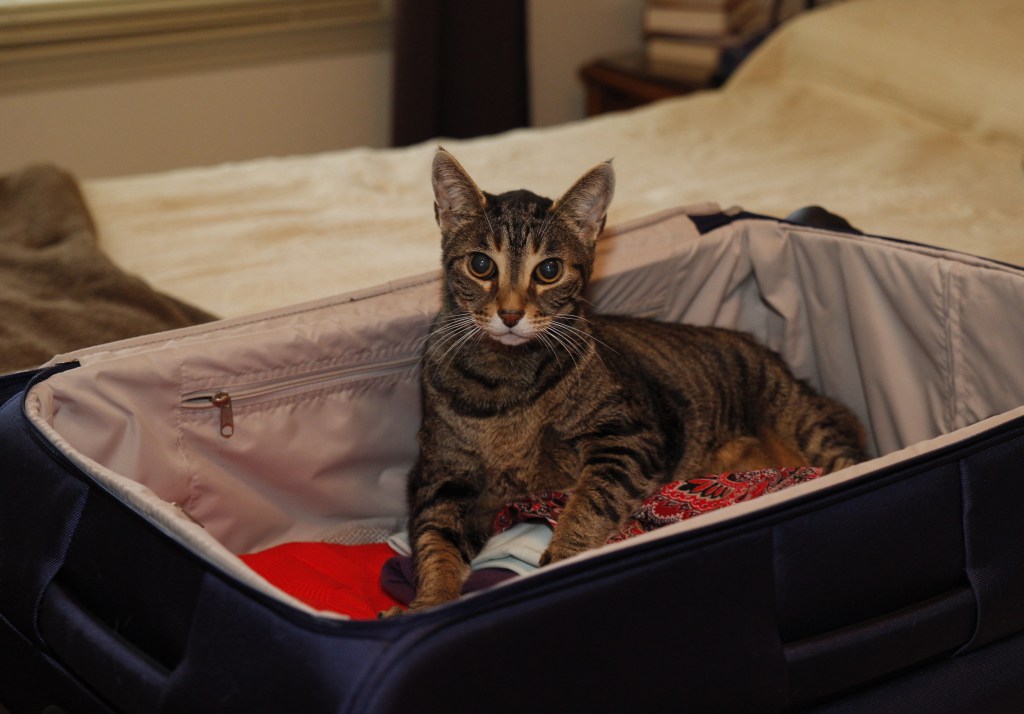
Josh wants to go!
This is our travel day from Home to London, and we do not have a lot to report here yet.
As you can see in the photo, Josh indicated that he wanted to go with us. However, when he learned that Ann would be taking care of him, he decided to stay home.
Based on past experience, we are curious to see if Bob’s luggage will make it to London. Anyone care to place a small wager on this?
Linda does not appreciate my whining, and she gently reminded me of our travel motto: You should develop a cheerful acceptance of the ways things are.
Okay, I am working on it!
Naturally when we went through security, Linda’s boarding pass said “TSA Precheck” and she walked through security without having to do anything. Yours truly, however, had to go through the full check including a pat-down. Go figure.
Day 2: Sep 9 – Arrival in London
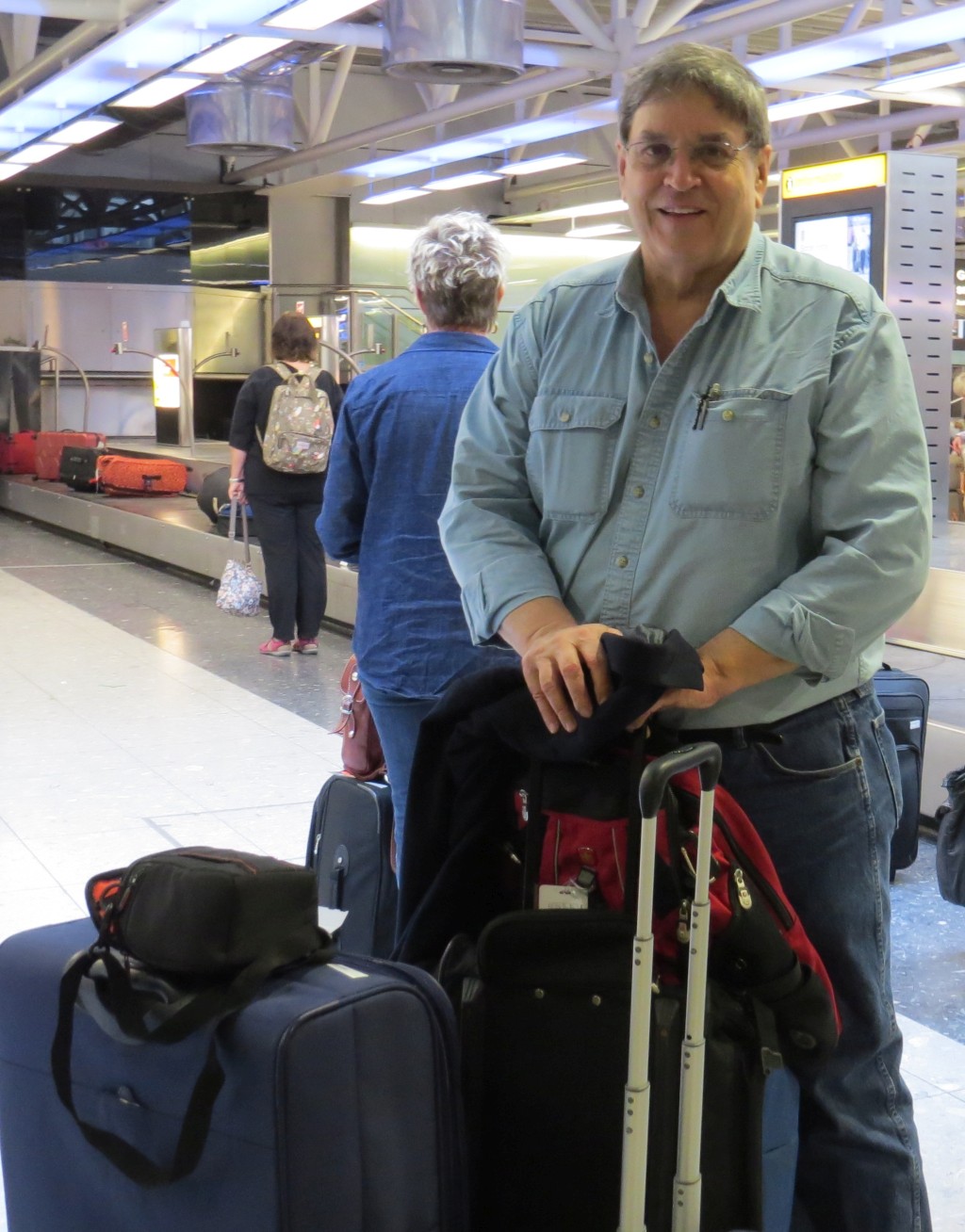
All of our luggage made it!
An interesting tidbit: We left Charlotte at 7:00pm, flew for 7 hours, and arrived at London’s Heathrow airport at 7:00am.
It took a while to get through passport control, but when we did our luggage was waiting for us. It is hard to believe, but all of our luggage arrived with our flight. This is very unusual for us, and it made Bob very happy.
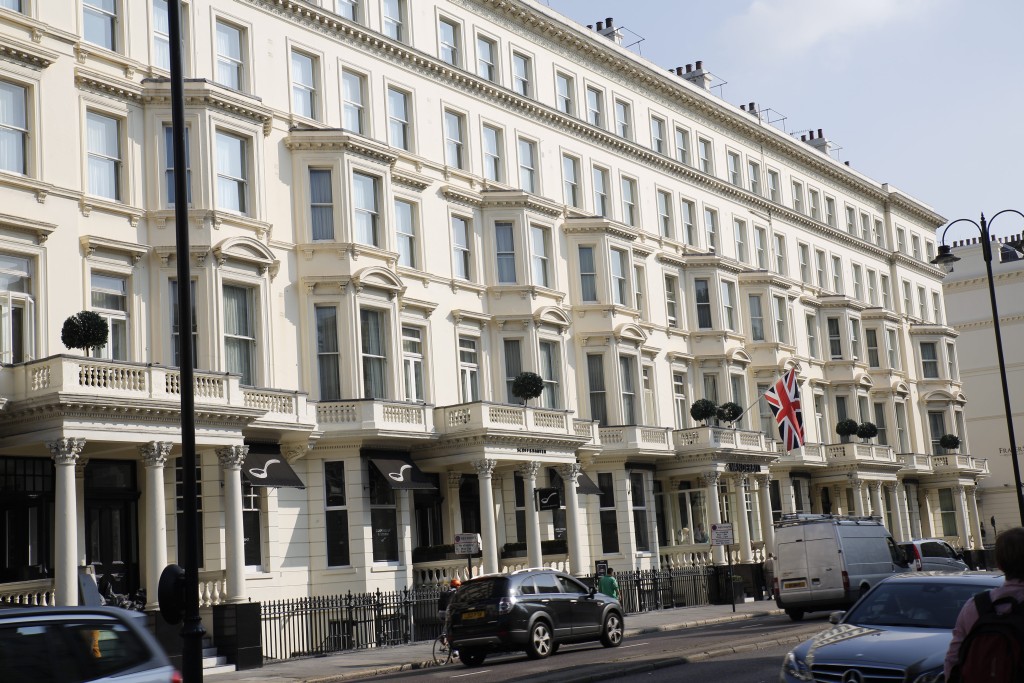
Radisson Edwardian Hotel
Outside luggage pick-up, we met our driver, Ibrahim(?) –a Turkish Kurd, who delivered us to the Radisson hotel.
The hotel is nice although the rooms are weirdly arranged and will take some getting used to.
After lunch with some of the group, Linda and I walked down the street to Harrod’s, which we must admit is quite impressive.
We had our group introduction meeting and dinner, and then finally got to bed after a very long day.
Day 3: Sep 10 – London
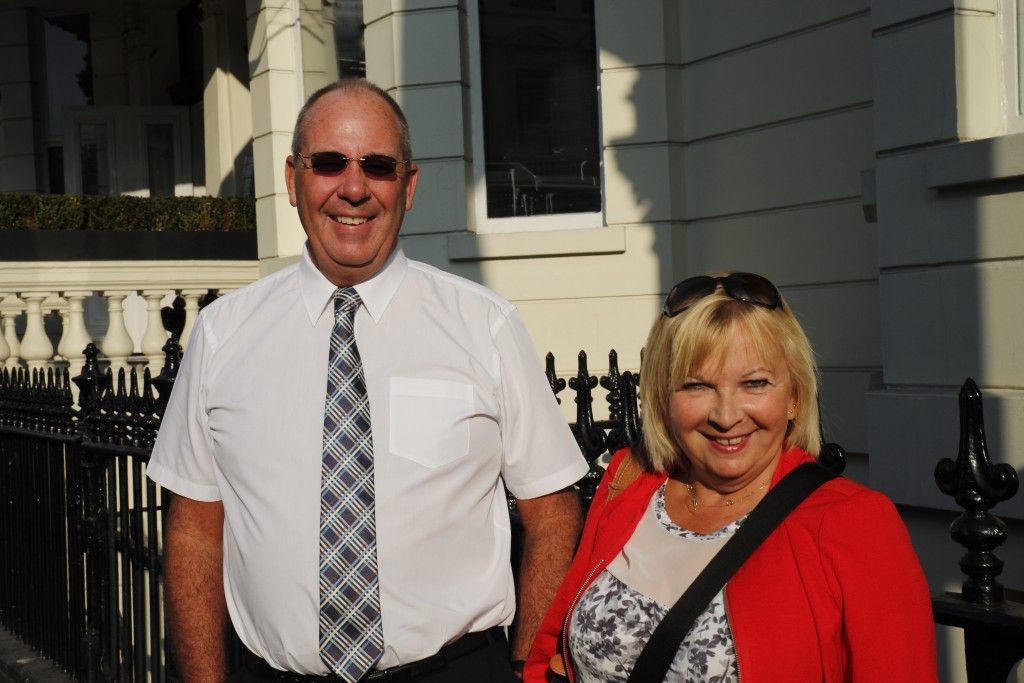
Ros and boyfriend.
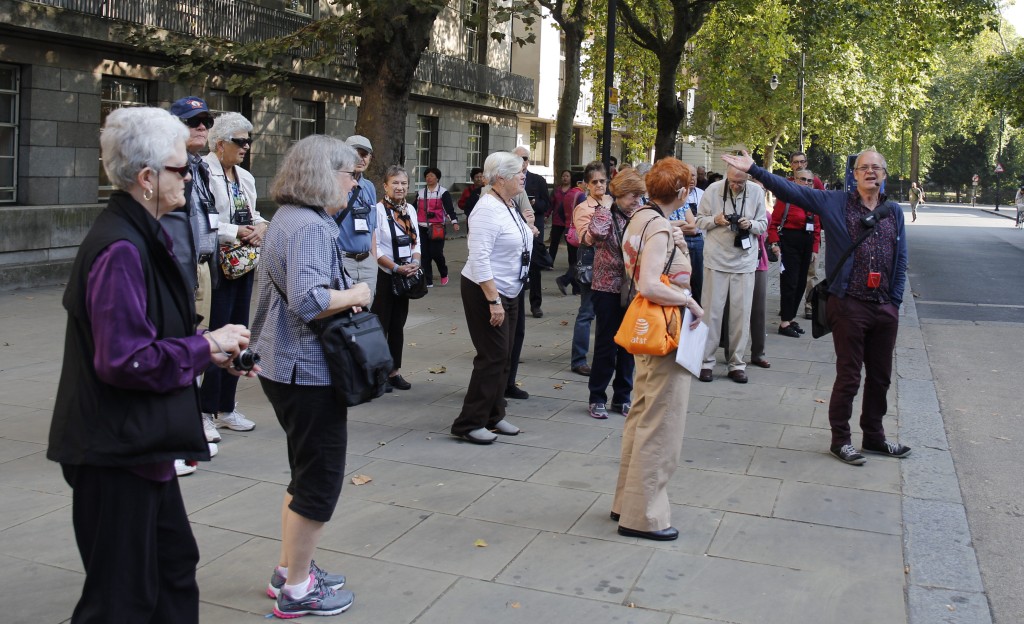
Kevin directing the group.
Our first day of touring and it was a busy day. Ros loaded us on the bus for an early start.
Kevin, our outstanding London guide, first took us to The British Museum. (He noted that the museum was across the street from the Senate House, which George Orwell used as his model for the Ministry of Information in 1984.)
The museum of course is one of the world’s best and we barely scratched the surface of all of its wonderful exhibits. A few of the “biggies” were an Easter Island statue, the Rosetta Stone and a marble horse head from the Parthenon.
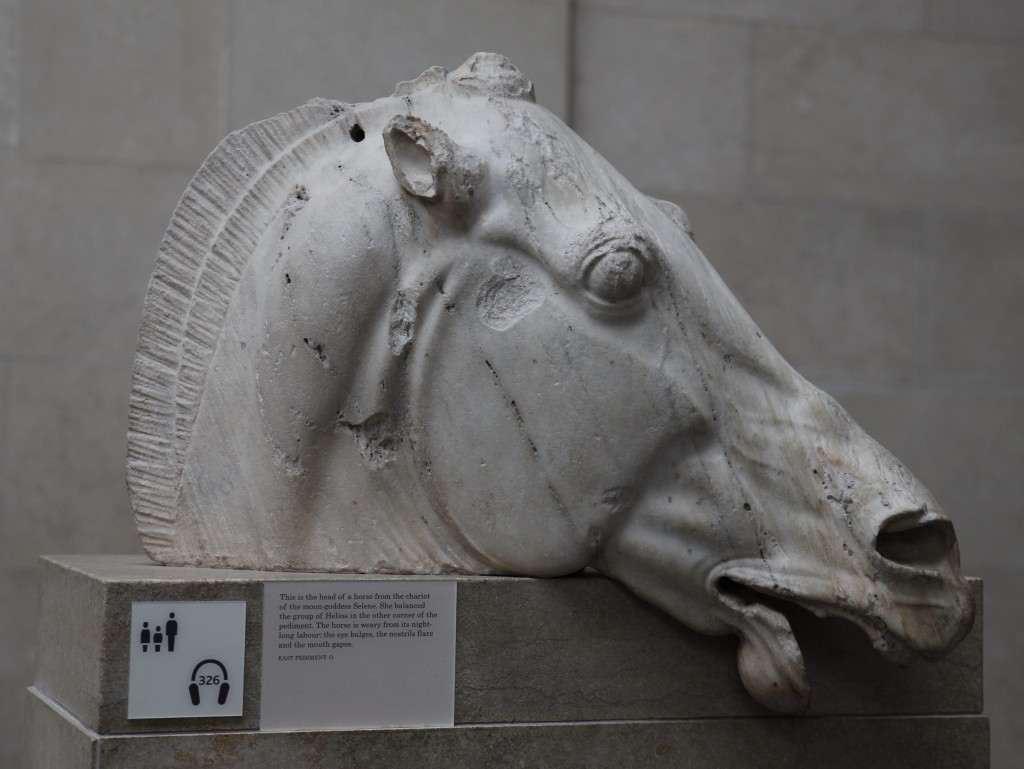
Marble from the Parthenon
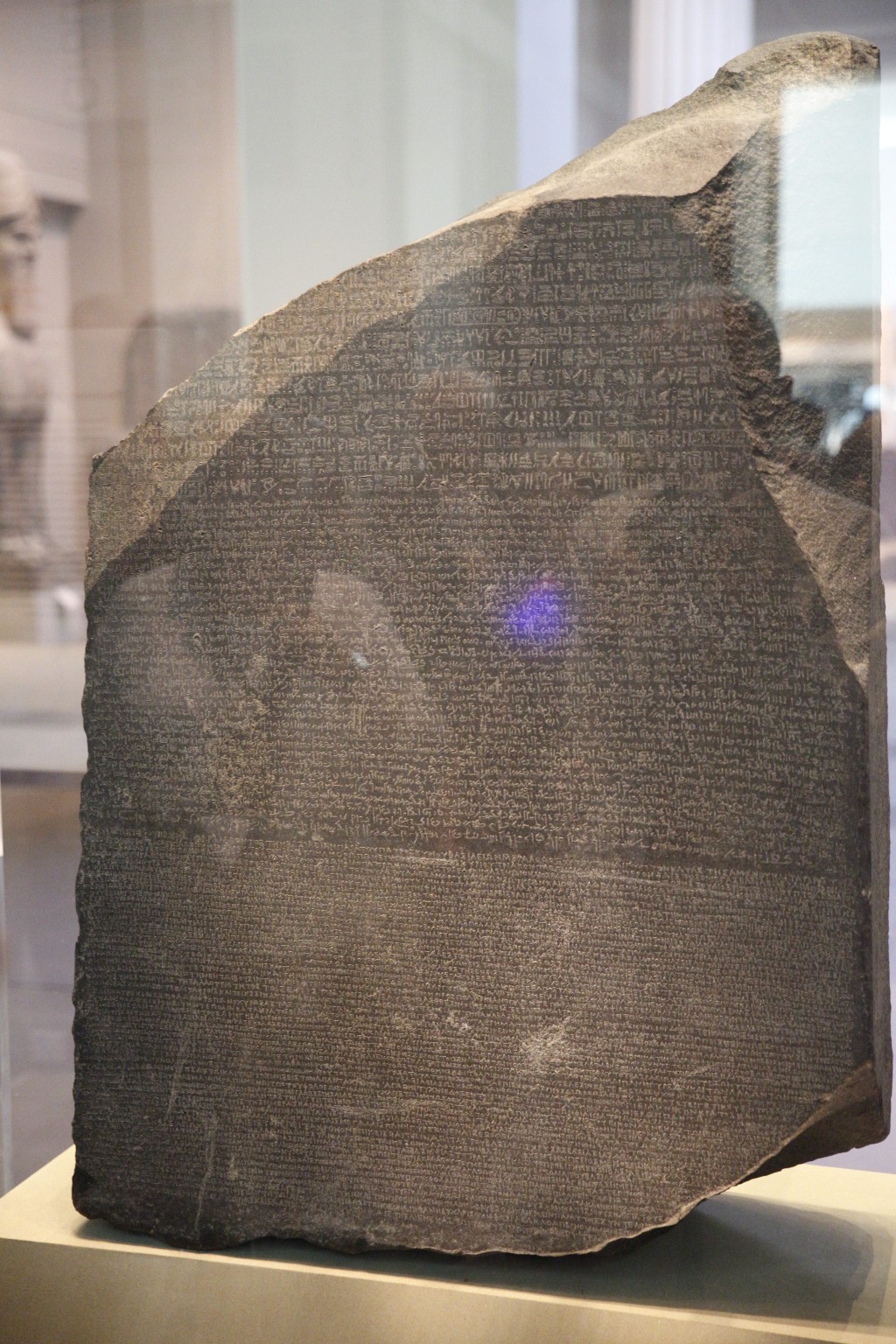
Rosetta Stone
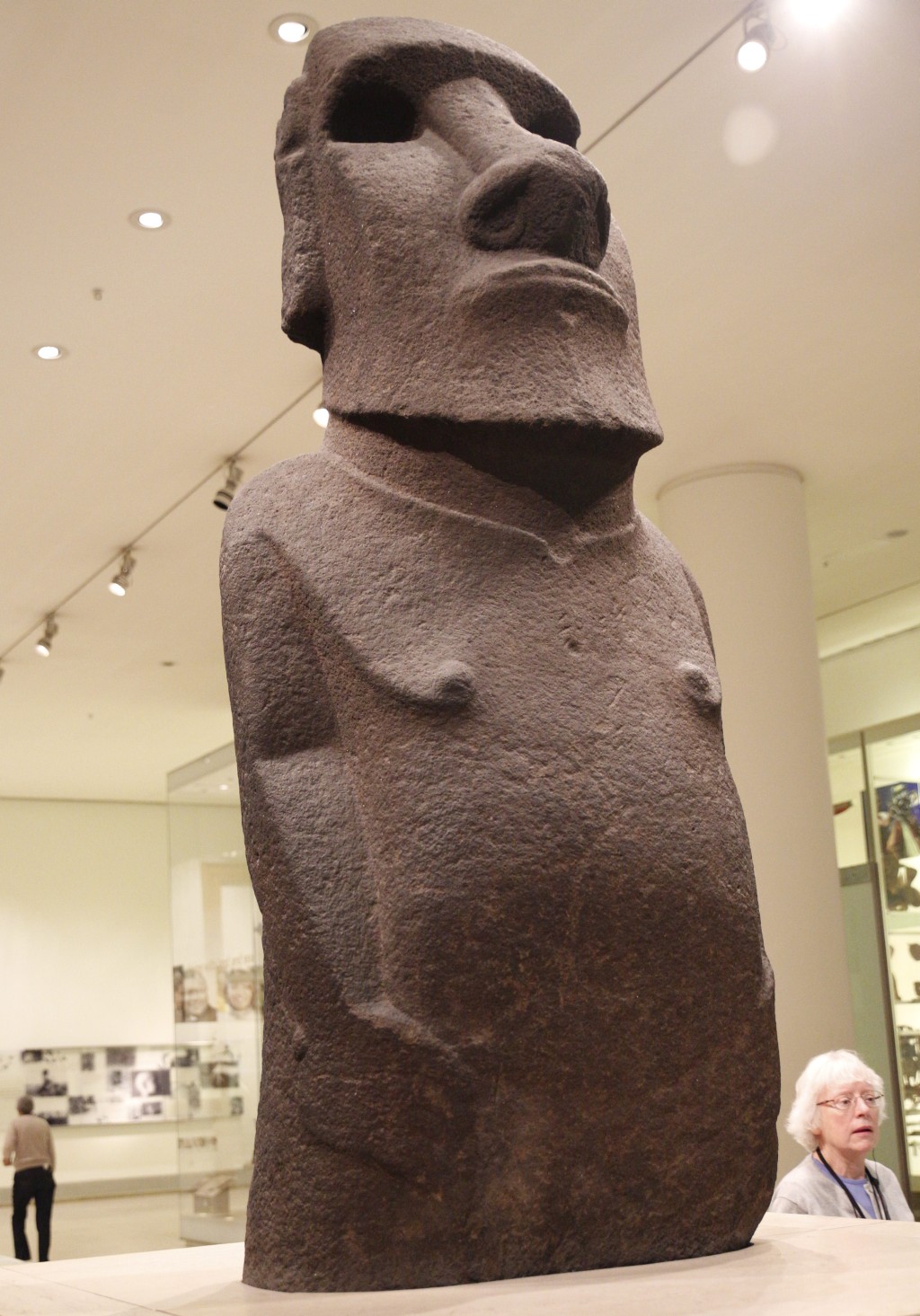
Easter Island statue
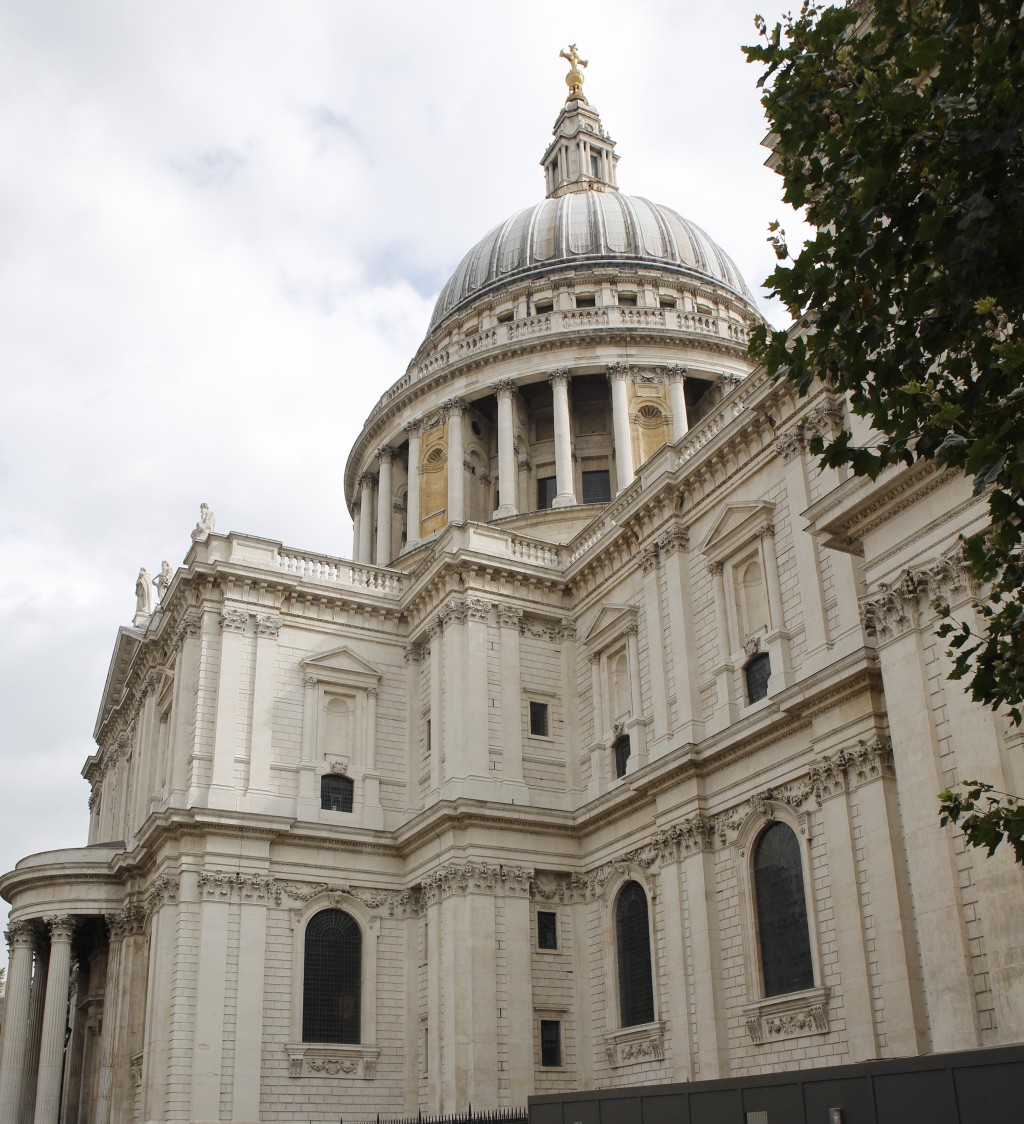
St. Paul’s Cathedral
After lunch we visited the Guild Hall, with its buildings and architectures from many centuries and archaeological remains dating back to the Romans.
Finally, we toured the world famous St. Paul’s Cathedral. It is not possible to describe or even picture this beautiful building, but its survival of the Blitz in WW II was one of the most remarkable stories of that conflict.
Day 4: Sep 11 – Oxford
We breakfasted at the hotel and boarded our bus for the hour and a half trip to Oxford. As we traveled across London, Kevin described the different neighborhoods and architectures along the way. We eventually left the city and passed through rolling hills and pleasant country-side that reminds me of southern Tennessee. Kevin explained that Oxford is a fair-sized town in itself and not just a university town. Cambridge on the other hand is almost entirely a university town.
Our first stop in Oxford was the Ashmolean Museum of Art and Archaeology. This is another of England’s world-class museums with a wonderful collection of art works and artifacts. One of our favorites was the painting by Uccello, “The Hunt in the Forest” one of the earliest depictions of perspective and the vanishing point — this painting was prominently featured in one of the”Inspector Lewis” Masterpiece Mystery episodes.
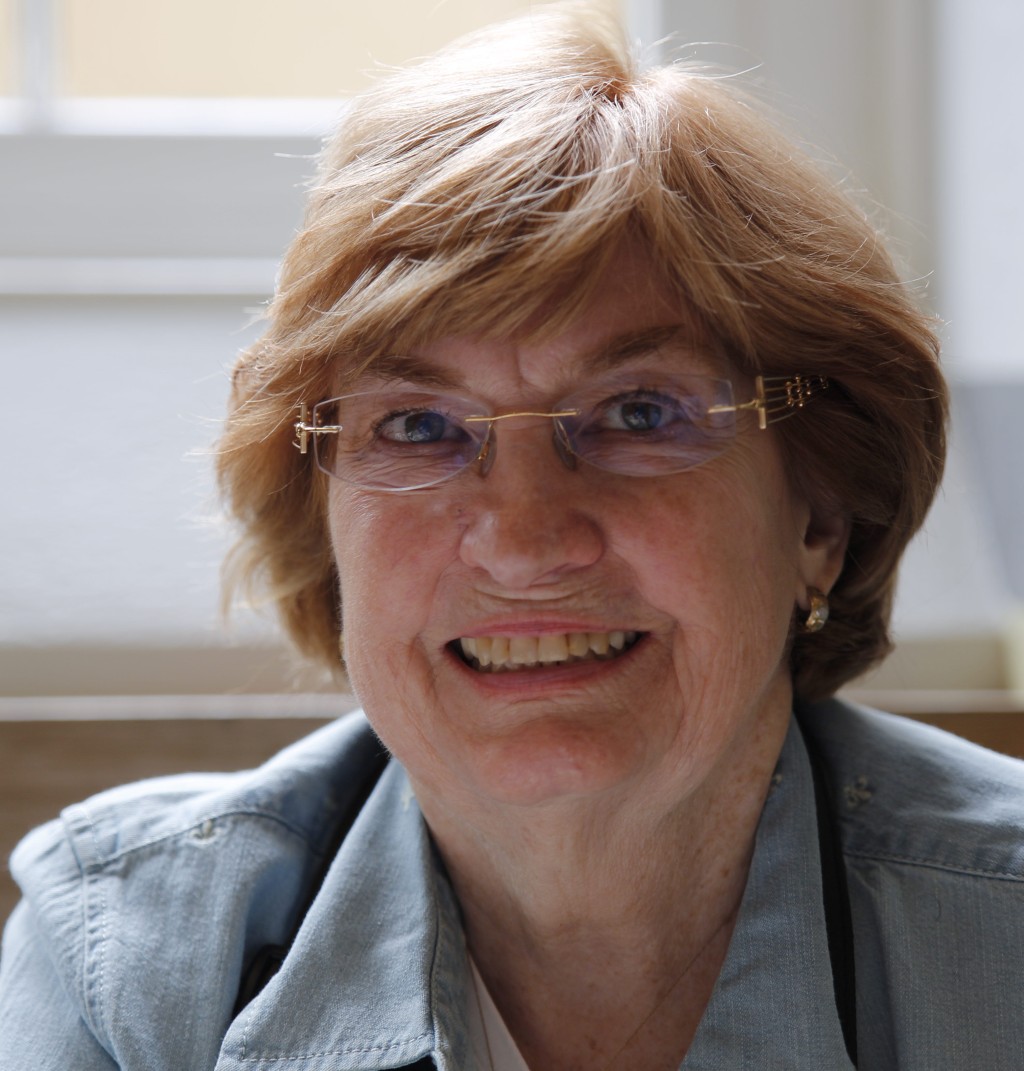
Linda taking a break
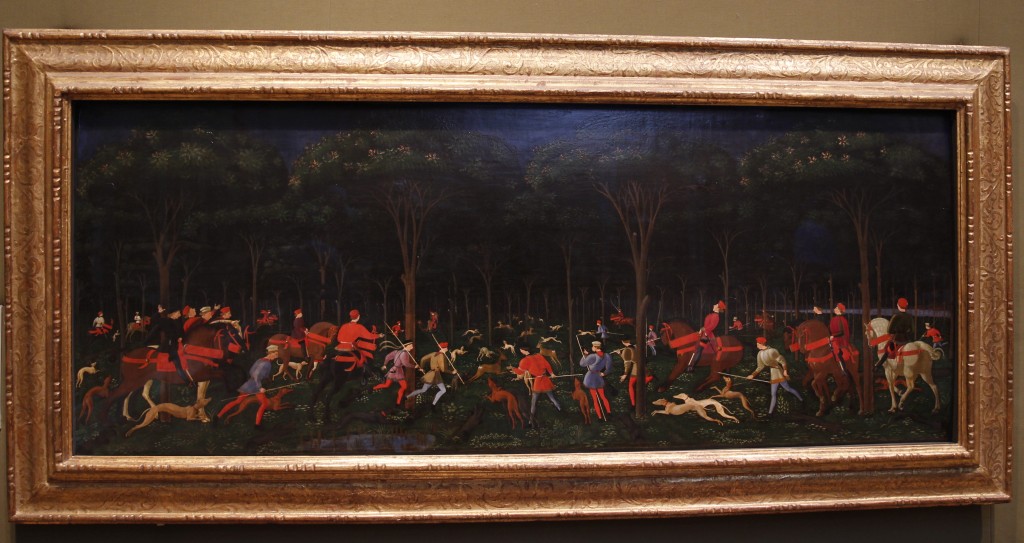
The Hunt in the Forest by Uccello
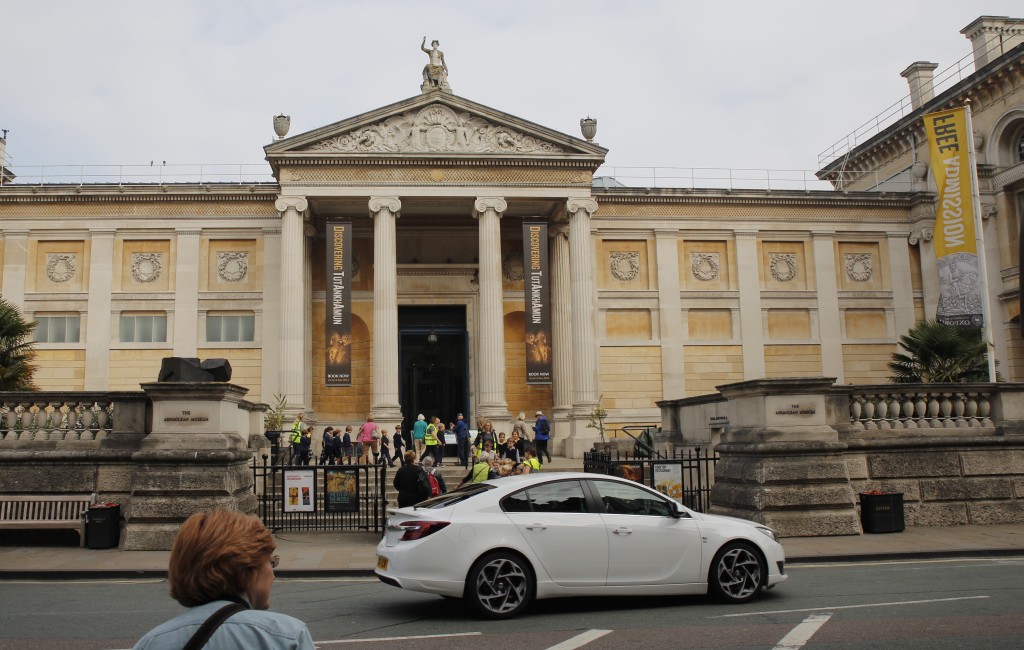
Ashmolean Museum
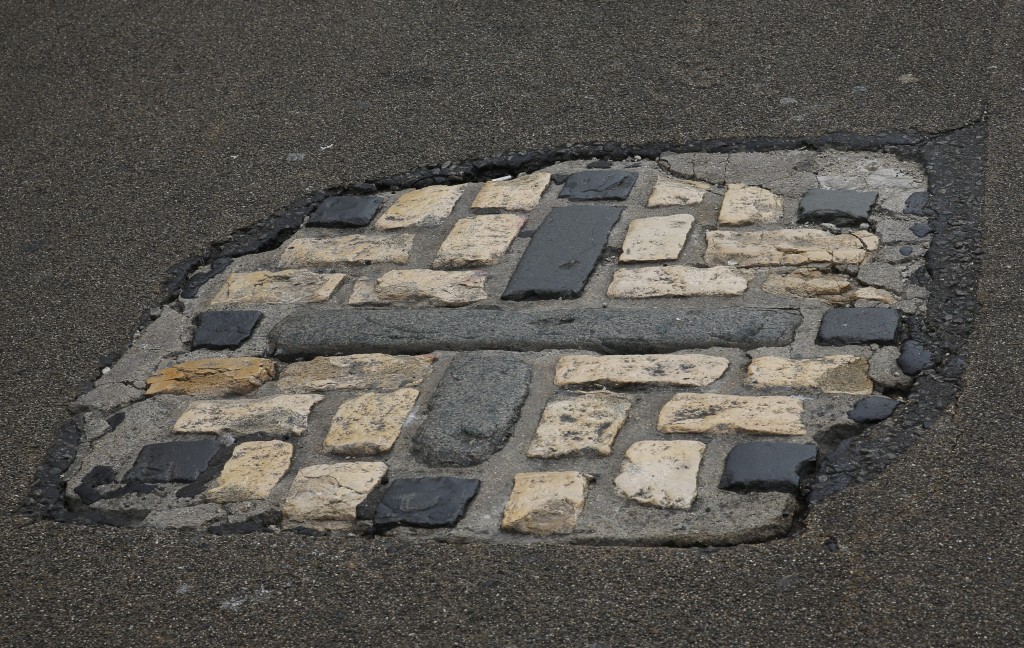
Site where martyrs were burned at the stake.
Next we took a stroll through the main streets of Oxford, passing by a few of the 38 colleges. A marker in the middle of one of the principal streets showed where several martyrs were burned at the stake.
We took a very good lunch at a nice restaurant and then did more walking before getting to Christ Church, one of the most famous of the colleges and a beautiful cathedral. It consists of many lovely gardens and buildings. Among the many interesting things to see at Christ Church are the door where Alice peeked into the garden and became immortalized by Lewis Carroll, and the great dining hall, used as the model for the Harry Potter movies.
We then left on our journey back to London and a well-earned rest.
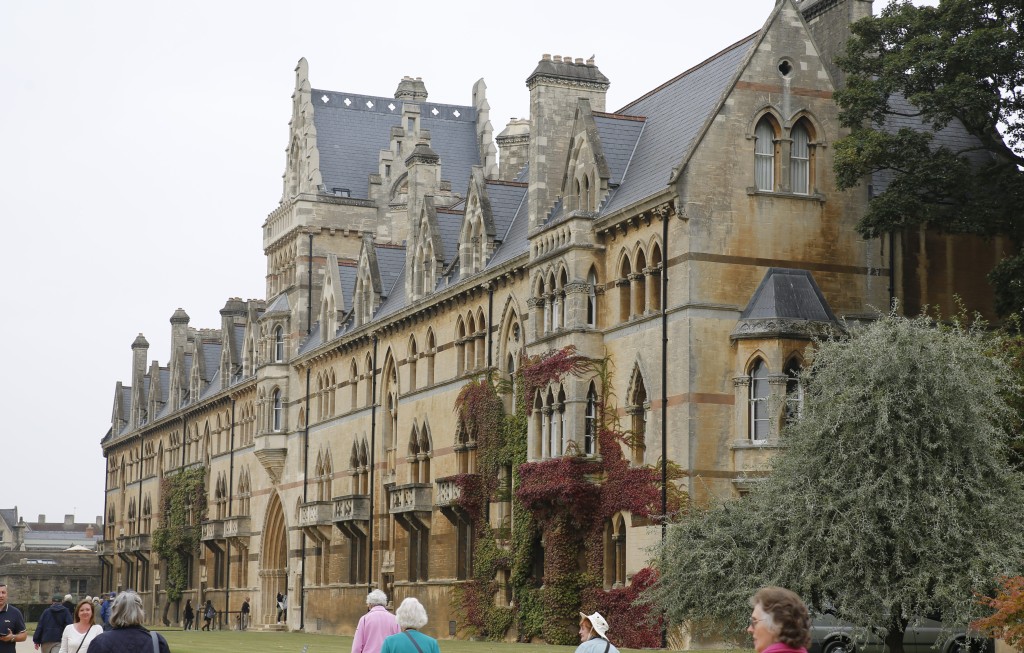
Meadows entrance to Christ Church
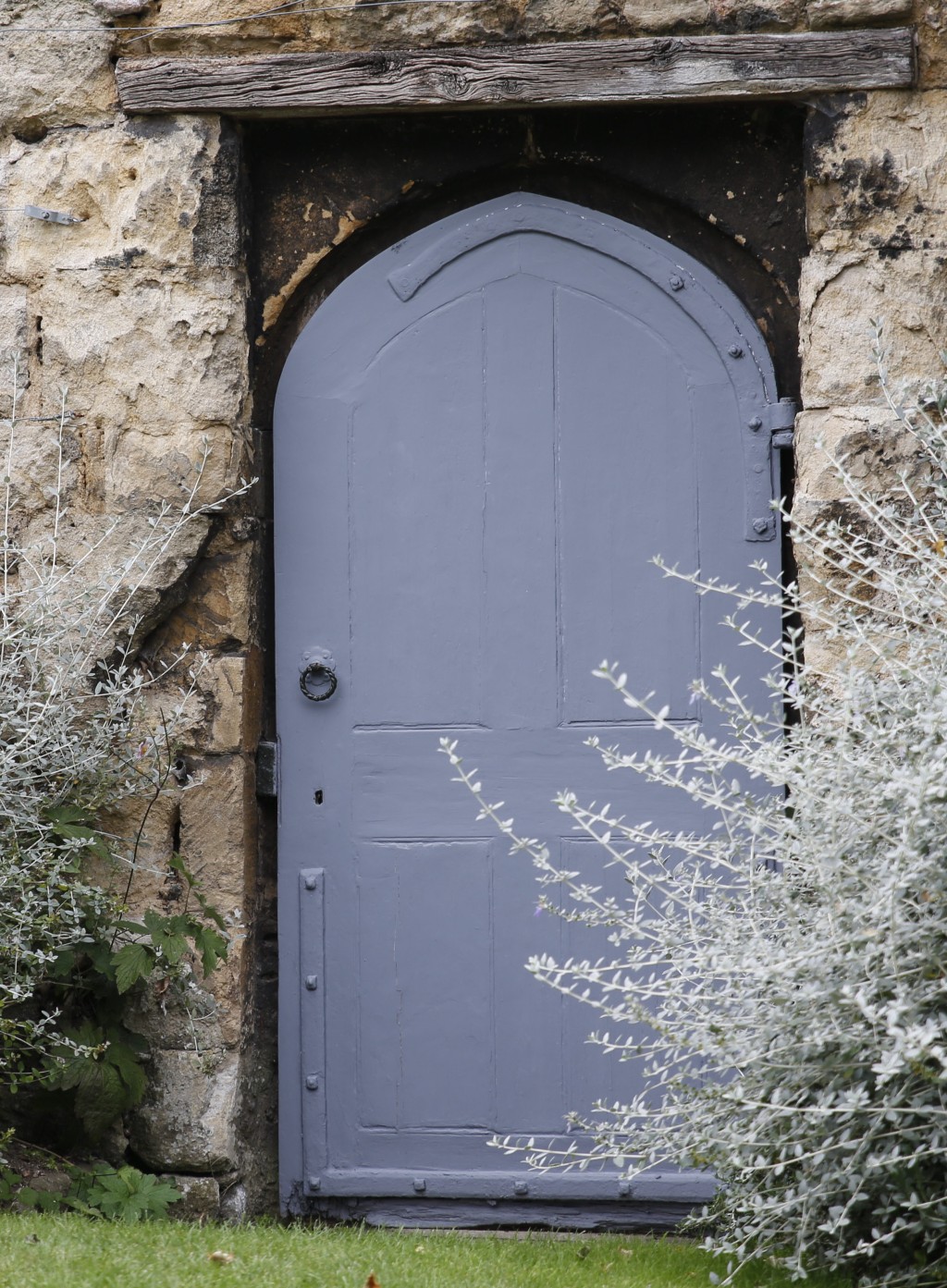
Alice’s garden door
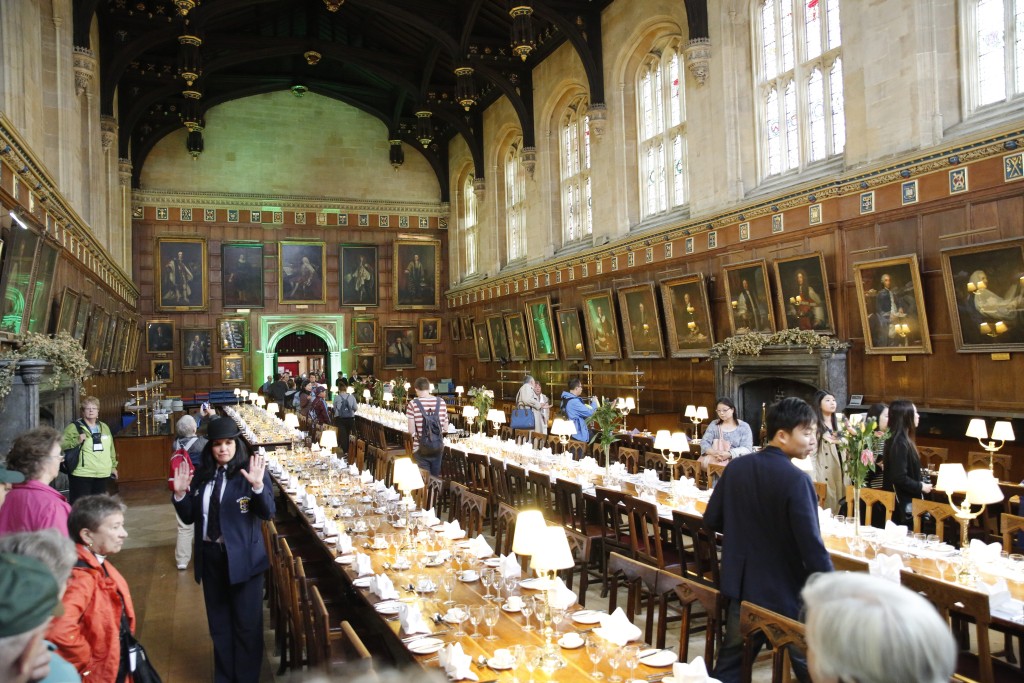
Christ Church dining hall
Day 5: Sep 12 – London
We spent the morning visiting the Tower of London. This of course is the most famous of the city’s attractions. In recognition of England’s WW I losses, the moat around the Tower is being filled with ceramic poppies, and this has been a big hit with people in the city. Our guide emphasized that the Tower was not built for defense from foreign invaders but from locals, including (especially?) Londoners. We explored many of the different structures in the tower; naturally this included the ‘vault’ where the crown jewels are stored and displayed.
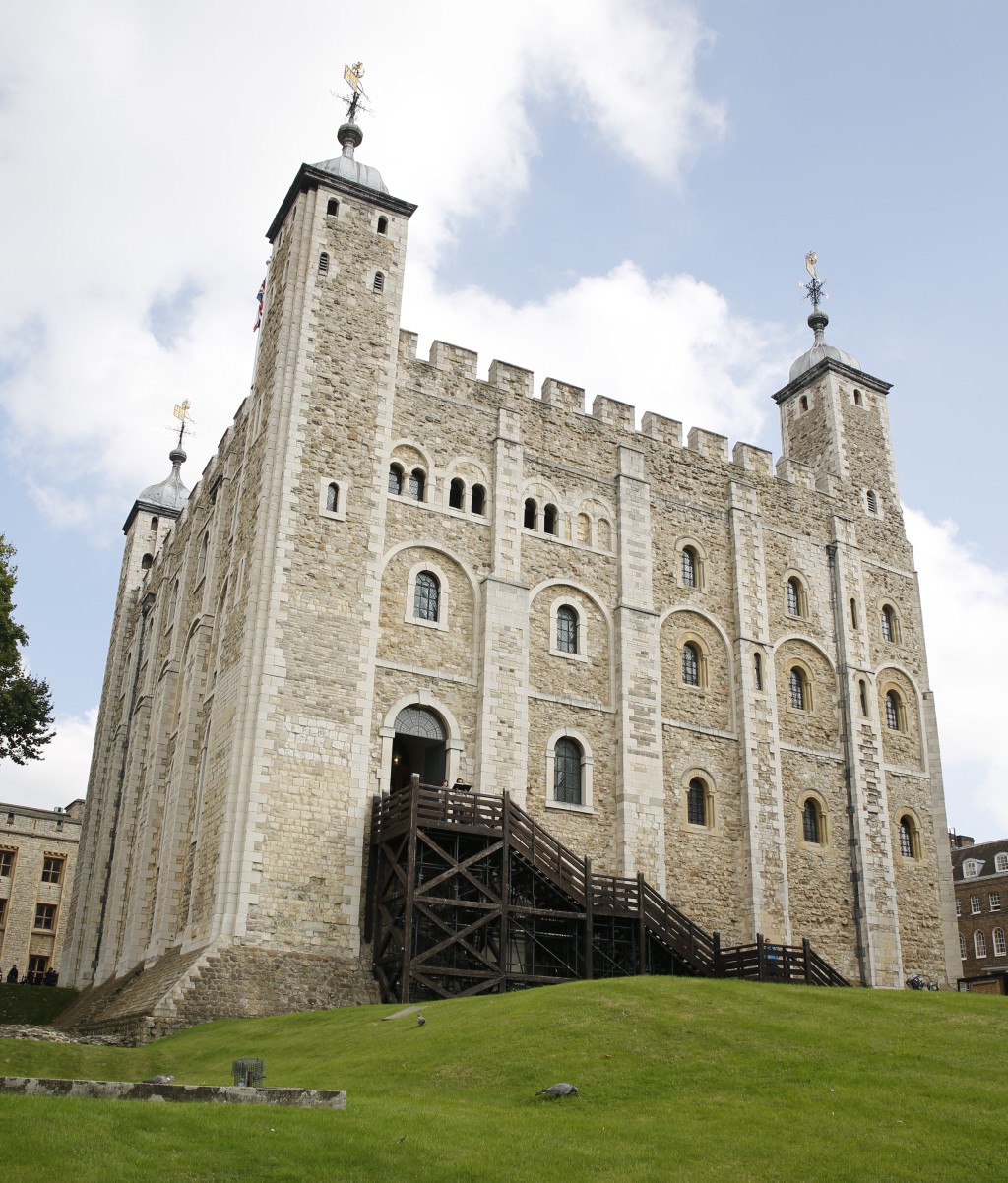
Great Tower
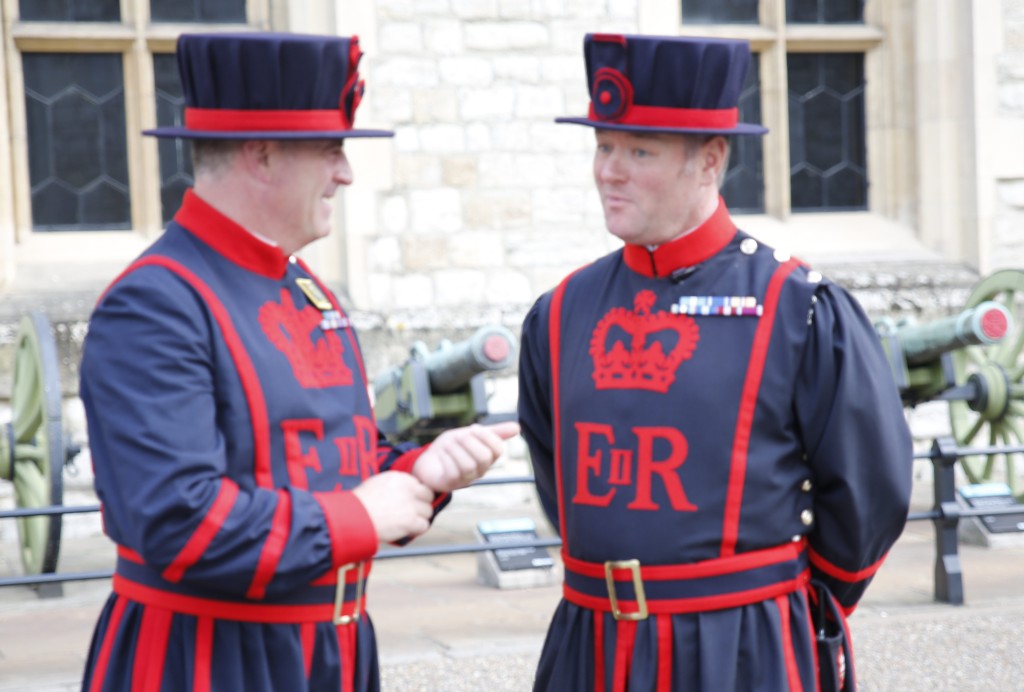
Yeoman Wardens
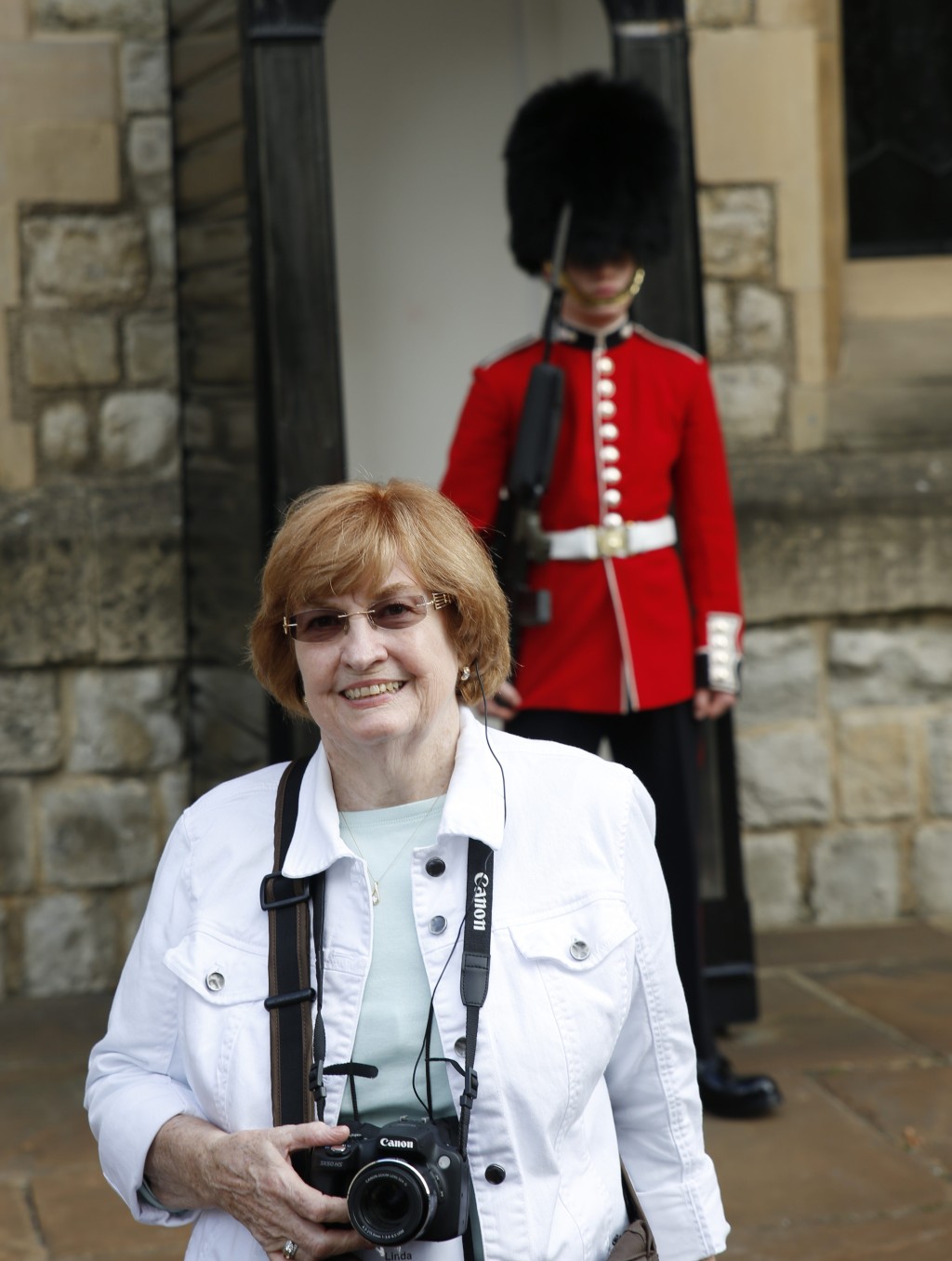
Linda at entrance to Crown Jewels
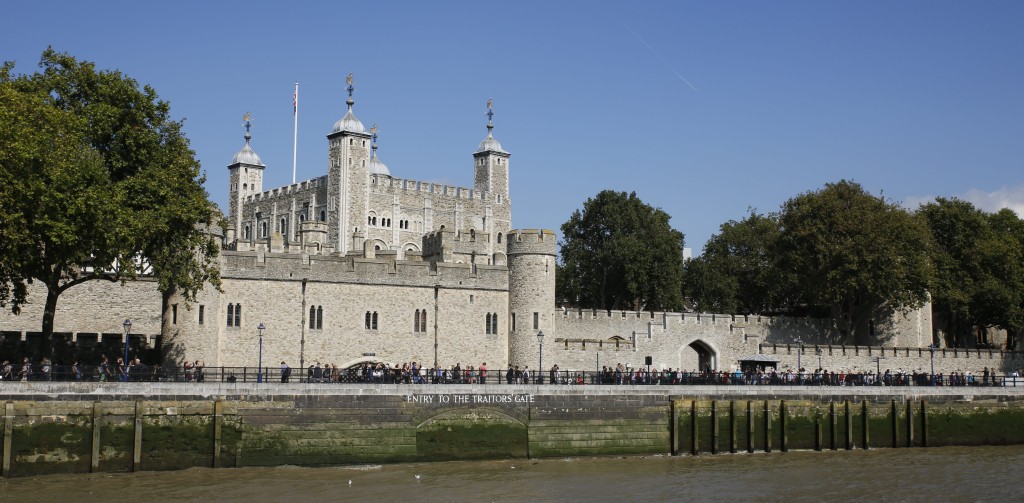
The Tower of London
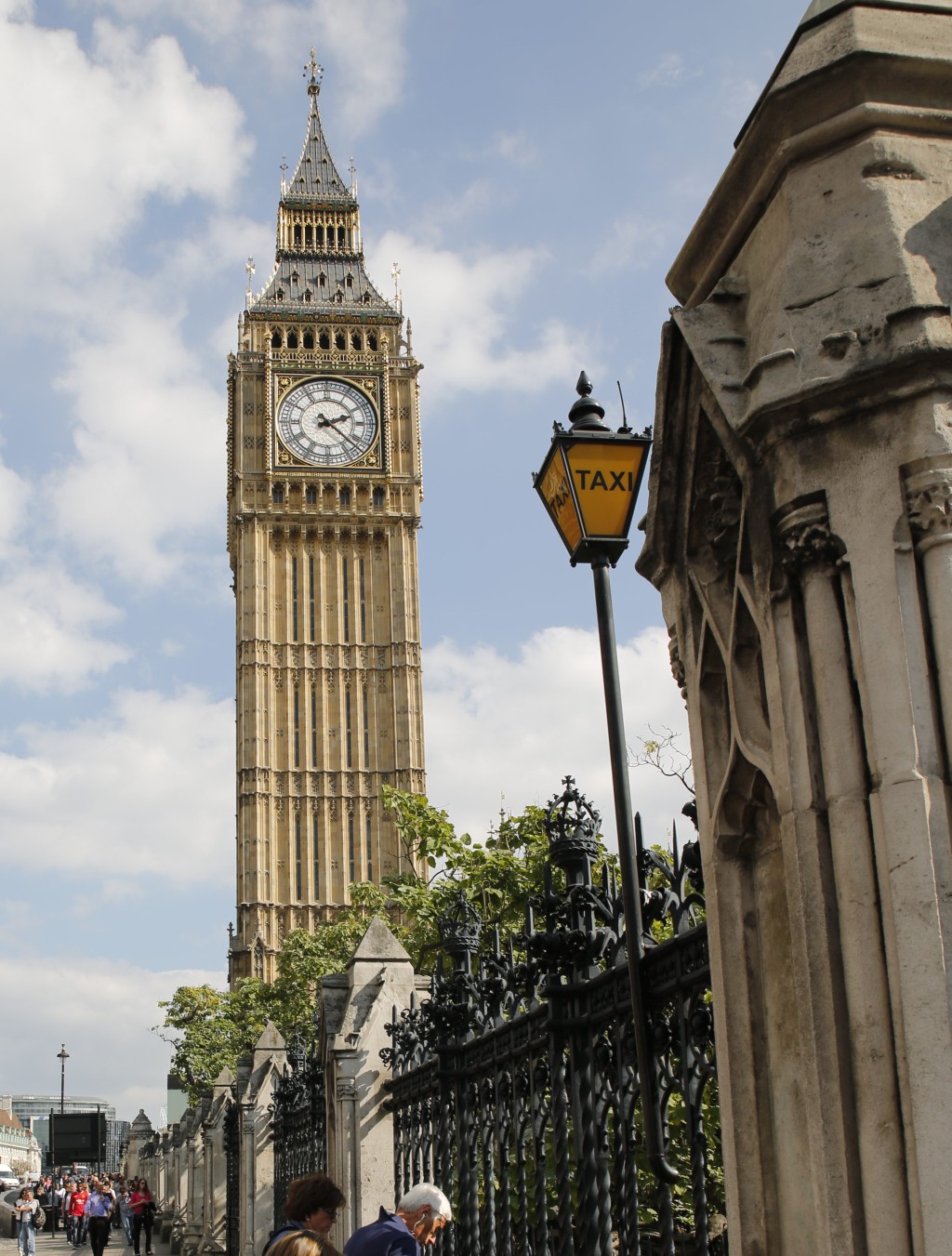
Elizabeth Tower with clock and Big Ben
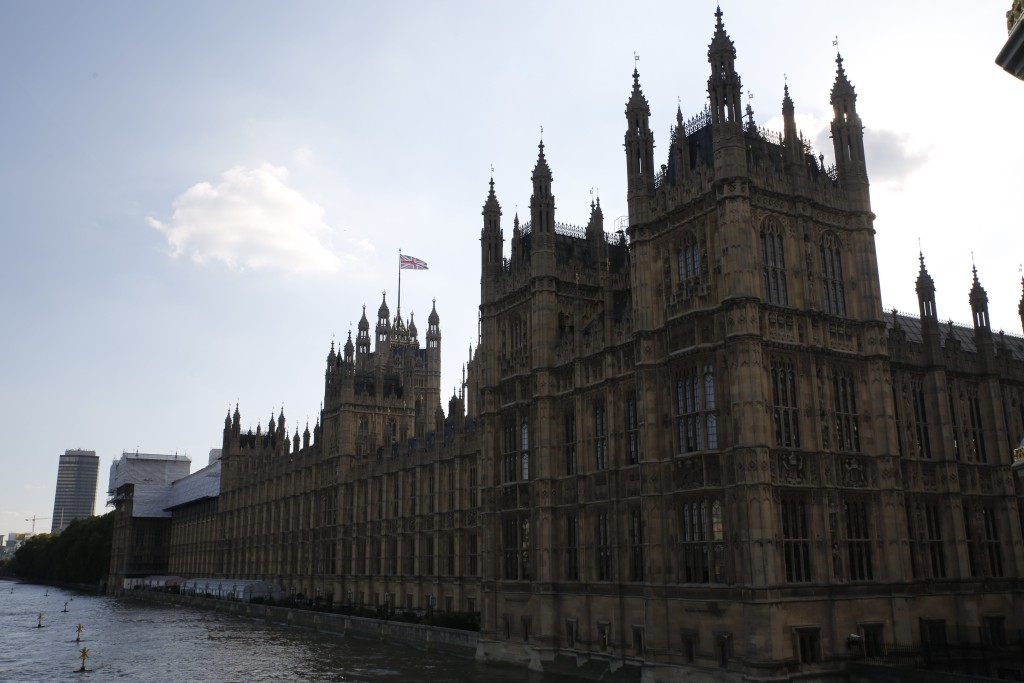
Parliament
After lunch at the cafe in the Tower, we next took a boat ride down the Thames from the Tower to Westminster. Here we walked past the parliament buildings, the Elizabeth Tower with its clock and Big Ben, and arrived at Westminster Abbey.
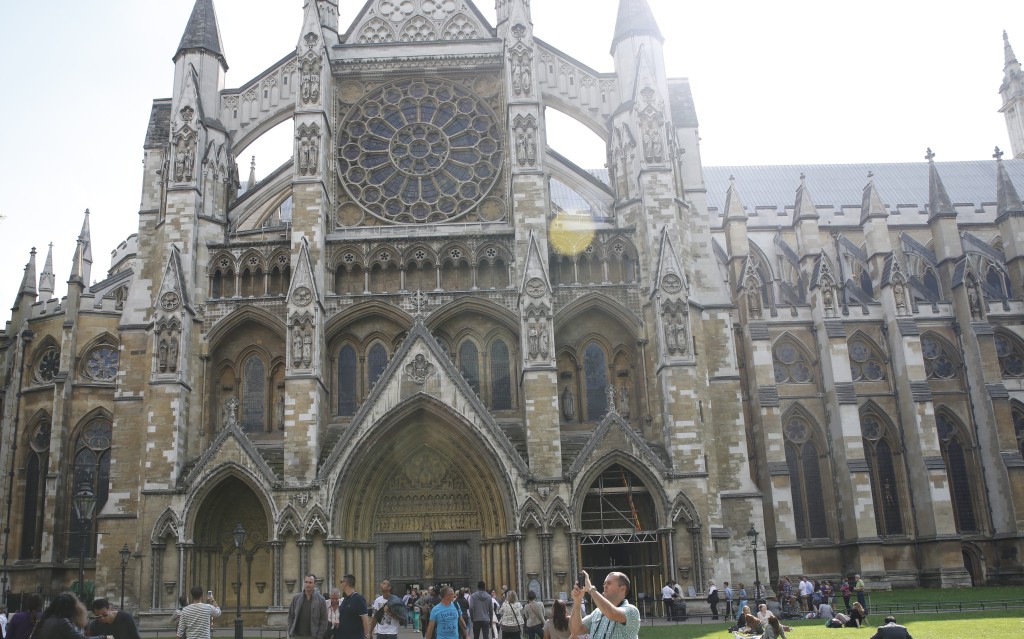
Westminster Abbey
Westminster Abbey is one of the most important buildings in London. It is the site of the coronation of kings and queens and also many of their tombs. Numerous other notables are also buried or memorialized there such as Isaac Newton and Charles Dickens. Many will recall that the funeral service for Princess Diana was held at the Abbey. Unfortunately no photographs are allowed inside.
We then walked across the Thames and took a ride on the London Eye. Following this we coached to The George, one of the oldest pubs in the city. The large courtyard was absolutely packed with young Londoners enjoying a beer and the beautiful weather at the pub. After a very good dinner we made our way back to the hotel for another well-deserved rest.
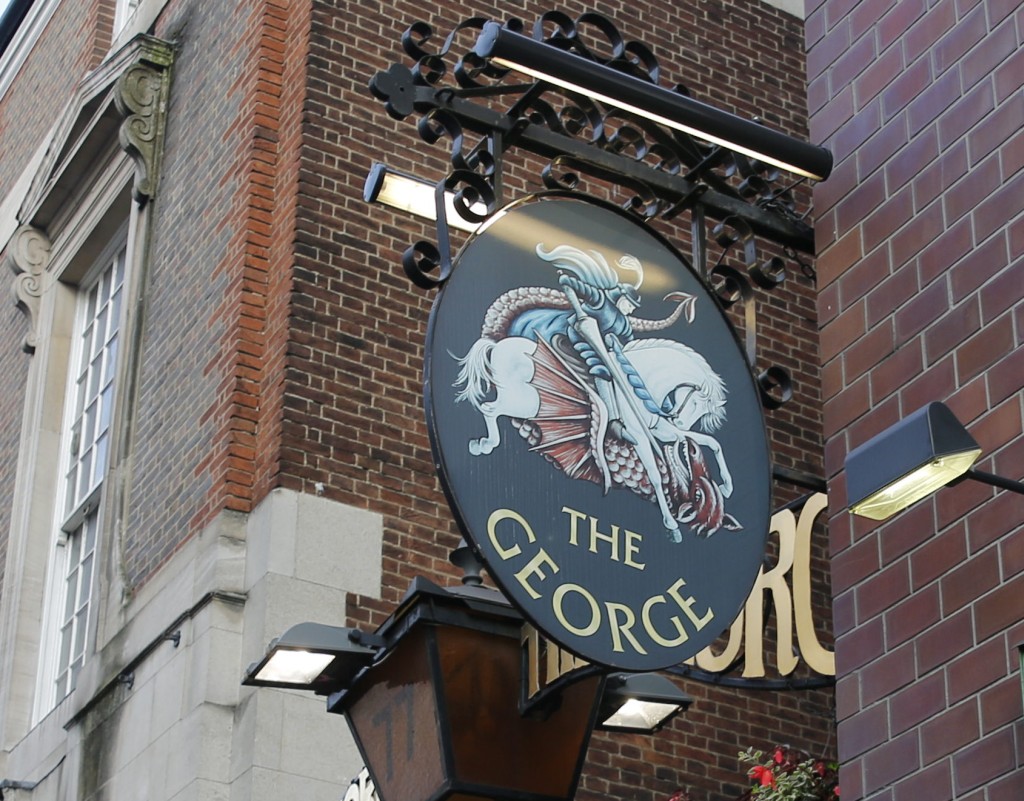
The George
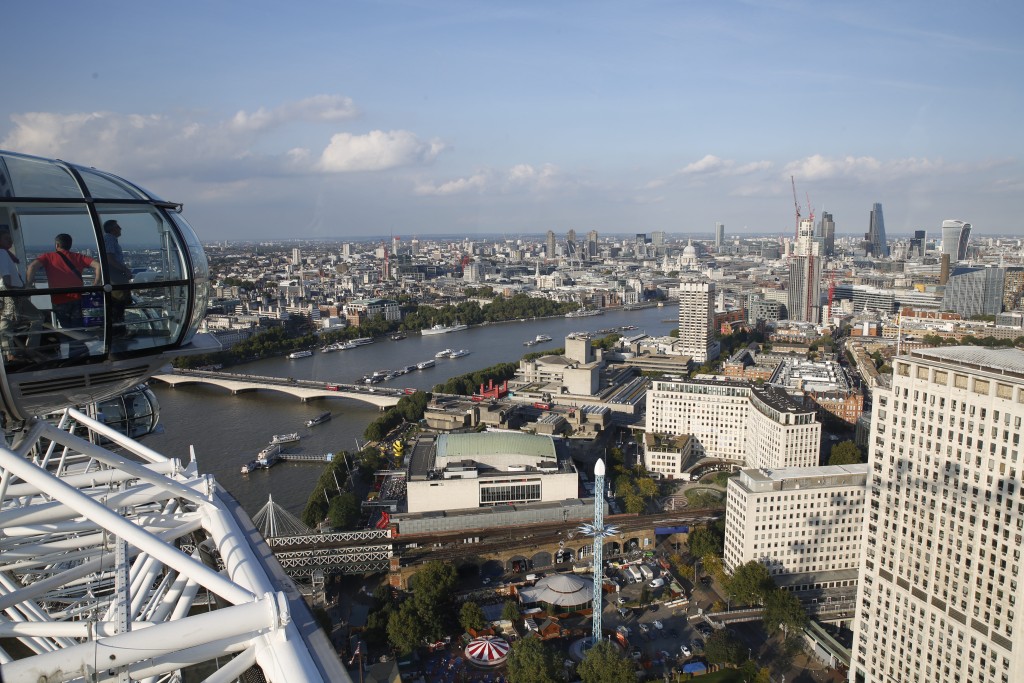
View from top of the Eye
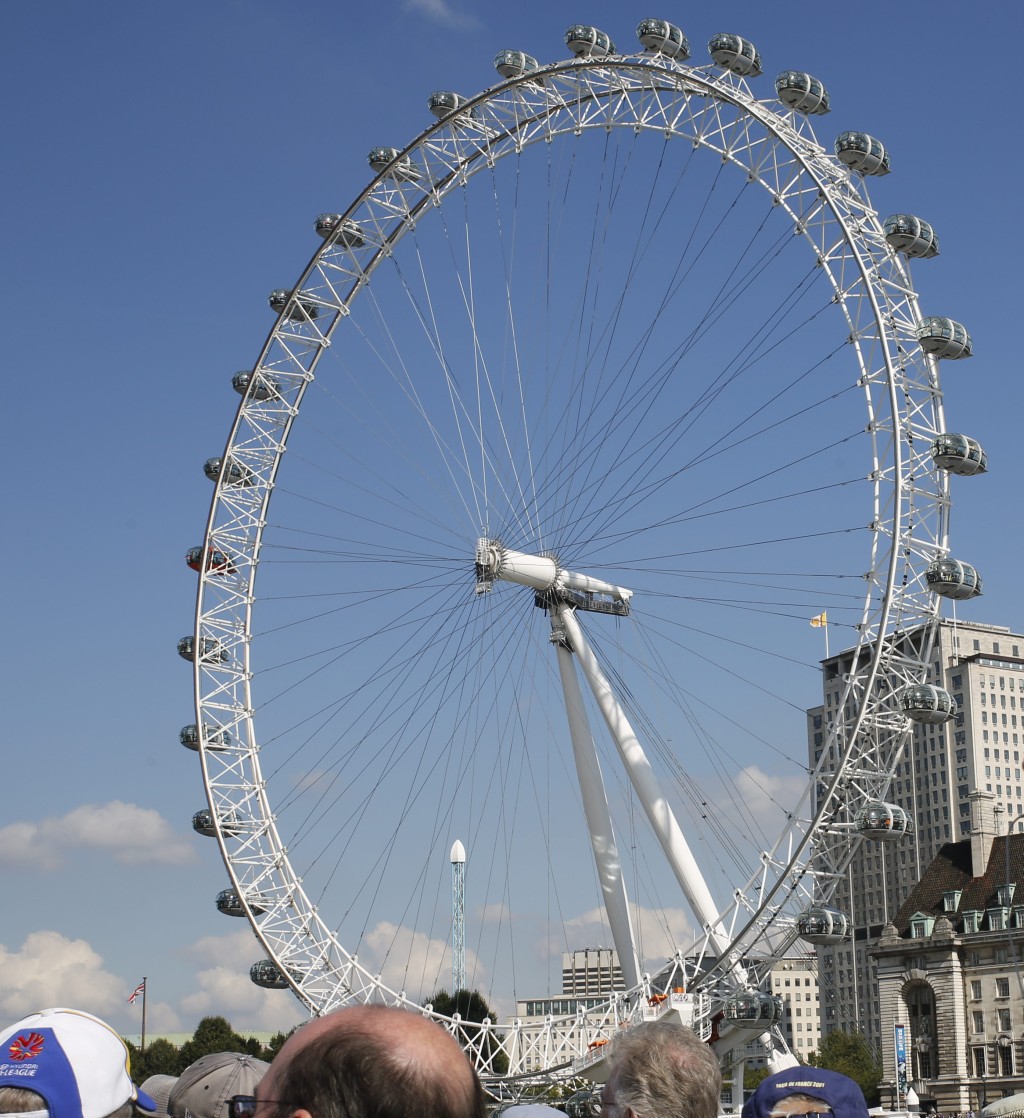
The London Eye
Day 6: Sep 13 – Travel London to Mickelton
Moving day: We had to have our luggage outside our rooms at 6:30, which was pretty darned early considering our long day on Friday. After breakfast we left the Radisson Vanderbilt hotel and boarded the bus under overcast skies and much cooler temperatures. We did not spend a lot of time in London, but we certainly had wonderful weather while here. We just hope that this will hold up as we continue on the next phase of our journey.
We journeyed west from London for about two and a half hours to the ancient city of Bath. Here are the hot springs and the location of the famous Roman baths. Because of the traffic we were late arriving and had to hurry through our time visiting the baths. Even so we were late leaving the baths and that put us behind schedule for the rest of the day.
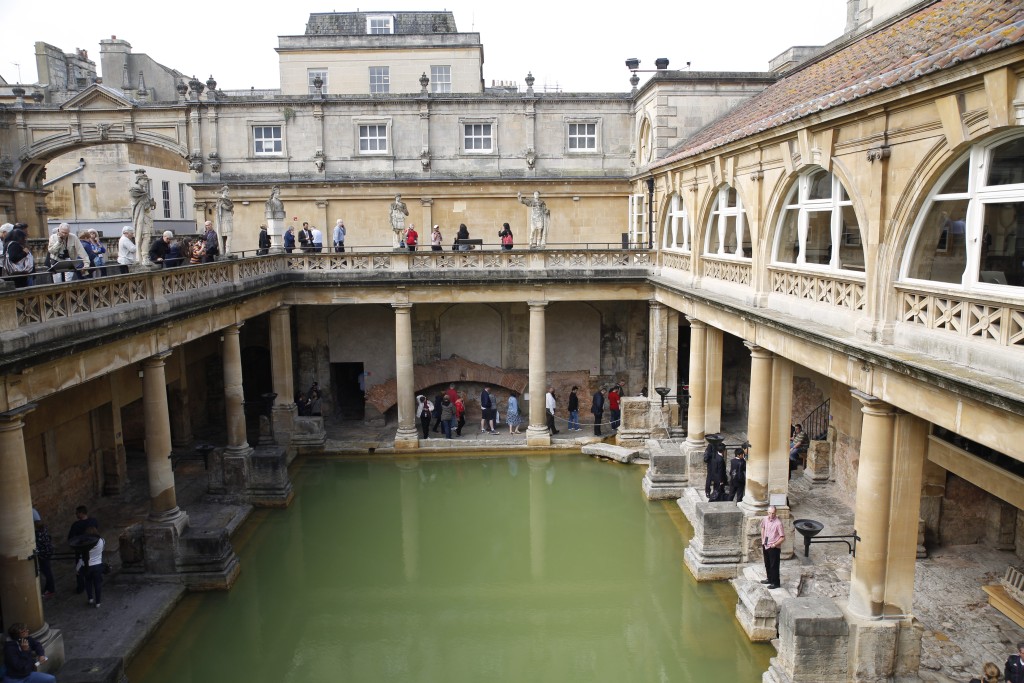
Above the warm water of the baths
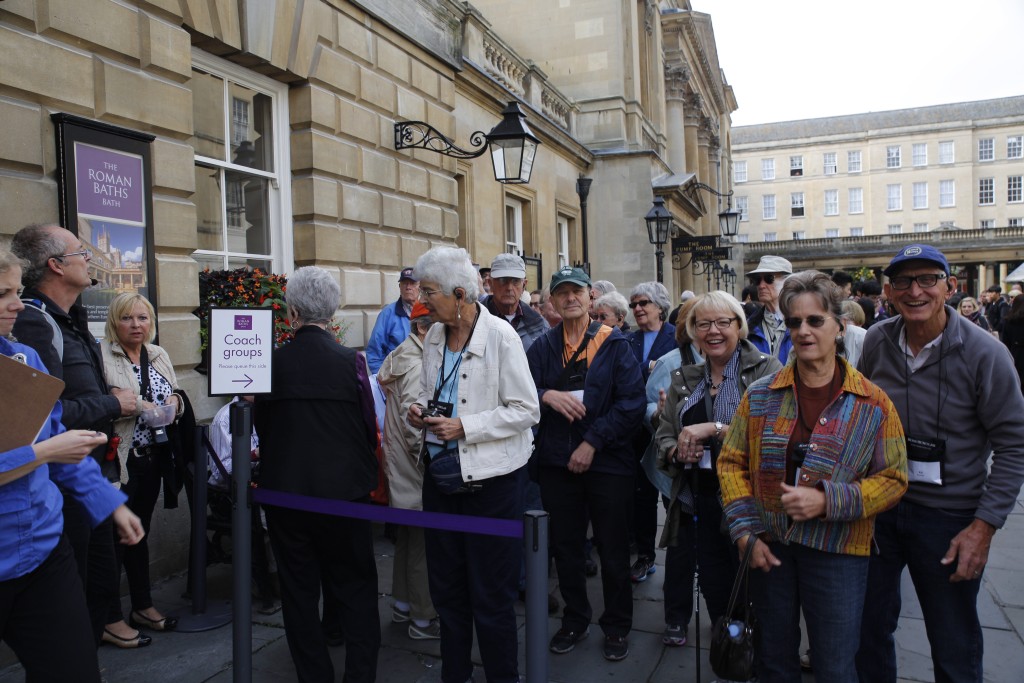
Waiting for the baths
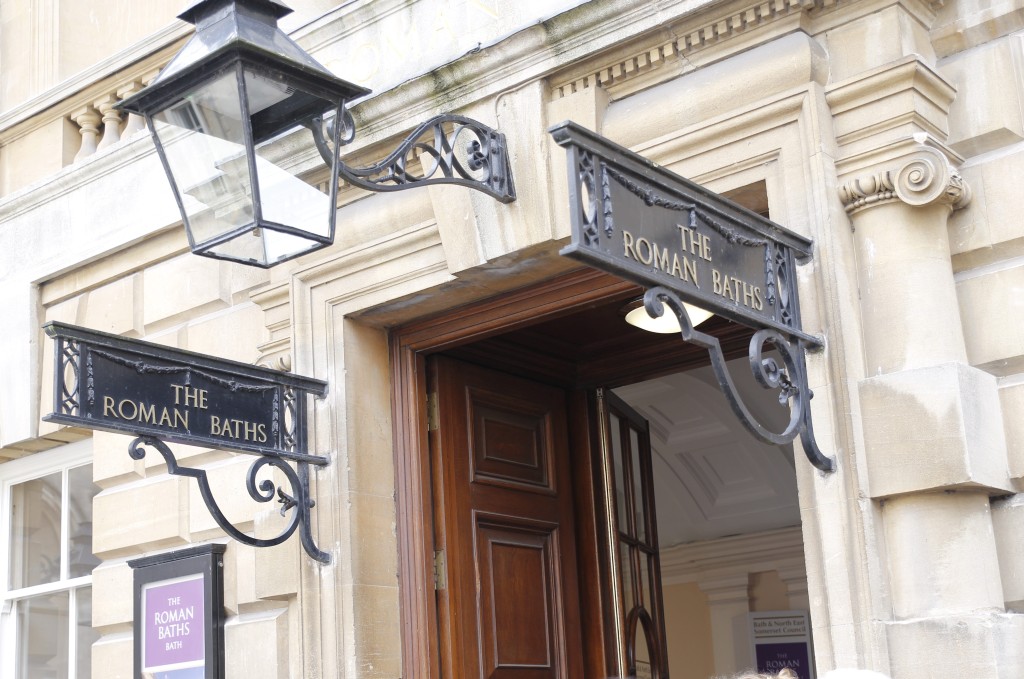
Bath entrance
Jane Austen spent several years in Bath and described the city in some of her books. It so happened that this was the first day of the Jane Austen Festival, and this obviously added to the traffic and crowds. We saw a number of people in costume, and of course we had to peek into the Pump Room made famous in her novels.
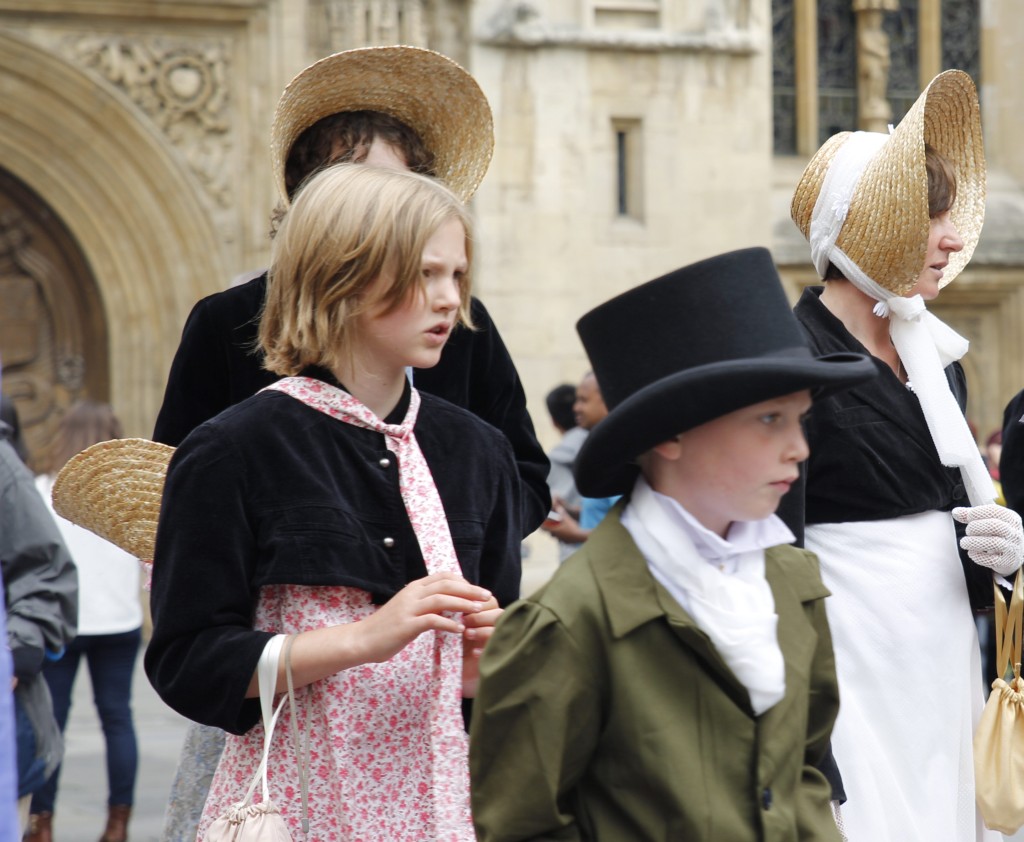
Jane Austen fans
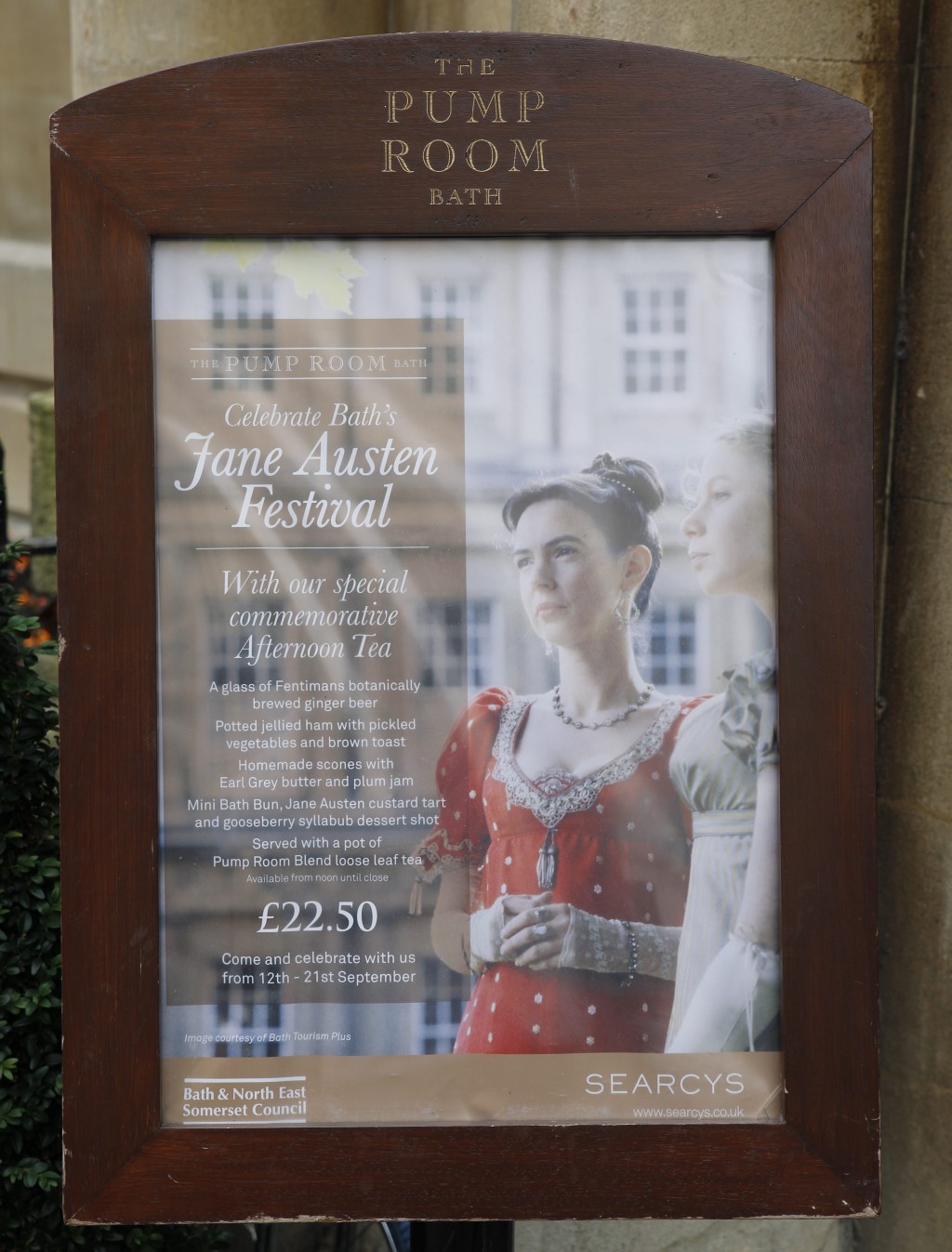
Jane Austen Festival
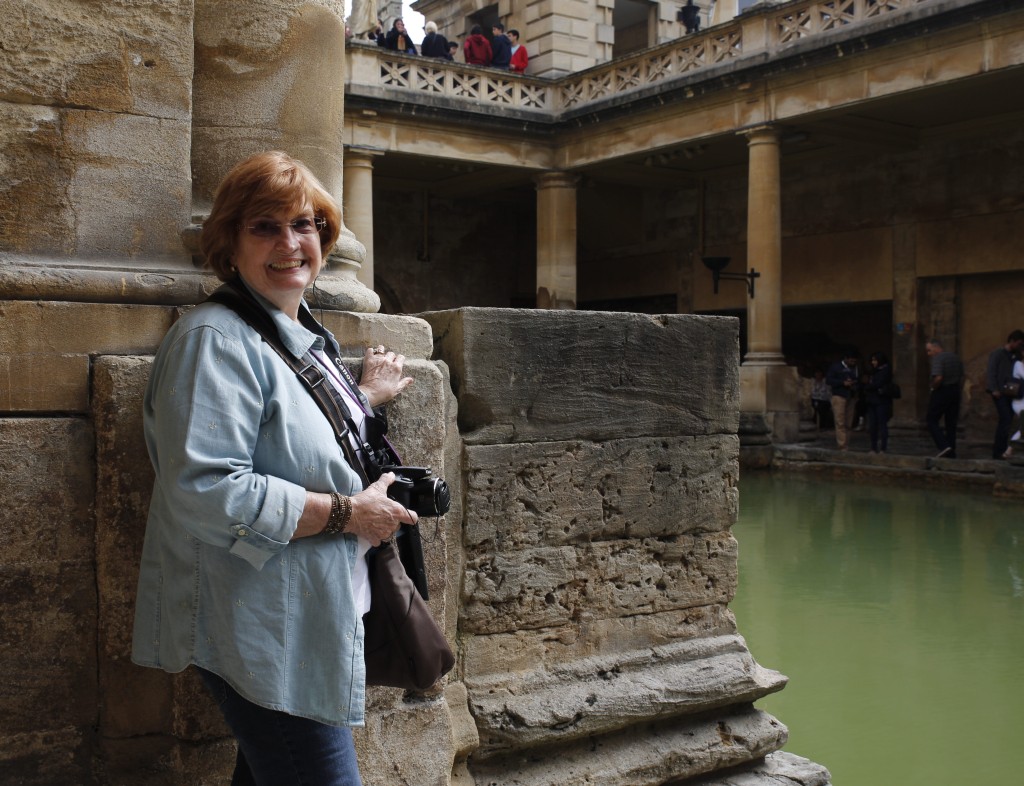
Linda ready to take a dunk
It was not a long drive from Bath to Stonehenge, maybe about an hour. The Visitor’s Center is some distance from the stones and we took a bus up to the henge itself. Kevin gave us a great deal of information about the history and the current thinking about the structure. He emphasized that there were many more henges throughout England and Europe and some are much larger. The really unique feature of Stonehenge is that the stones were shaped and the large lentels were placed along the tops of the enormous stones.
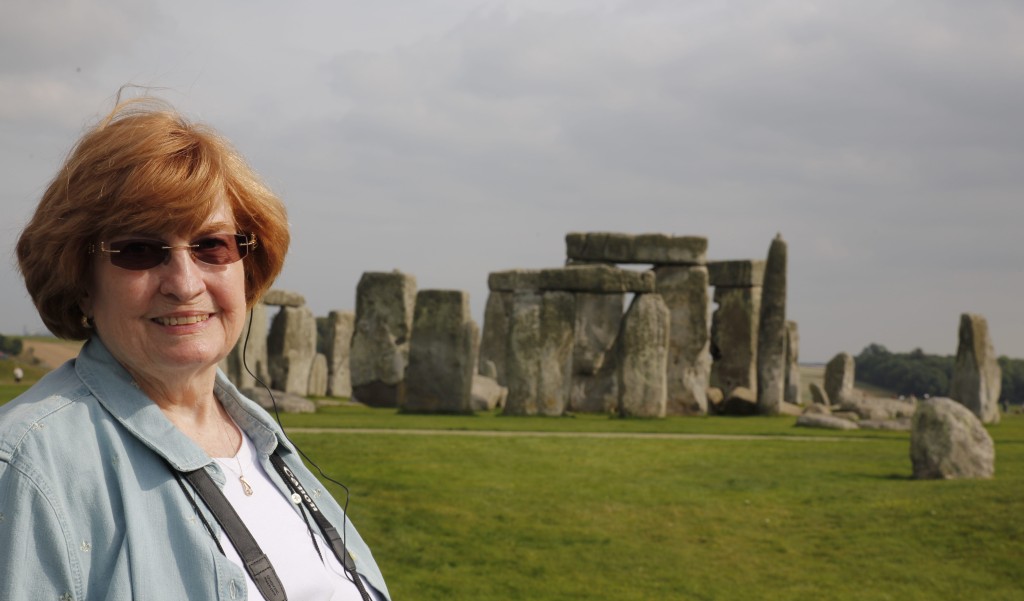
Linda at Stonehenge
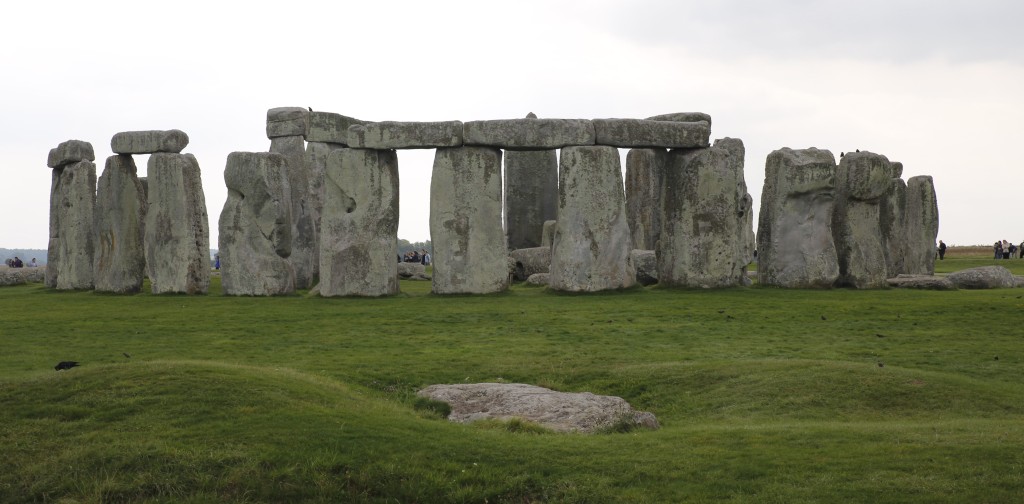
Stonehenge along the avenue
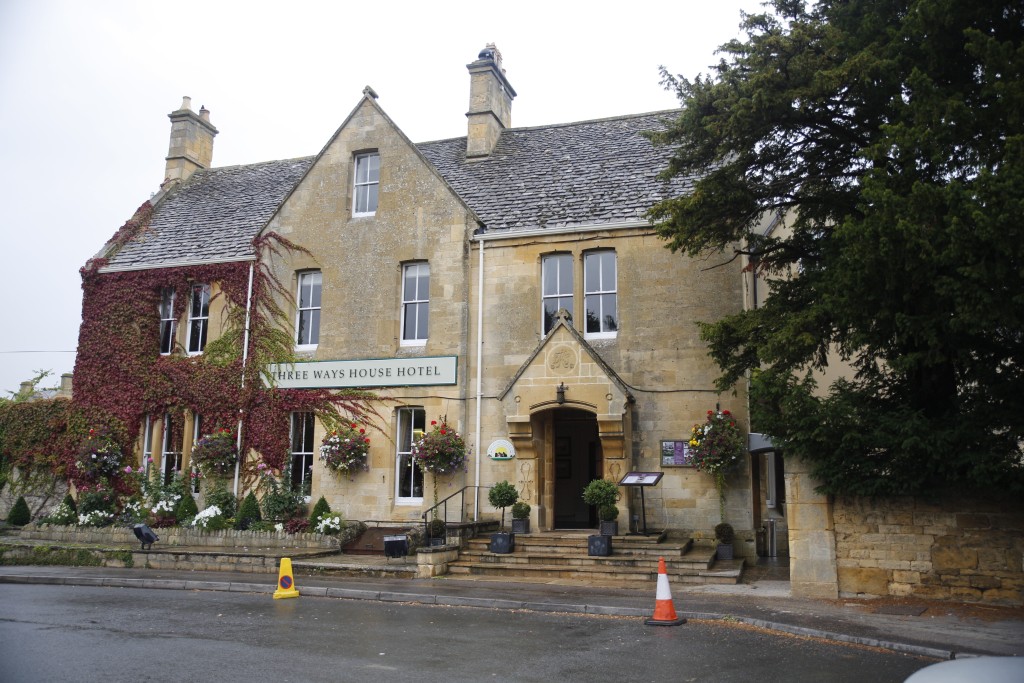
Our nice hotel in Mickelton
We left Stonehenge about 4:30 for the two+ hour ride to our hotel in the small village of Mickelton. Along the way, we said farewell to Kevin at the rail station in Swindon where he returned to London. Along the way we noticed many, many sheep farms, and when we arrived at our hotel we immediately sat down to dinner–where most of us has a very fine lamb steak.
Day 7: Sep 14 – Mickelton
We will be here in the small village of Mickelton, population~2000, for three nights. Today was an easier day than the last two. We began with a nice breakfast and then an introduction to the area from our guide, Peter, who will be with us for the rest of the trip. He then led us in a short walk about the village of Mickelton
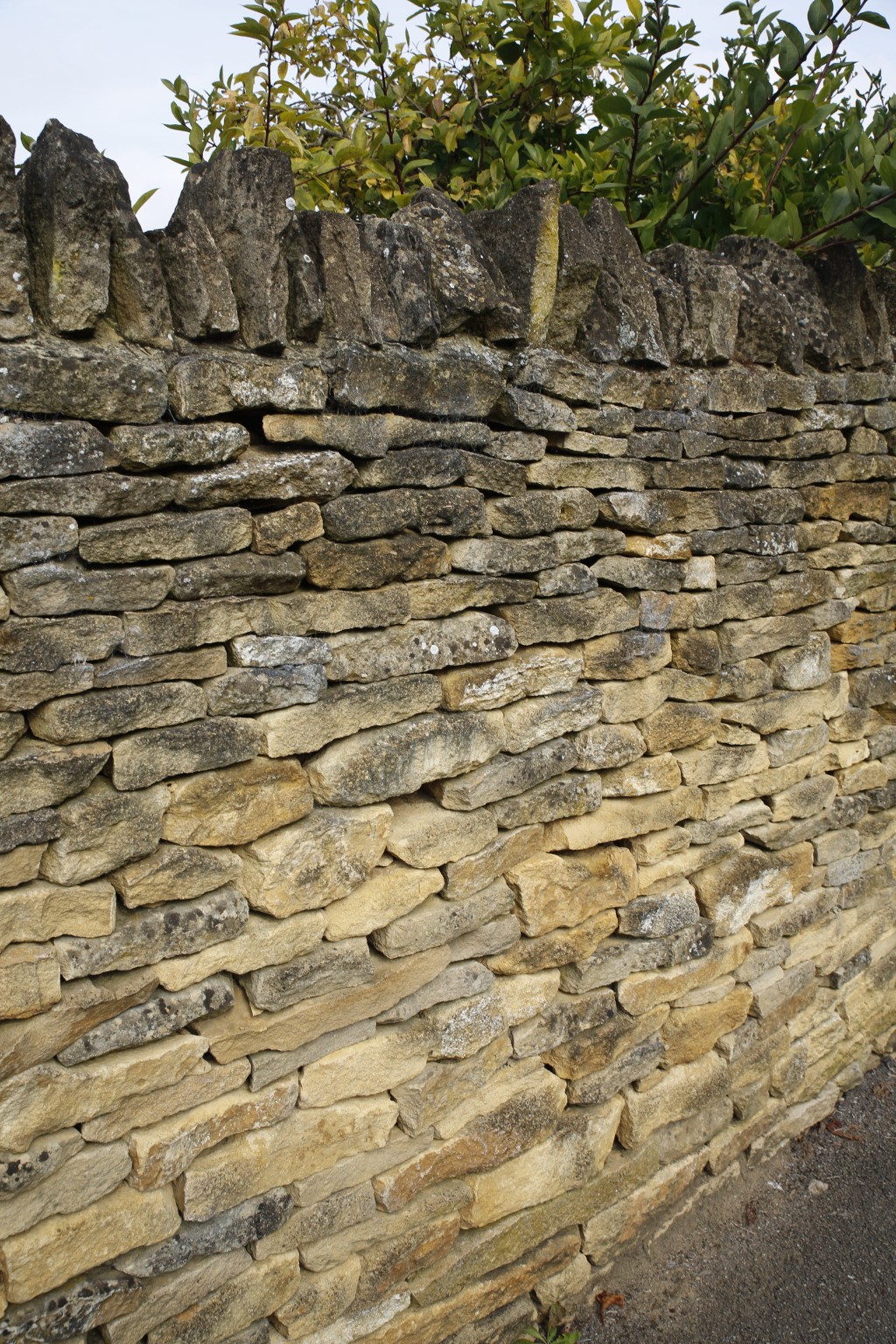
Typical stone wall
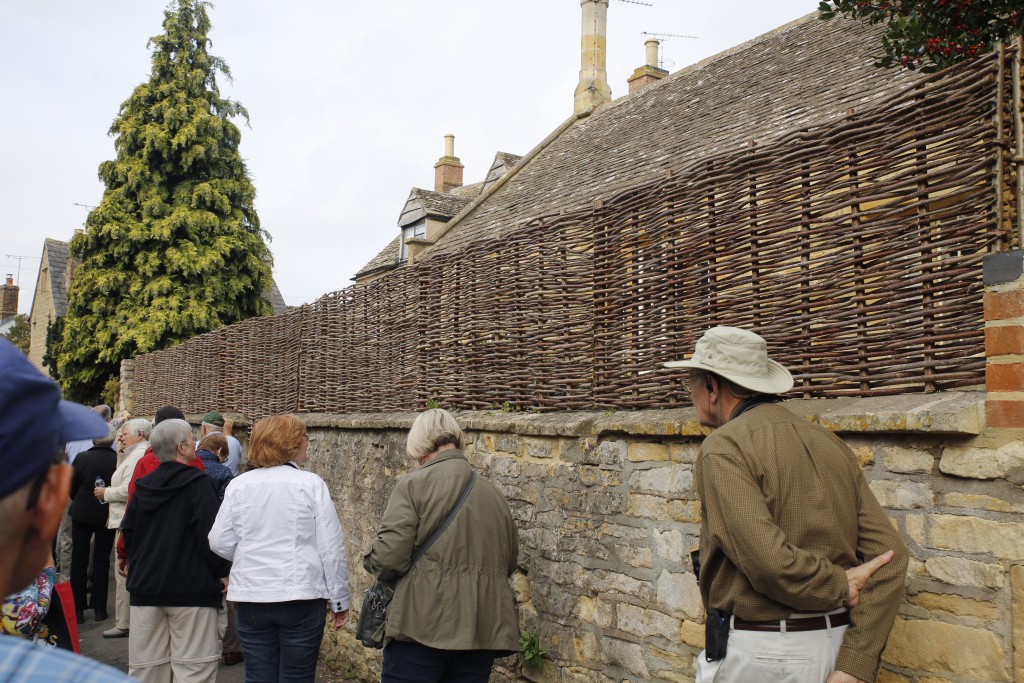
Wattle fence — as in wattle and daub walls
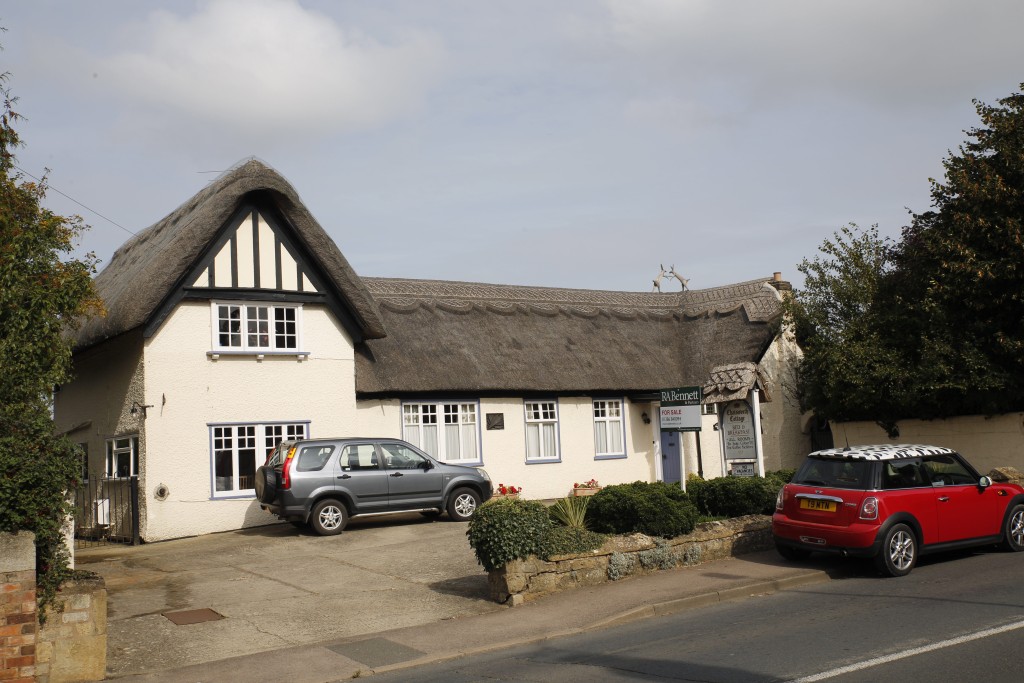
Very pretty thatched roof
We then boarded the bus and visited several near-by English villages here in the Cotswolds. The villages included Broadway, Stow on the Wold, and Chipping Campden. This was a much easier day, which we ended with another really good meal at our hotel. I believe that everyone has been surprised and pleasantly pleased with the fine food which we have been served at every location so far.
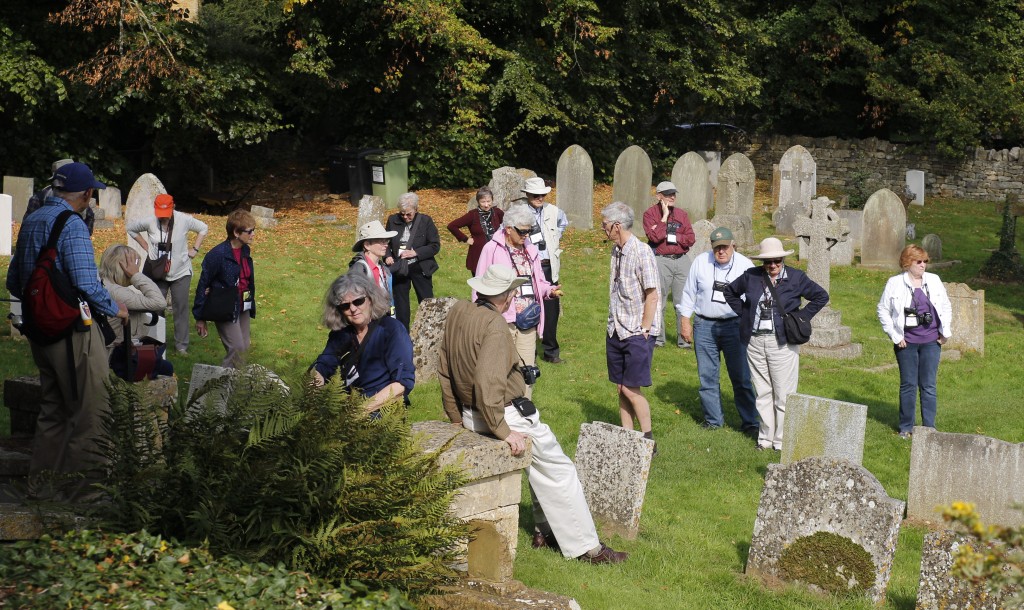
Group at Stow on the Wold cemetary
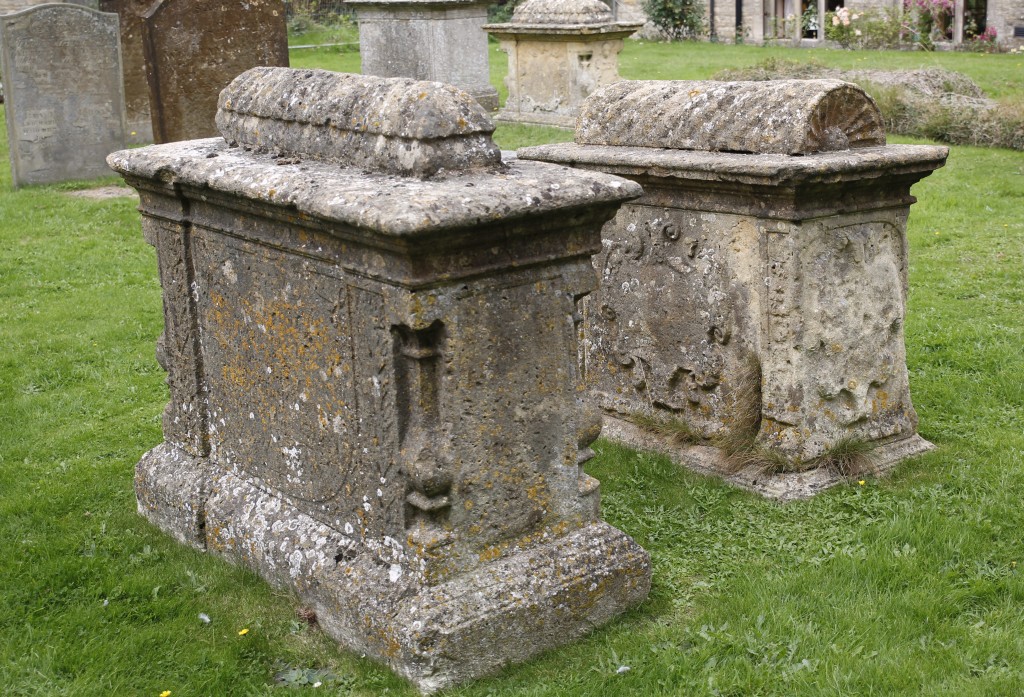
Bale tombs
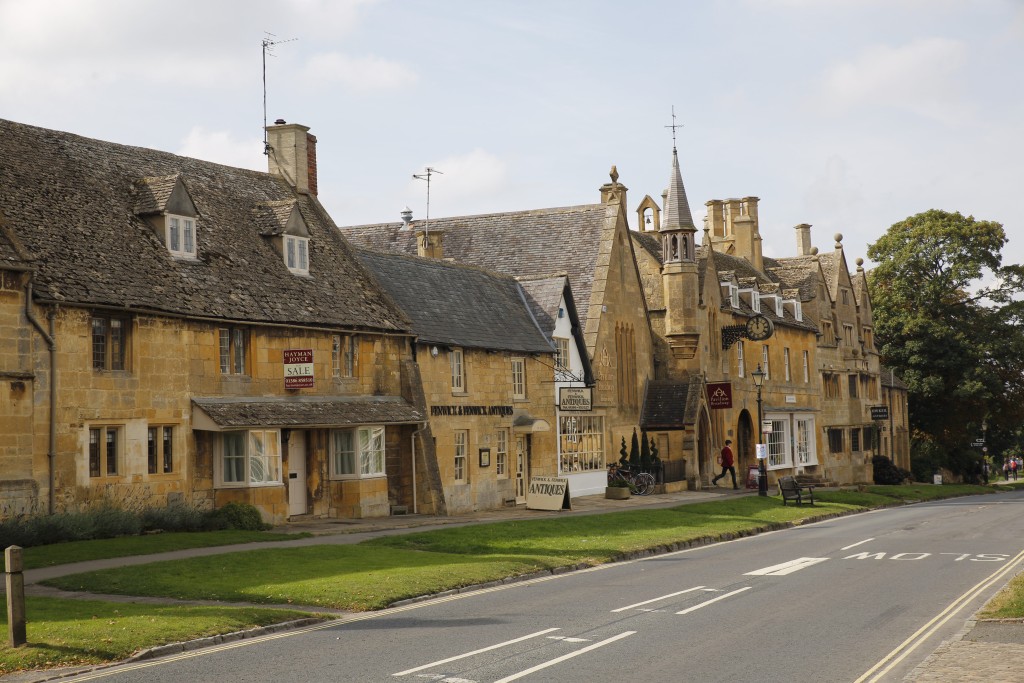
Buildings in Broadway
Day 8: Sep 15 – Mickelton
This morning we made the short ride up to Stratford-upon-Avon, one of the places that Linda and I were most anxious to see. Naturally, for the first time on our trip, the weather was murky. We learned several other terms for this type of weather: the English often call it manky and the gaelic term is dreicky. In any case, it was dizzling rain.
Stratford is now a town of about 25,000, and in Shakespeare’s time it had around 1,500 inhabitants. Peter guided us about the center of town and explained some of the history from Shakespeare’s day.
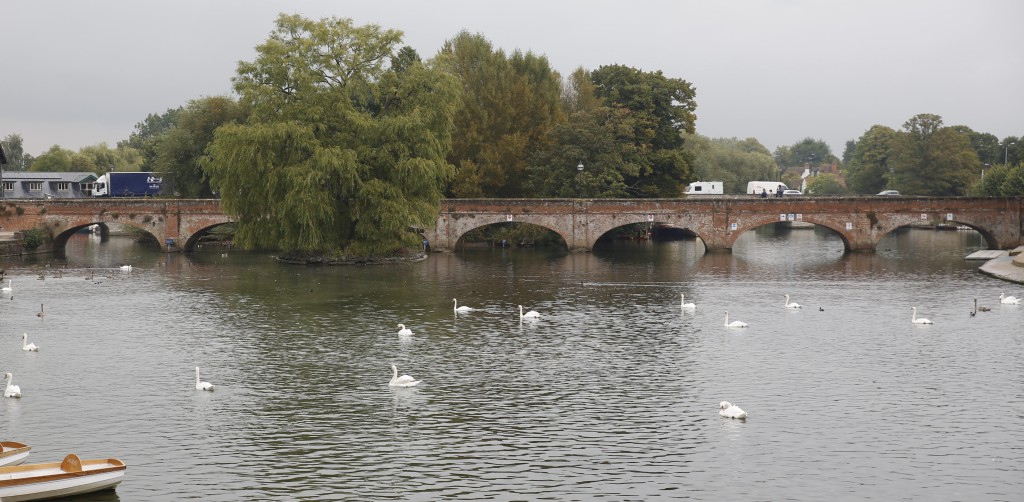
Swans on Avon
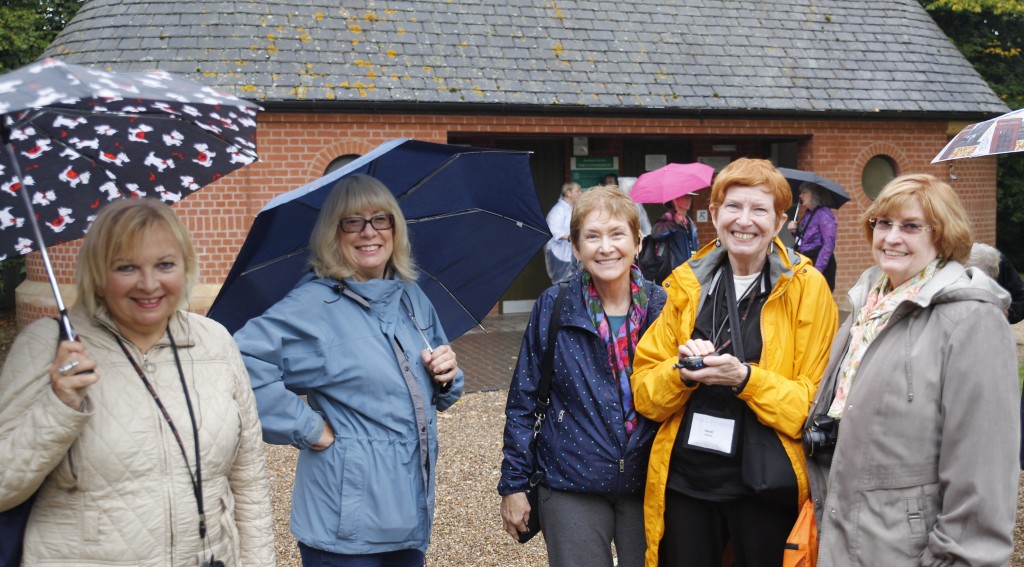
Lovely ladies
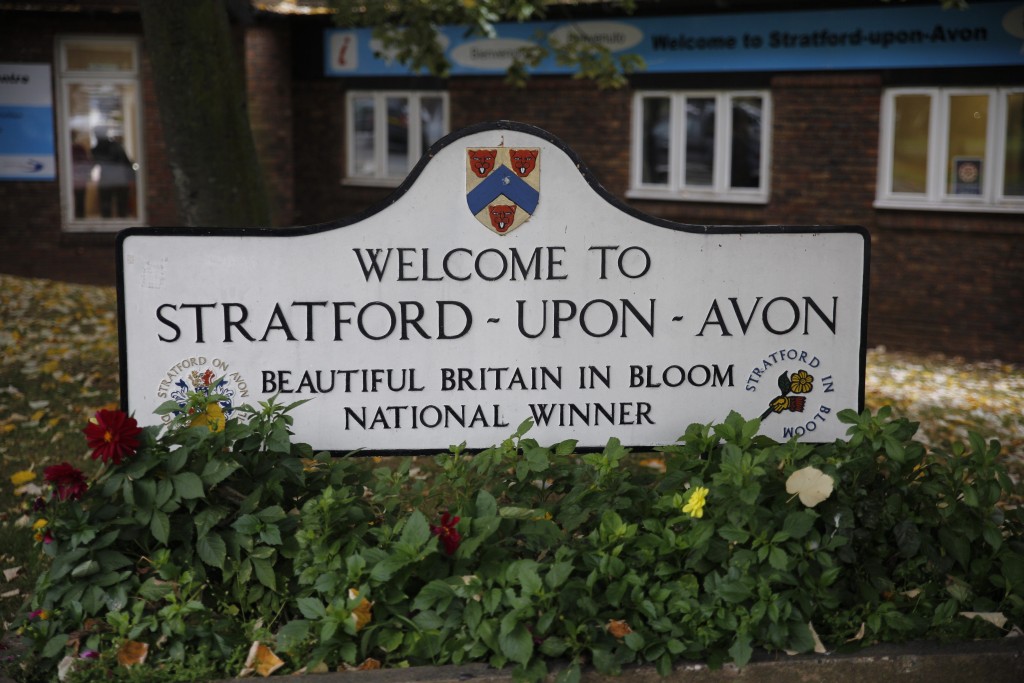
City entrance
Since he has done some serious acting himself, Peter was especially keen on describing the history and operation of the Royal Shakespeare Center. In one of the exhibits at the RSC, Linda and I was startled to learn that Tchaikovsky’s skull was actually used in one of the performances of Hamlet. (Months later we learned that this was actually the skull of Polish composer/pianist Andre Tchaikowsky, not Pyotr Ilyich Tchaikovsky.)
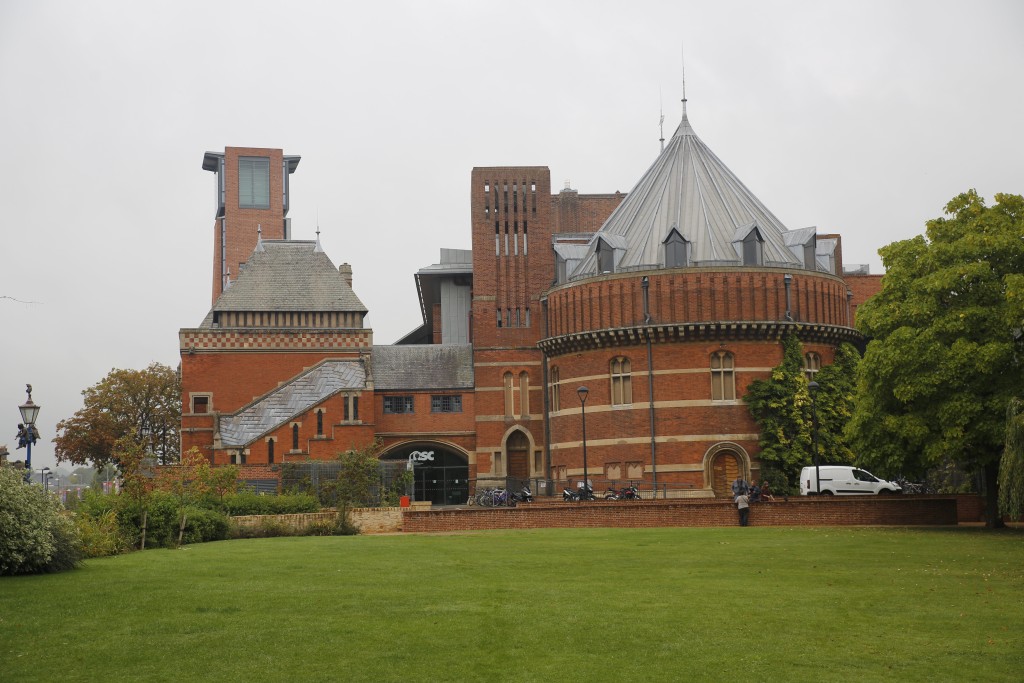
Rear of the RSC
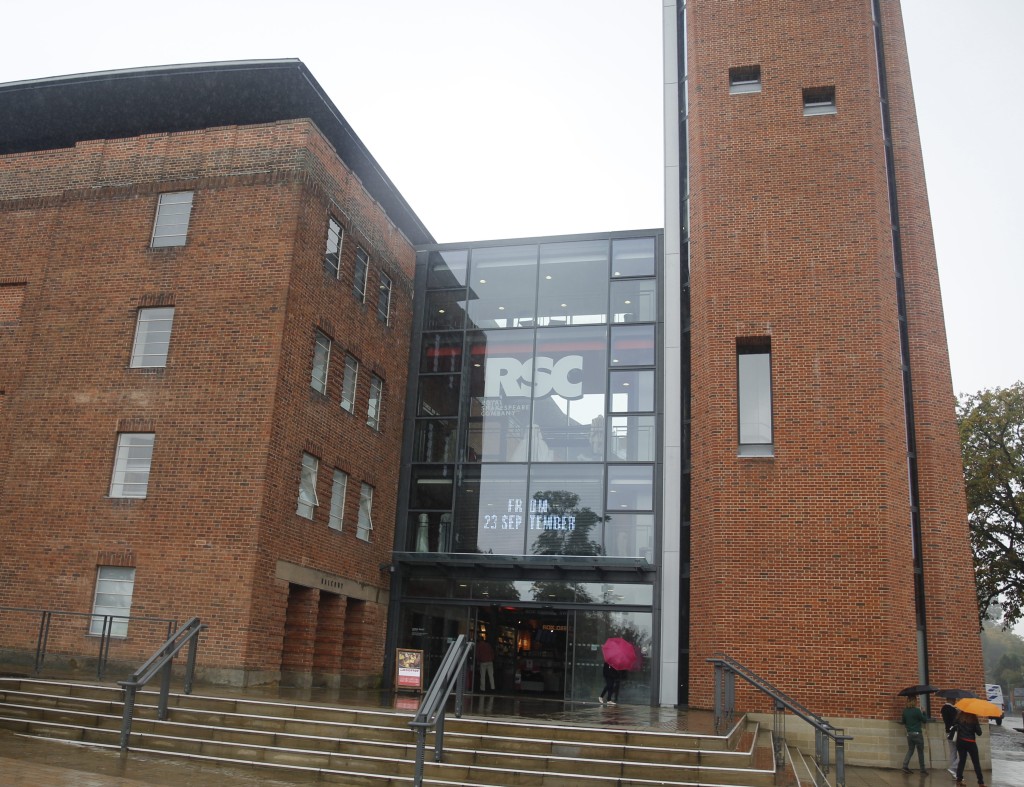
Front entrance to the Royal Shakespeare Center
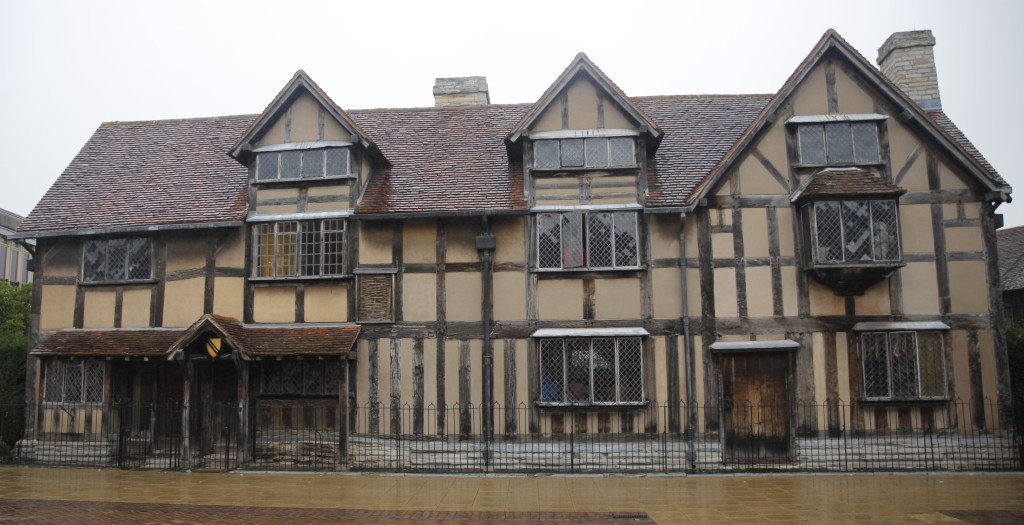
Shakespeare’s birthplace
After a light lunch Linda and I returned to the Holy Trinity Church, where Shakespeare is buried. His grave is behind a low railing at one end of the church, with his wife Anne on one side and his two daughters and a son-in-law (I think) on the other. On the church wall near his grave is a monument dedicated to him. Apparently, this was commissioned during his daughter’s lifetime and is thought to be good resemblance of The Bard.
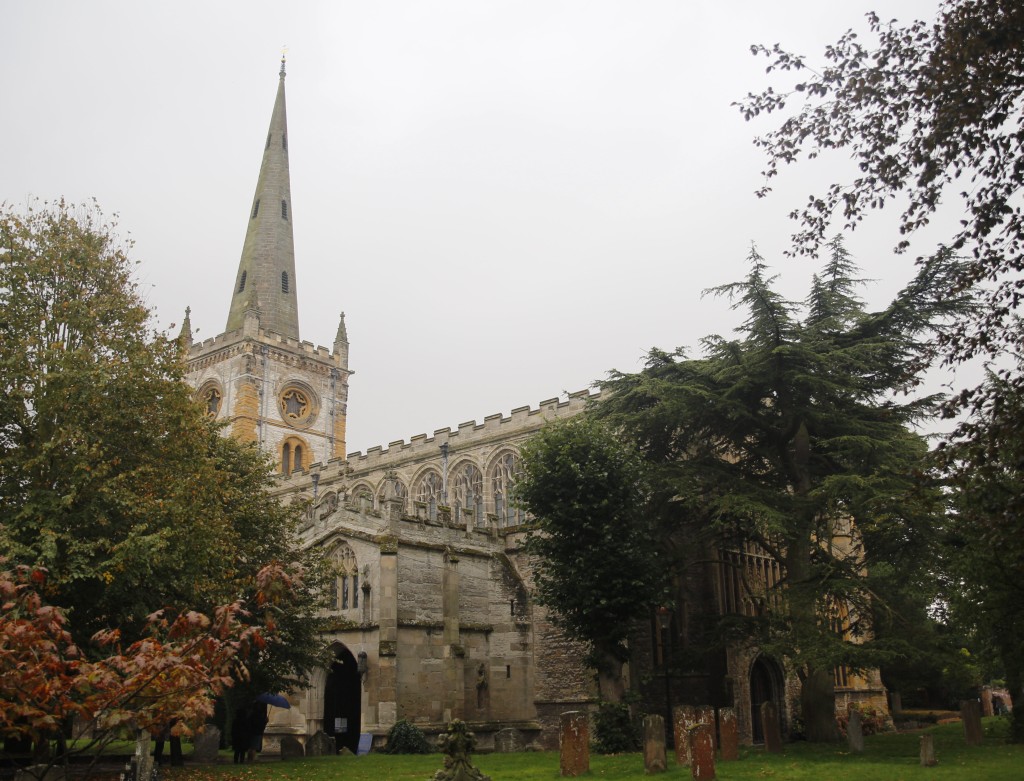
Holy Trinity Church
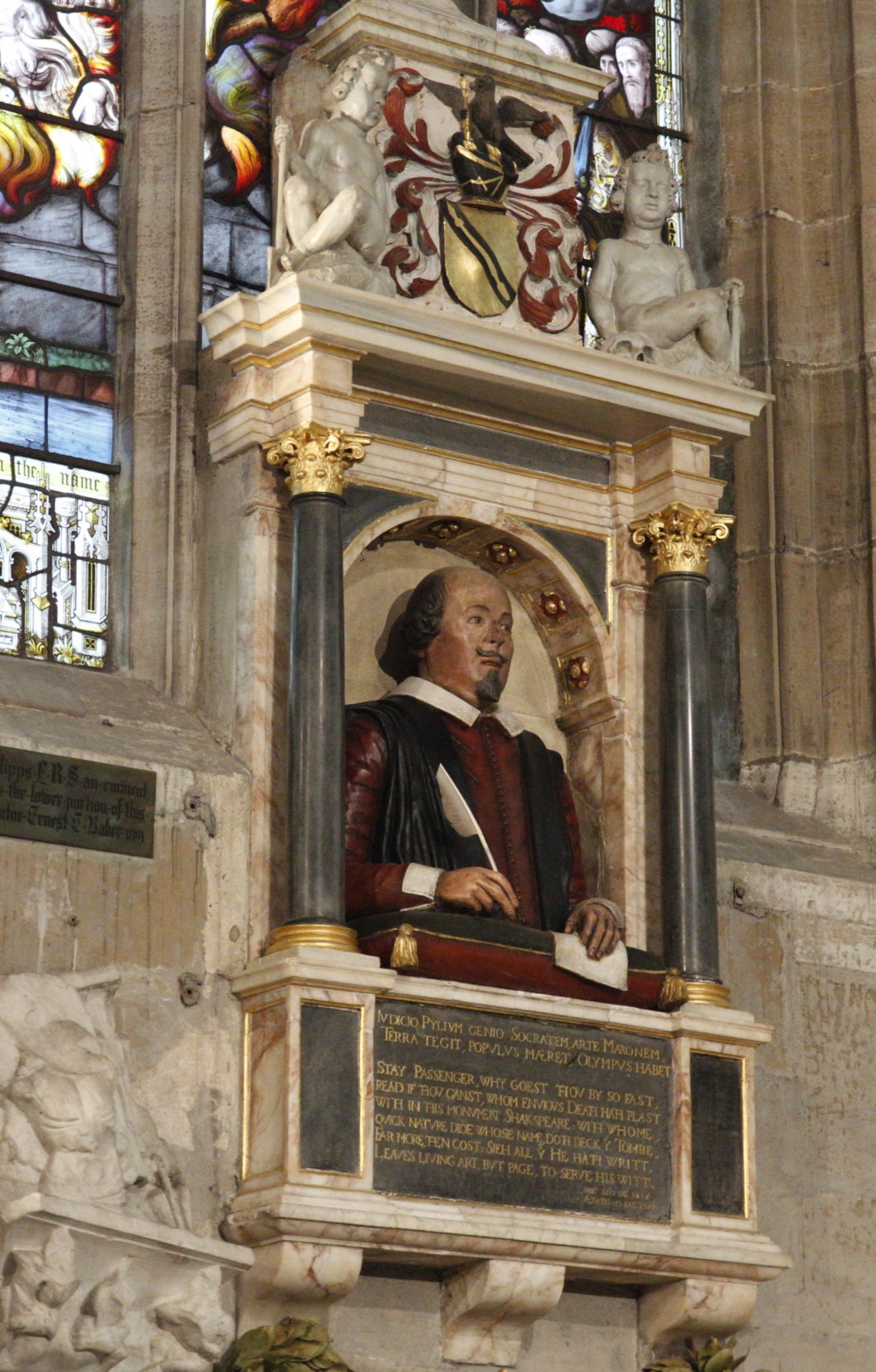
Shakespeare’s monument
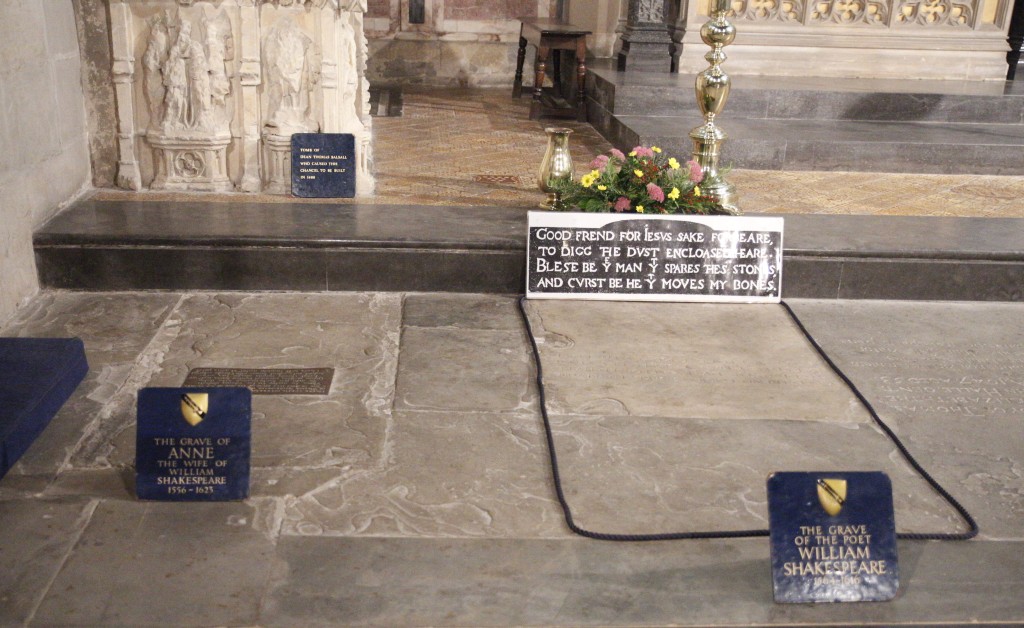
Graves of Shakespeare and wife Anne
Most of the group went on the the Hidcote Gardens just a short way from the hotel. Because of the dreicky weather (and to enable me to catch up on this darned blog), Linda and I decided to skip the gardens. Obviously, we will now hear how lovely they were.
After still another very good meal at the hotel, we headed back to our rooms to pack up and prepare for our move in the morning–luggage is to be outside the room at 7:00am.
Day 9: Sep 16 – Travel Mickelton to Chester
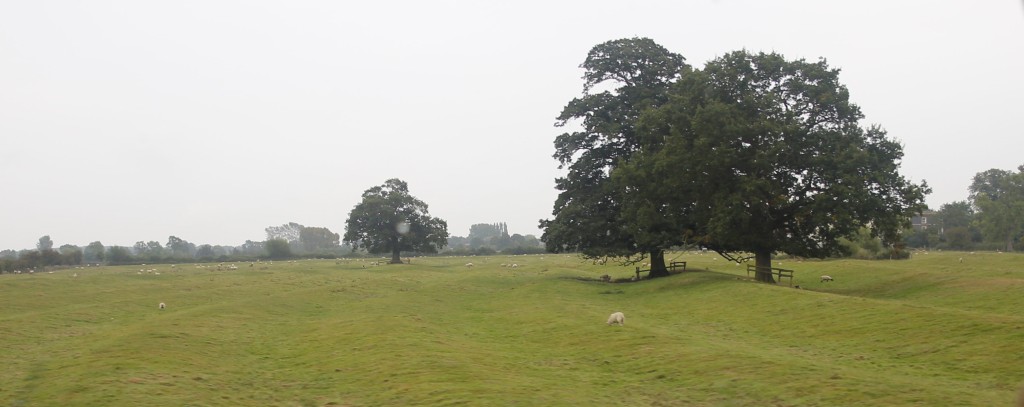
Ridges and furrows
We put our luggage out at 7:00 am and ate our last (big) breakfast at Mickelton. We then boarded the coach at 8:30 and headed north, leaving the Cotswold Hills and heading toward Chester, which will be our base for the next three days. On the way we again passed through Stratford-upon-Avon and said our final farewell to William Shakespeare. As we continue on, it appears that we have now left the region of ‘ridges and furrows’, remnants of the farming practices from the Anglo-Saxon days. Unfortunately, I was never able to get a decent picture of the still prominent and quintessentially English features.
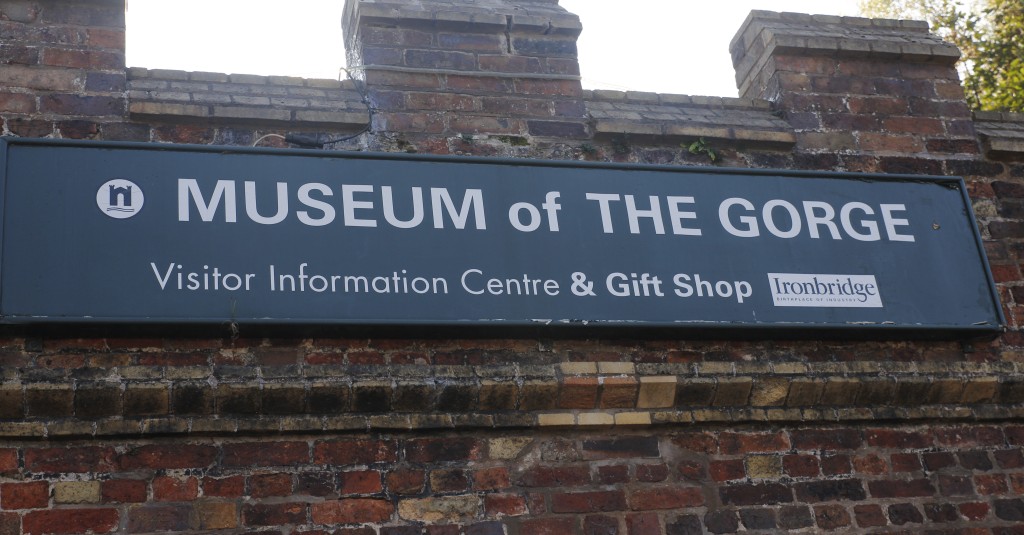
Museum of the Gorge
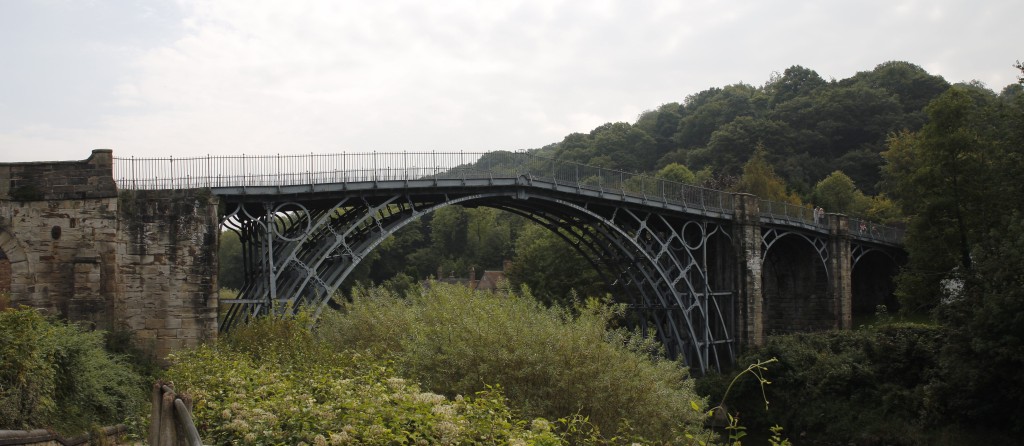
Ironbridge
Our first stop of the day was at Coalbrookdale in the Ironbridge Gorge. The river Severn now flows through the gorge which was created by glacial flows at the end of the ice age. With its timber and its exposed coal, limestone and iron ore deposits, the gorge was really the center of the British Industrial (R)Evolution. In fact, it had been an industrial area since the Monastic times of the 15th century. We visited the small Museum of the Gorge and then took a short walk down river to Ironbridge, the site of the world’s first iron bridge, which opened in 1791. The bridge iron beams were all cast in the gorge itself.
Next we took a short ride to Blists Hill, a Victorian Town where we saw more blast furnaces, steam engine replicas and other depictions of the region during Victorian times.
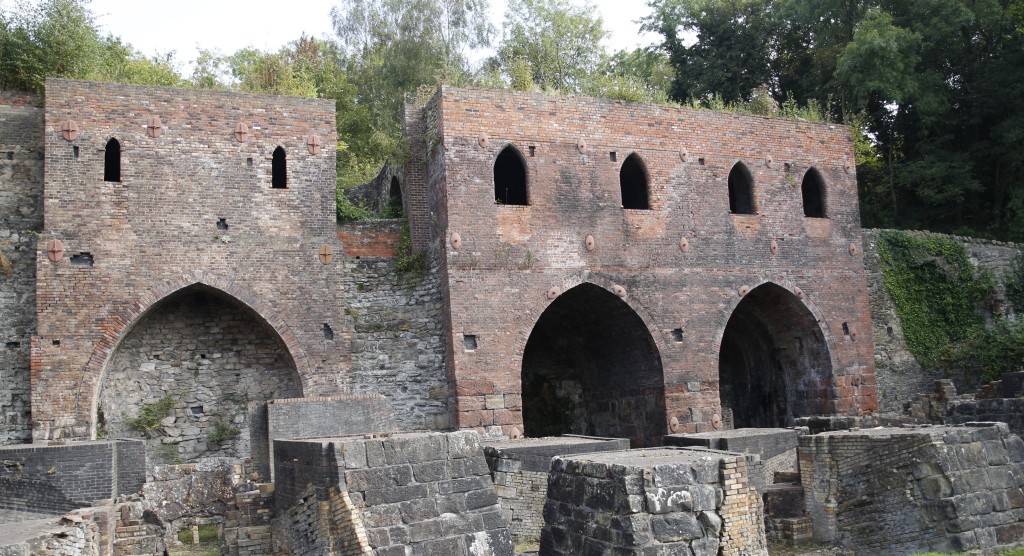
Blast furnaces
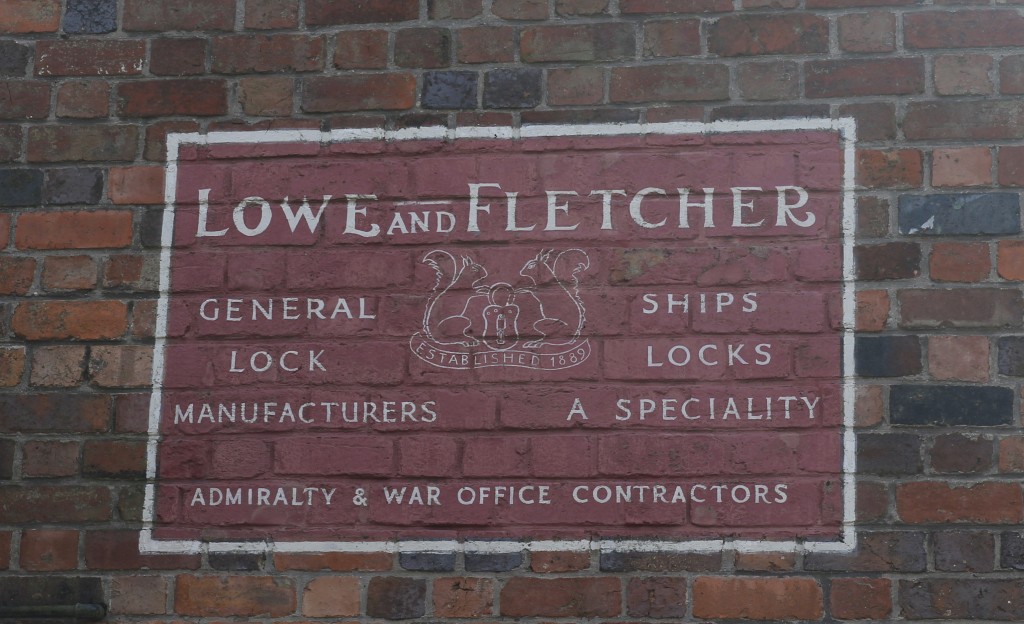
Good locks made here
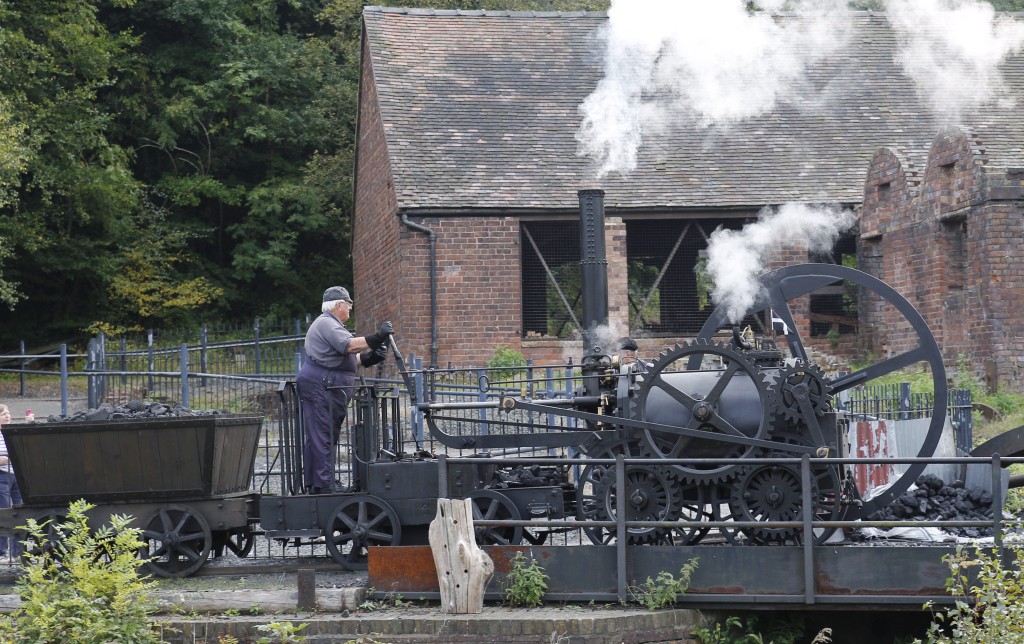
Replica of early steam locomotive
After lunch we traveled on for a little over an hour to the Farndon Parish church. This was a delightful small church in a very old town. The church was destroyed in the religious wars in 1643 where it was used for billets by the Parliamentarians. The tower dates from this early period; however, the top of the church tower was later ‘vandalized’ by the Victorians with the addition of the cresselations.
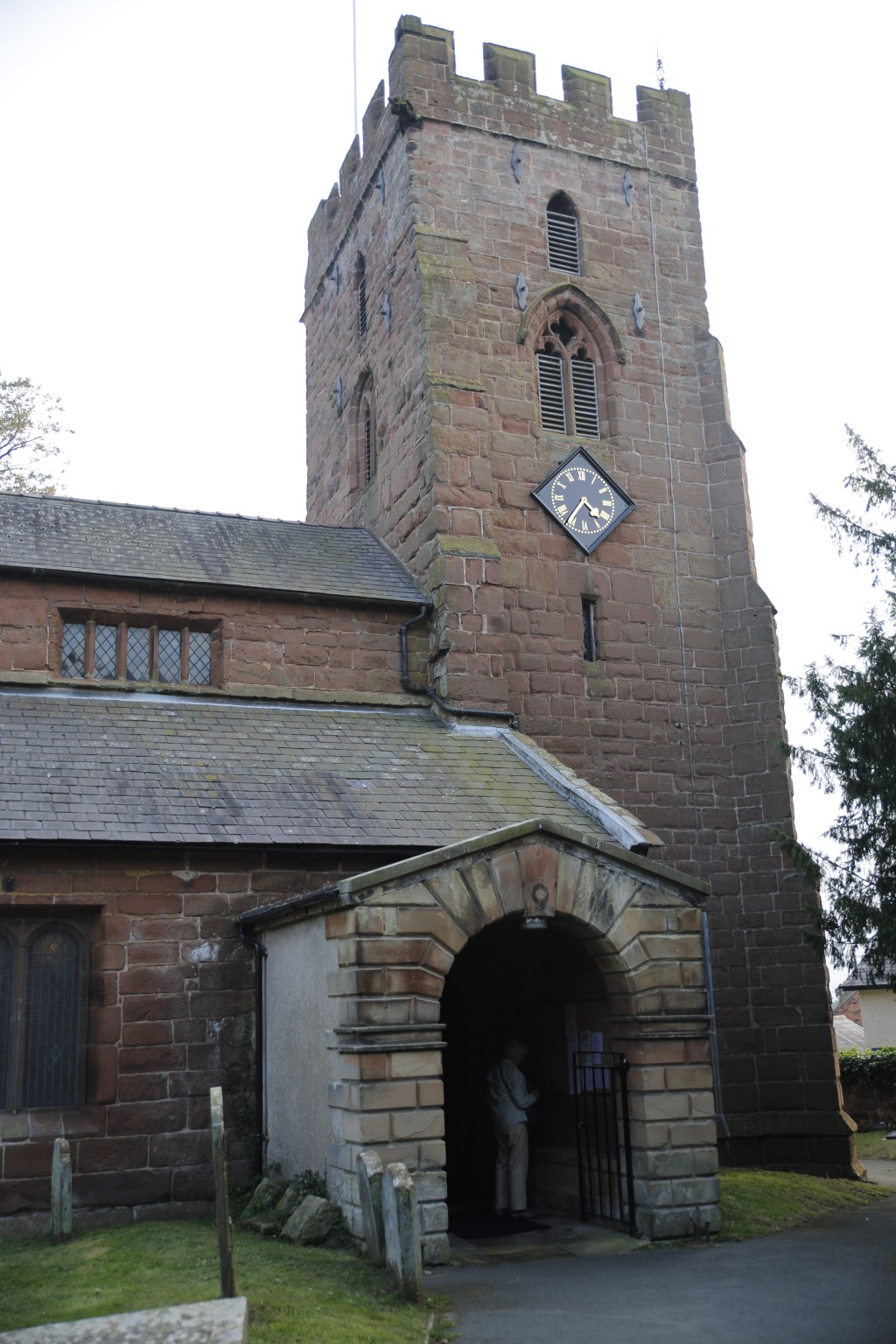
Very old church tower
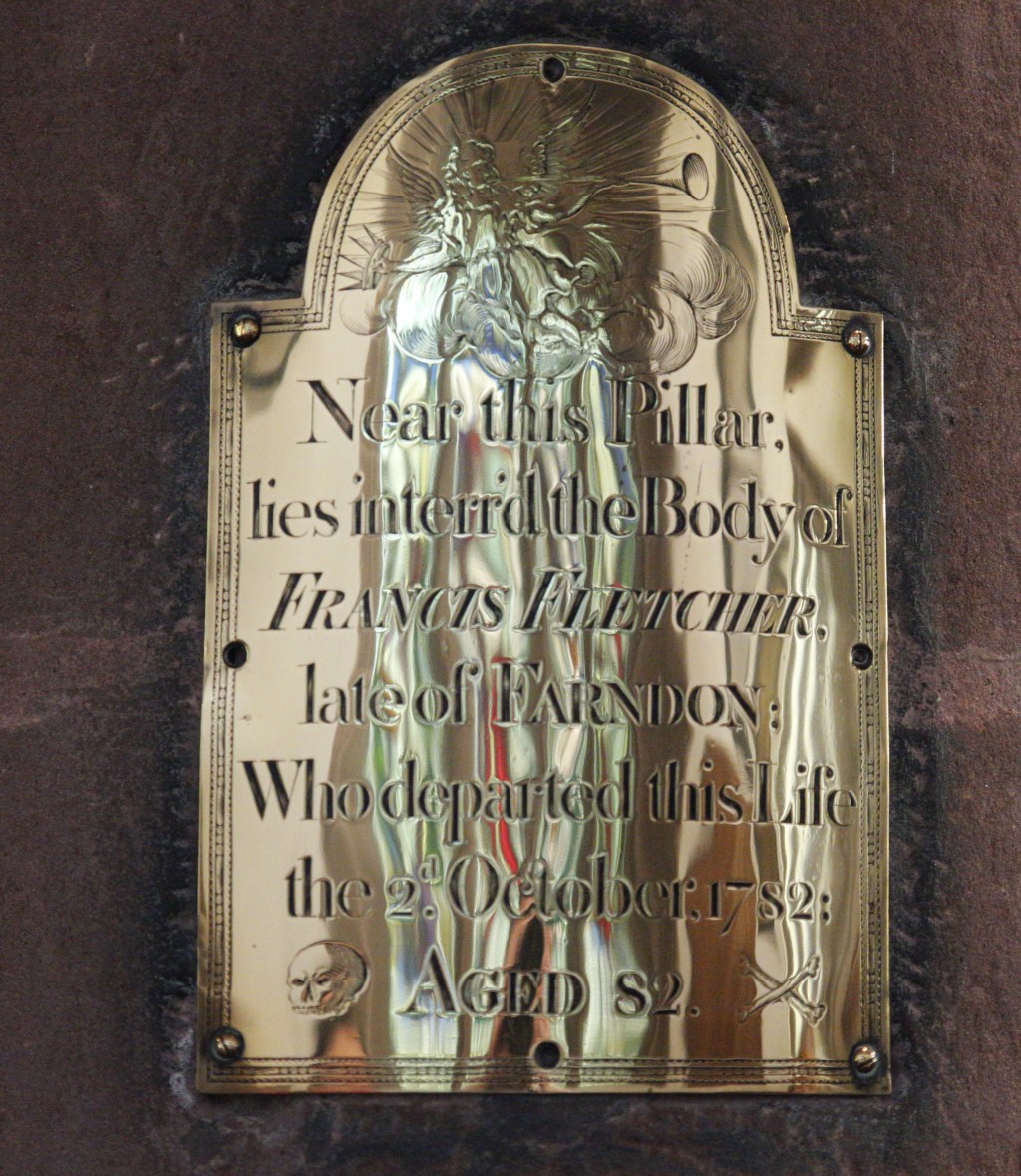
Plaque to ancester?
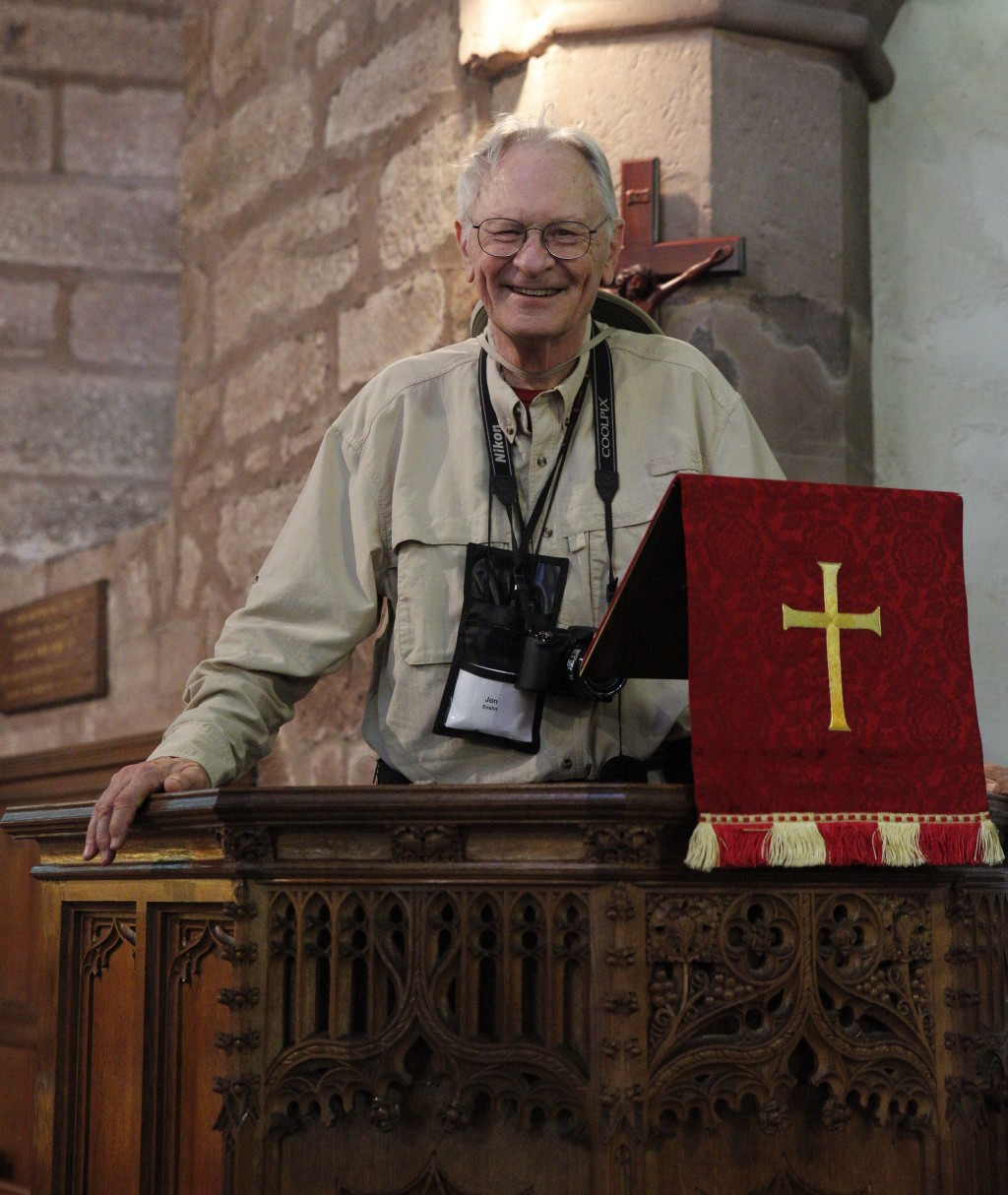
Bishop Jon in the pulpit
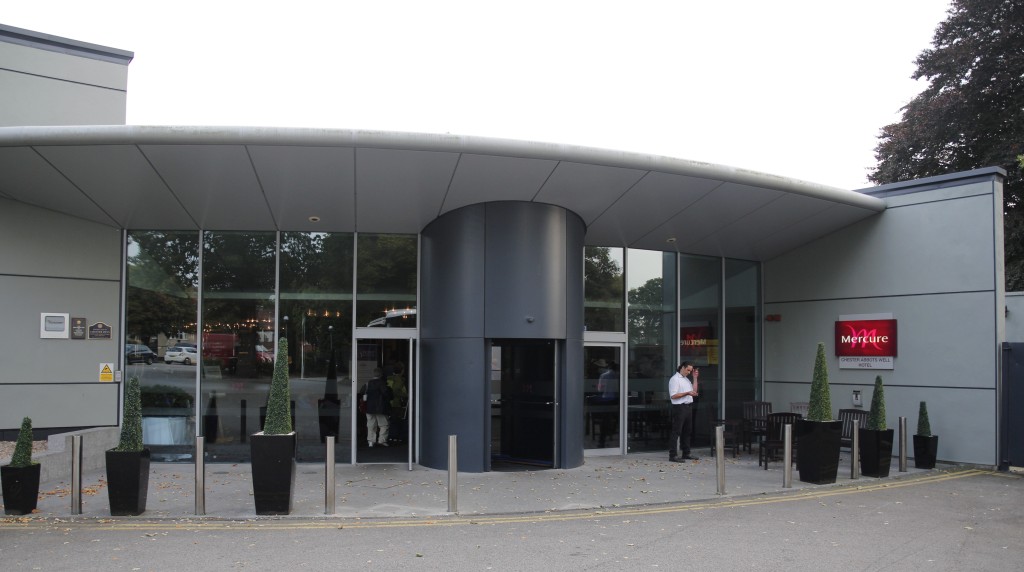
New hotel
We then drove the remaining short distance to our hotel–called the Mercure Chester Abbots Well Hotel, no less. This hotel is located on the outskirts of Chester, very near the Wales border and is very different from the one we left in the morning. Peter gave us a lecture with slides on “Snowdonia”, after which we had another fine dinner and then called it a day.
Day 10: Sep 17 – Wales
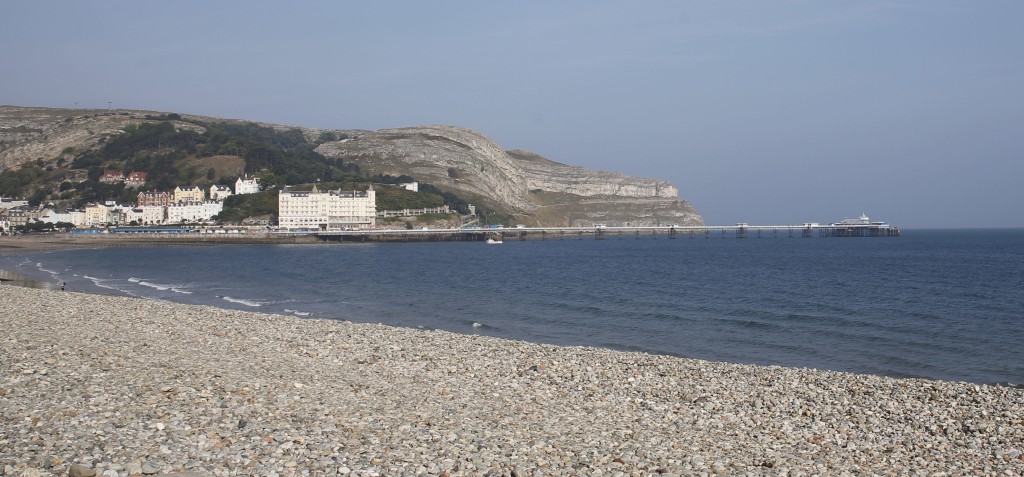
Seaside at Llandudno
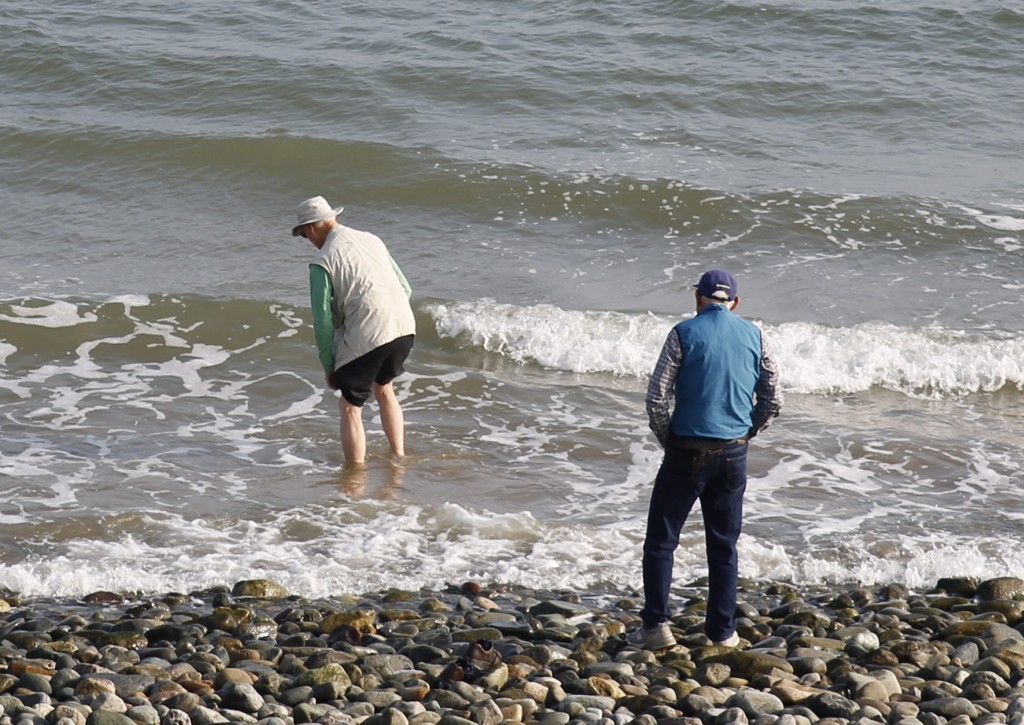
Fred wadding in Irish Sea egged on by Ed
After breakfast in our new hotel, we headed into Wales and made a quick stop at the beach at Llandudno on the Irish Sea, where Fred did a little wading. As we entered the town we were given the words to a popular British ditty, which we were all supposed to sing. We tried but the singing was pretty pitiful.
Dean Liddell of Oxford college, with his daughter Alice, had a home here and throughout the town there are several statues representing characters from Alice in Wonderland.
Next we moved on to Conwy Castle, completed by Edward I in 1288. This is a really nice and very old castle, and it gives you a better appreciation of the difficulty of trying to storm such a place. Much of the original city wall also still remains–a remarkable place
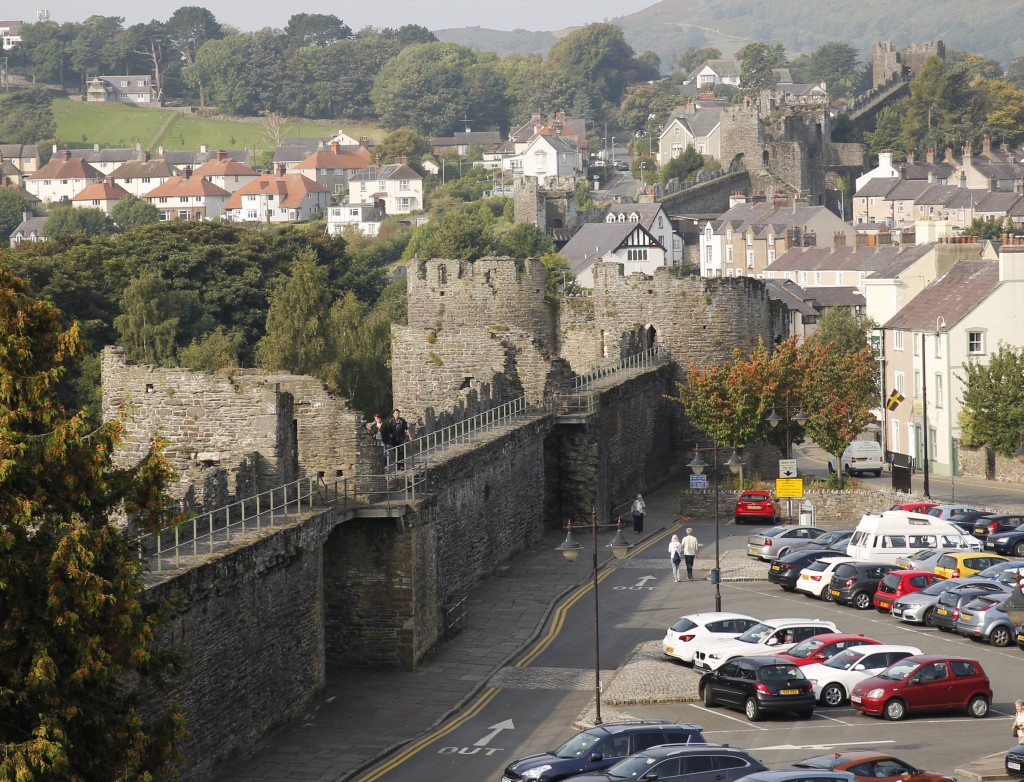
Conwy town wall
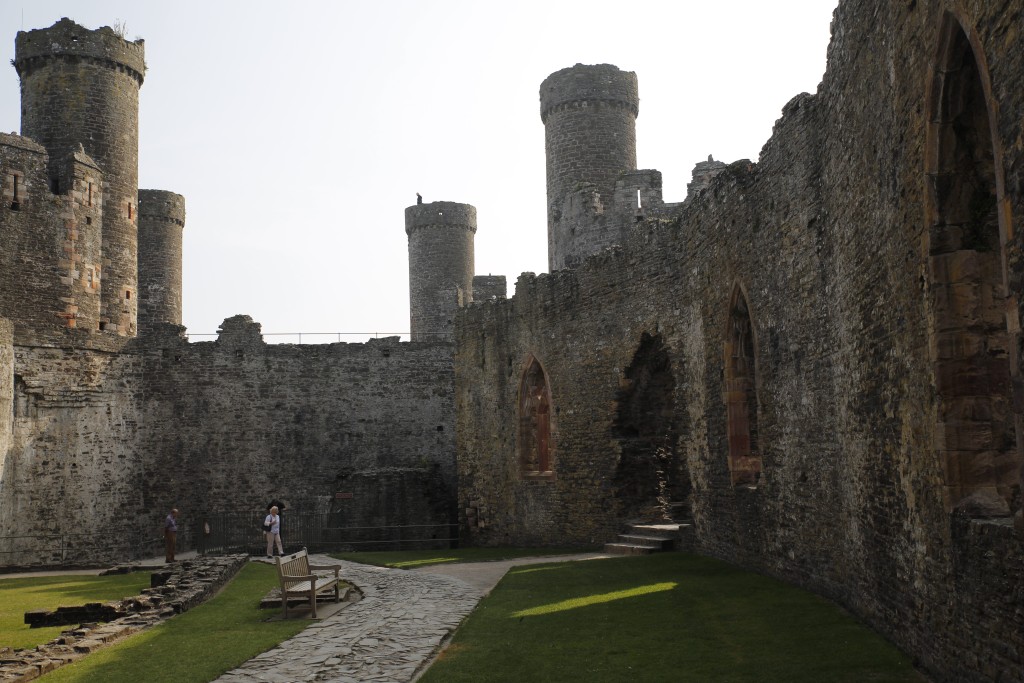
Inside the castle
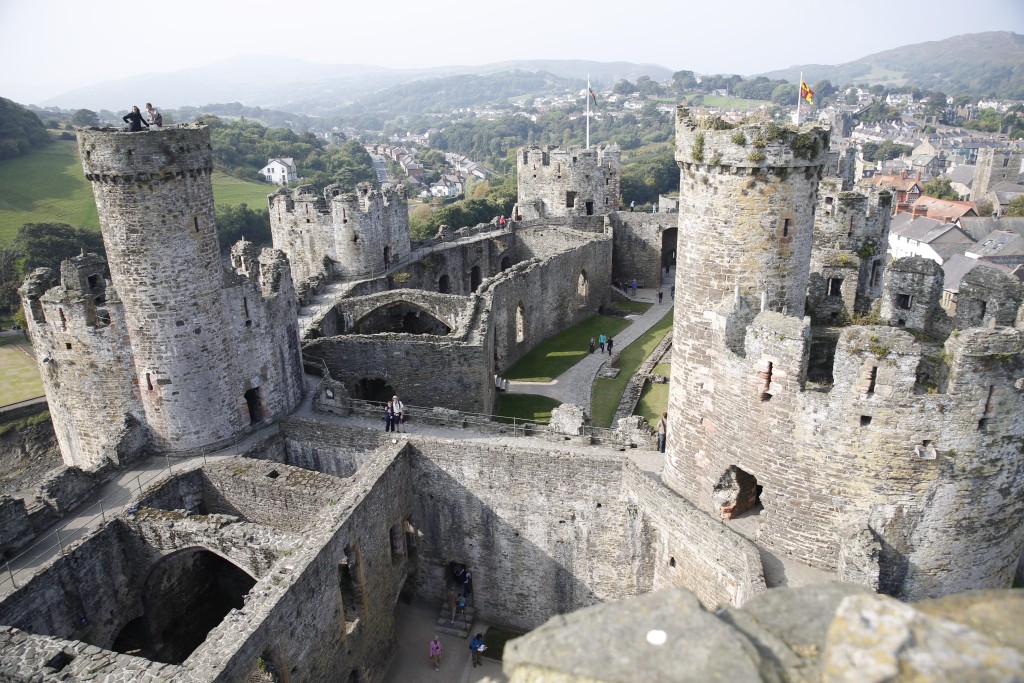
View from the tower
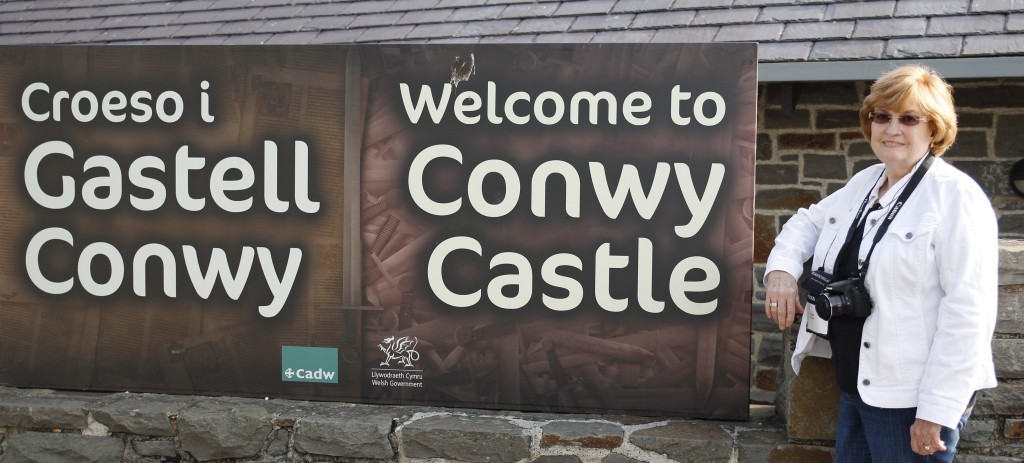
Linda at Conwy Castle
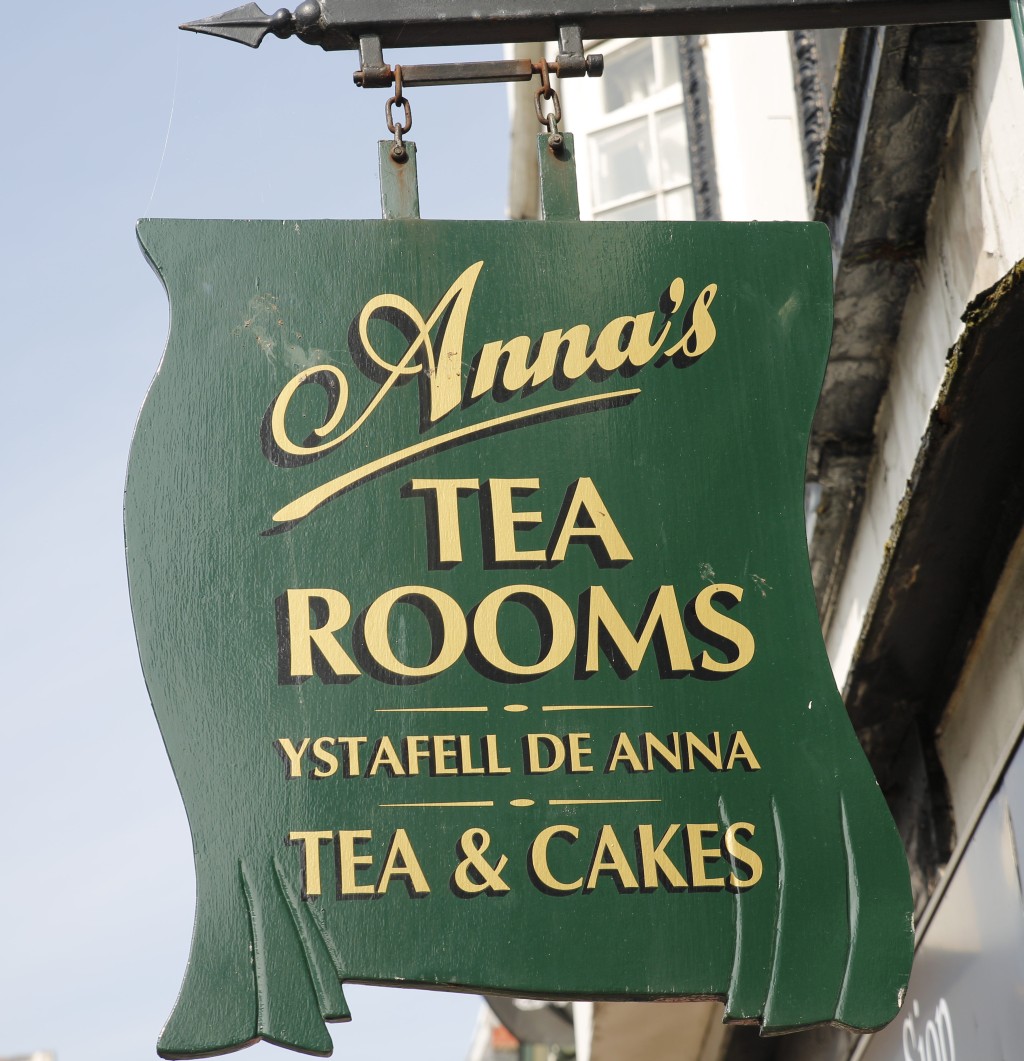
Anna’s for refined eating
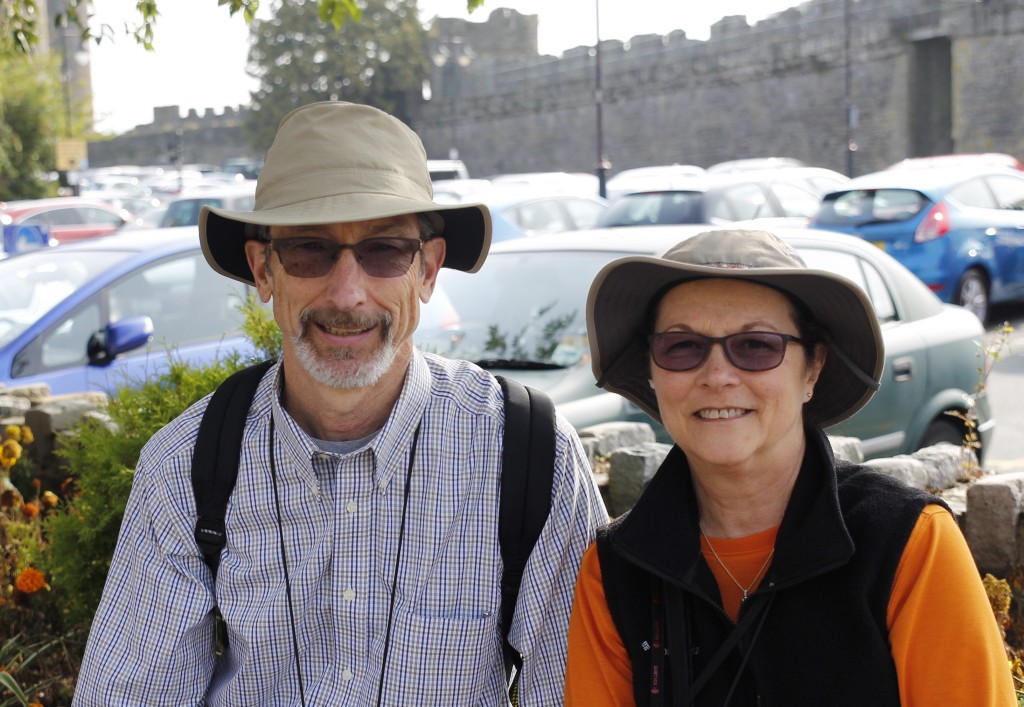
Mark and Eileen
After scrambling up and down the castle towers, we were all ready for a lunch break, which we took at Anna’s, a very refined tearoom where we had soup, sandwiches and a small cake.
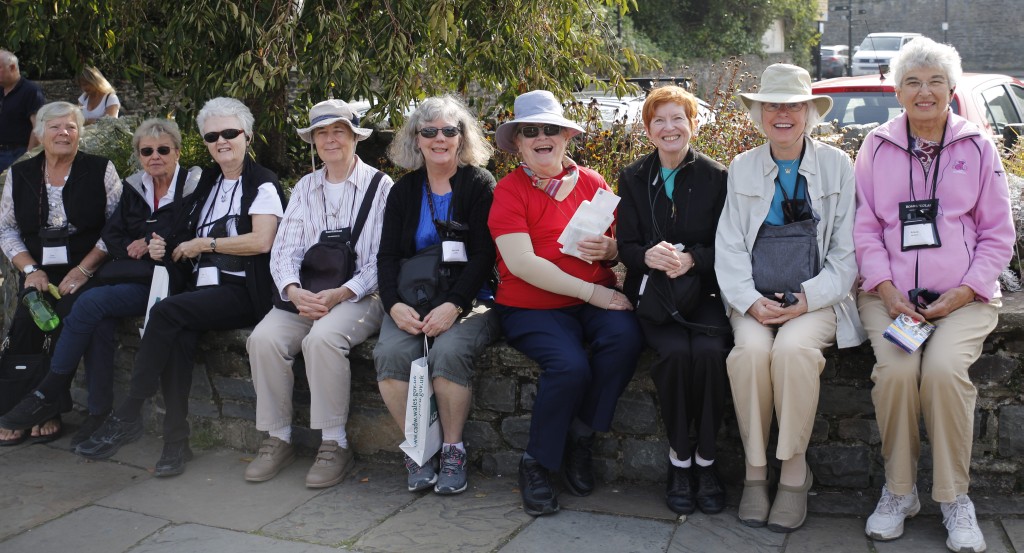
Happy ladies ready for lunch
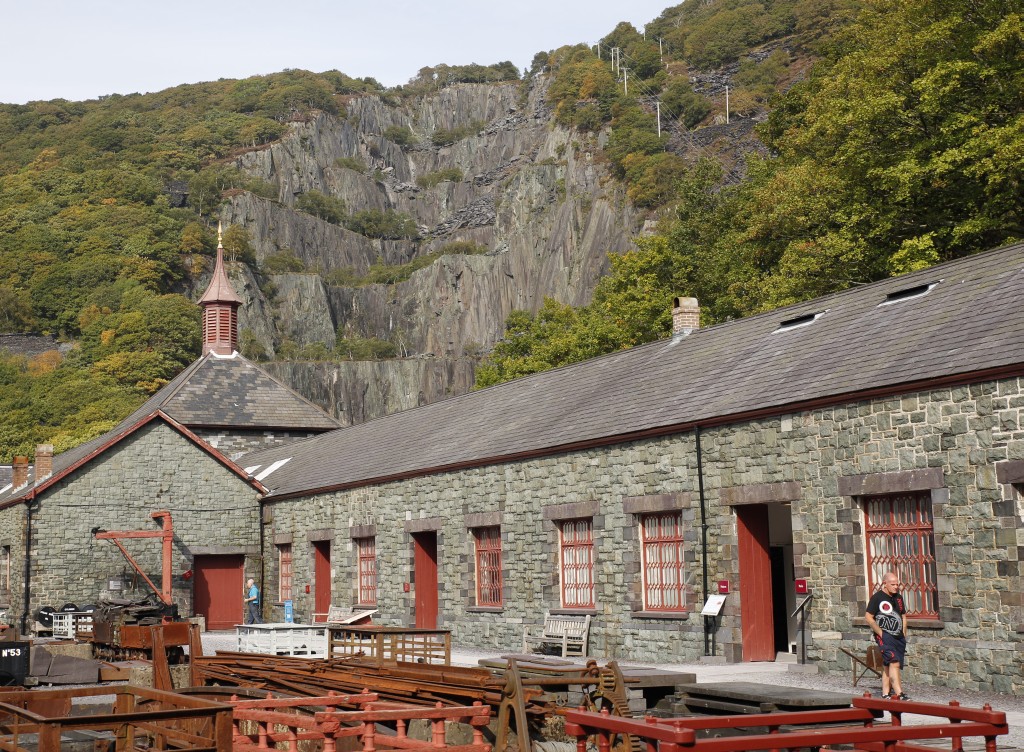
Slate Museum and quarry
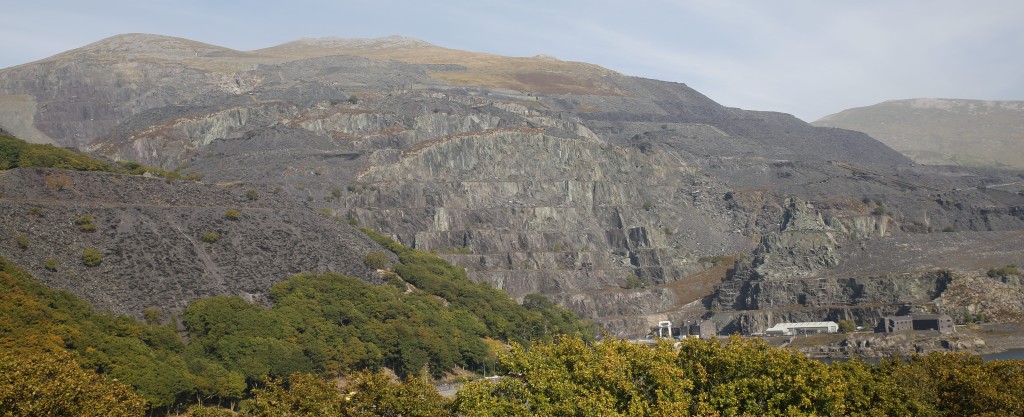
Huge slate quarry
Next we visited the Welsh Slate Museum at Llanberis, the site of huge slate quarries and now a prime attraction for rock climbers.
Some of us then took the short hike up to the remains of Dolbadarn Castle. This was a Welsh stronghold of Llywelyn the Great defeated by Edward I. We then drove back home passing through Snowdonia Park, where we were able to get a photo of our Road Scholar leaders at a beautiful lake.
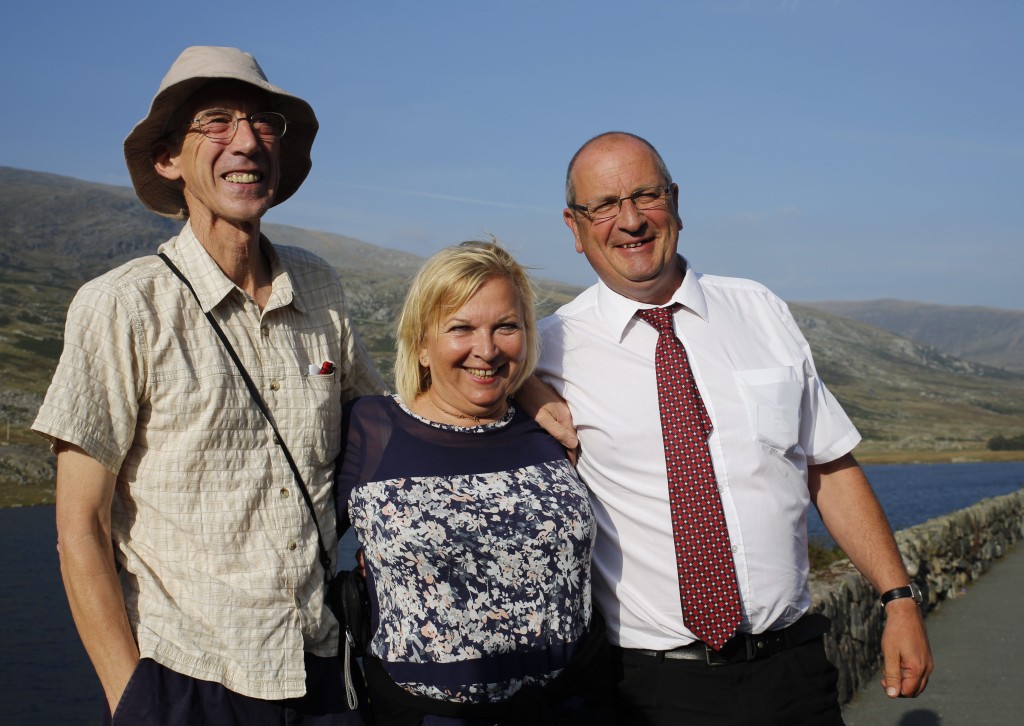
Peter, Ros and Stuart — our leaders
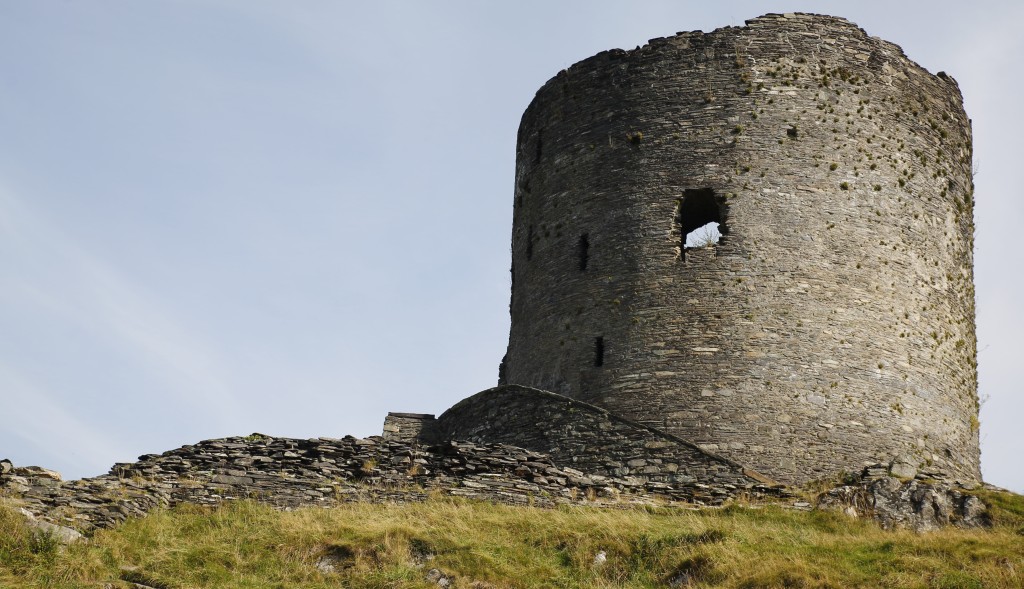
Tower of Dolbadarn Castle
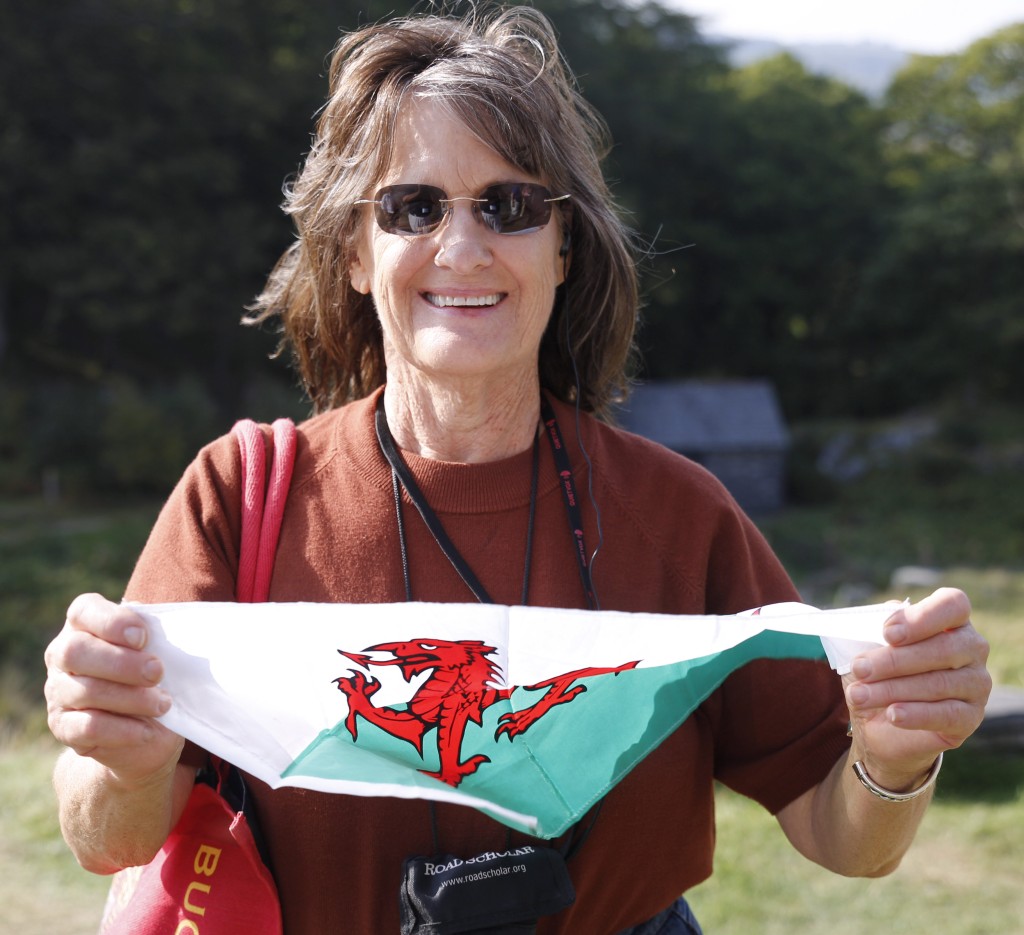
Sharon with Welsh Red Dragon flag
Day 11: Sep 18 – Chester
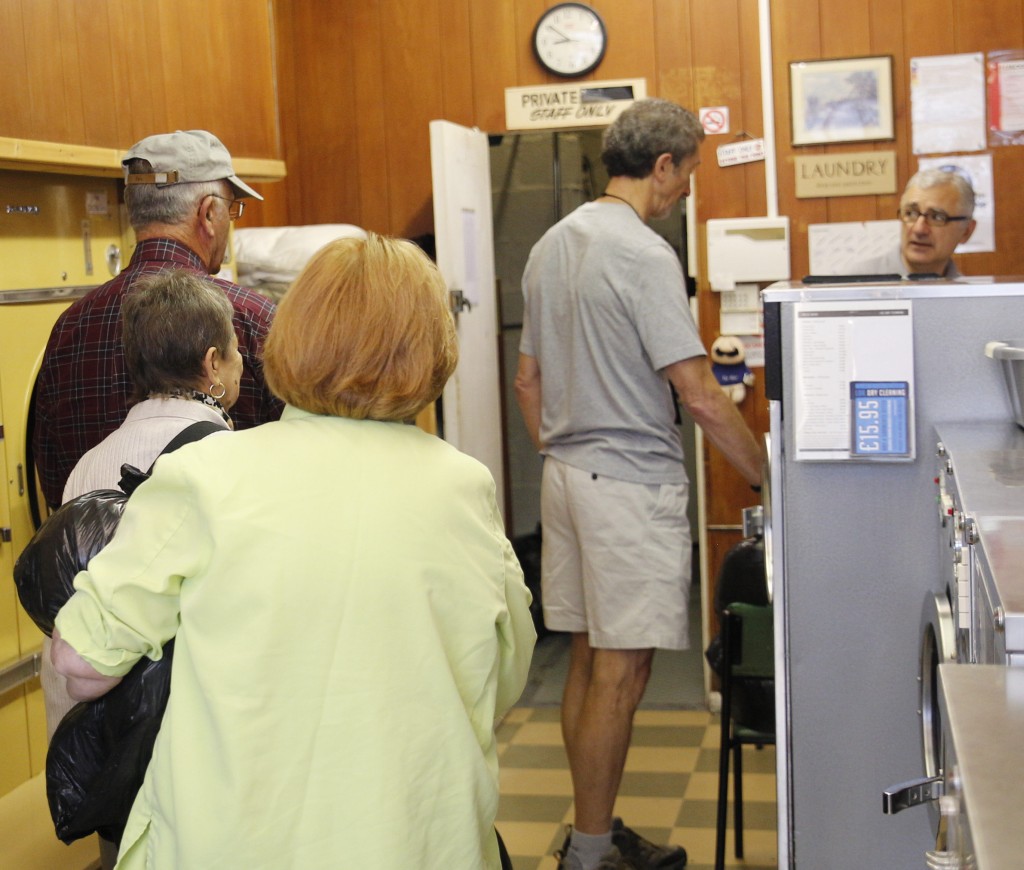
Queue for much-needed laundry
Today is a big day in Britain–the Scottish people vote on their independence referendum. This of course has been the major subject of discussion and television news since we arrived in England. We keep asking if we will even be allowed to enter Scotland next week, but no one expects any changes in the near future regardless of the election outcome.
It is also a big day for us Road Scholars: it is our laundry day, and Peter has arranged for a local laundromat to handle this for us. For this we are very grateful.
This is a fairly easy day for most of us. We had a short bus ride into the old town of Chester and spent the day touring its sites.
We began our exploration of down-town Chester with a tour of the beautiful Chester Cathedral. This is one of England’s great cathedrals with some of its ancient walls and stones dating back to Norman times.
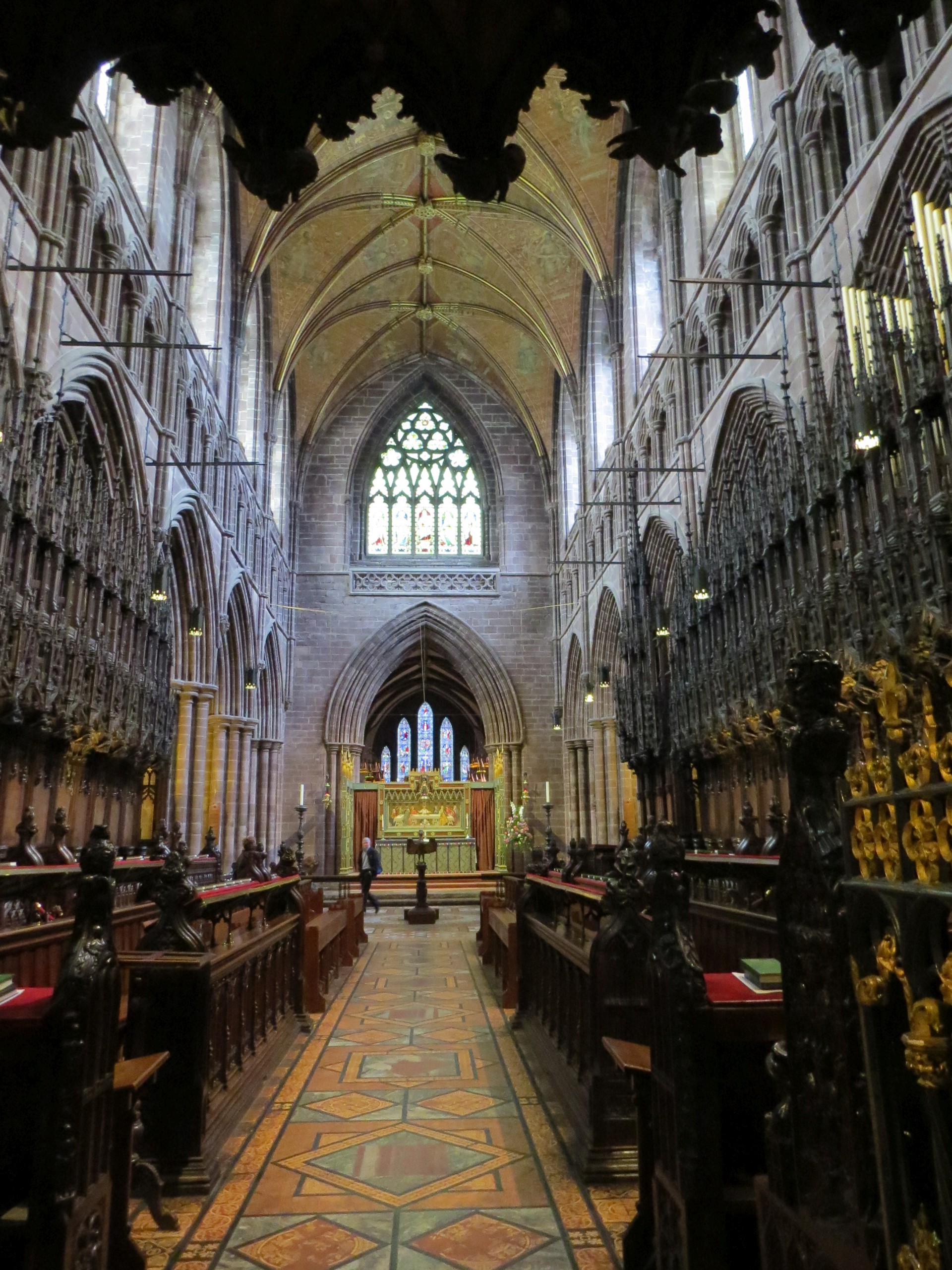
Quire and altar of cathedral
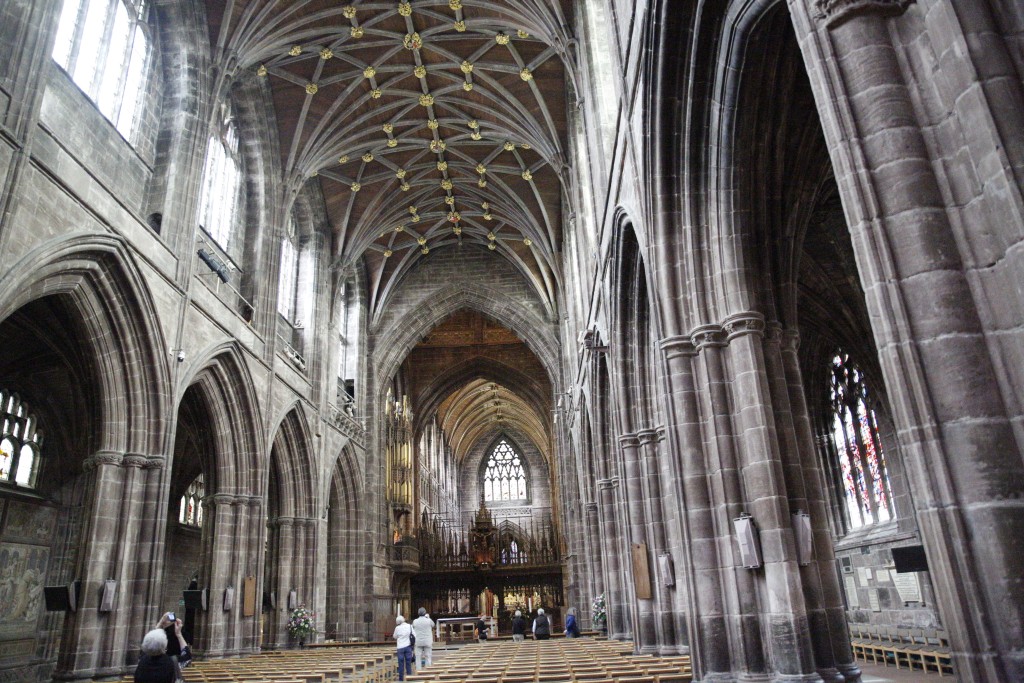
Cathedral nave
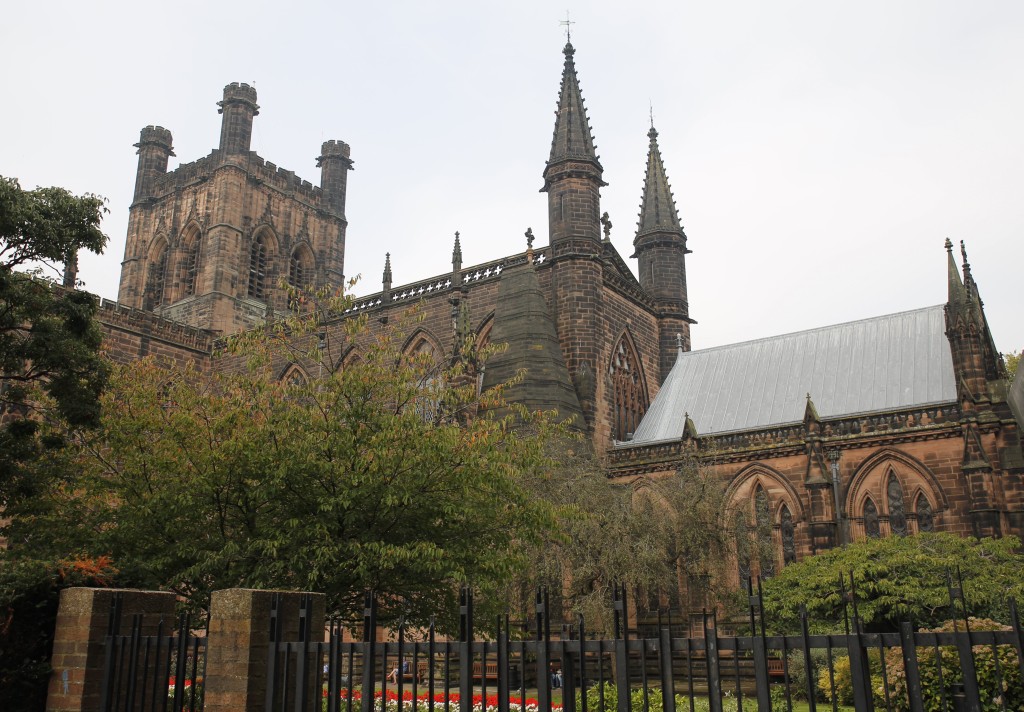
Chester cathedral
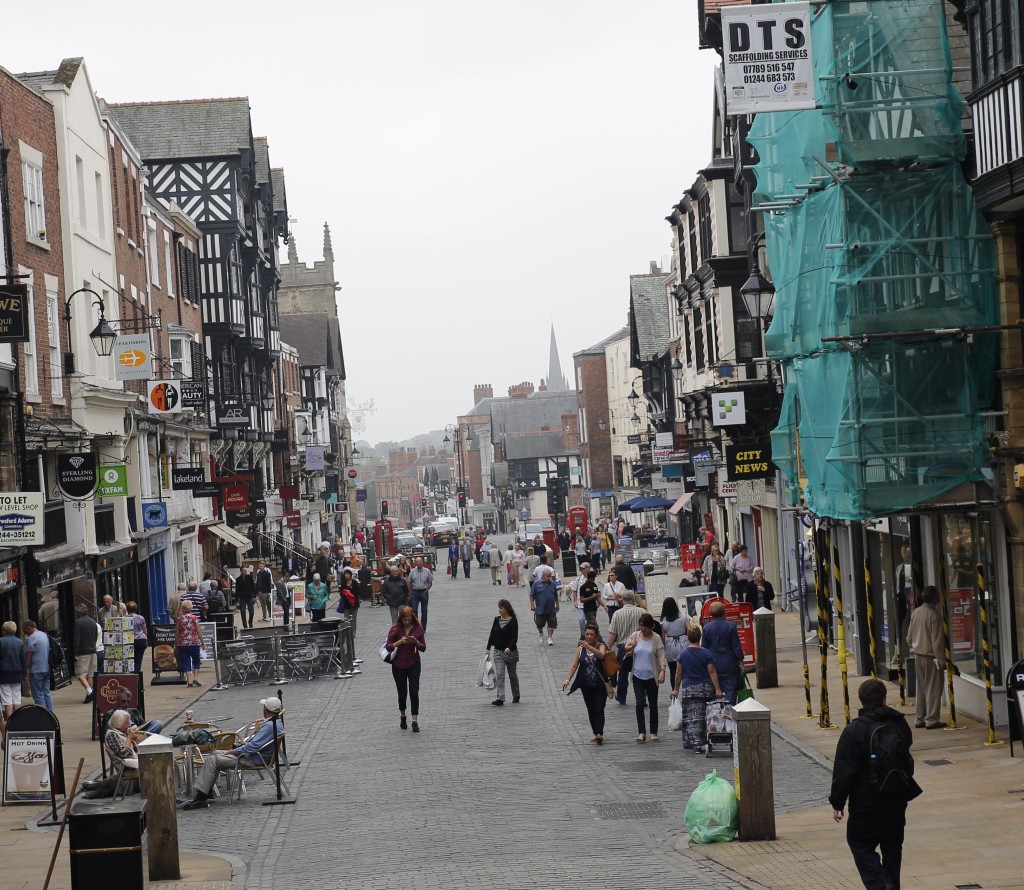
Roman Via Pretoria
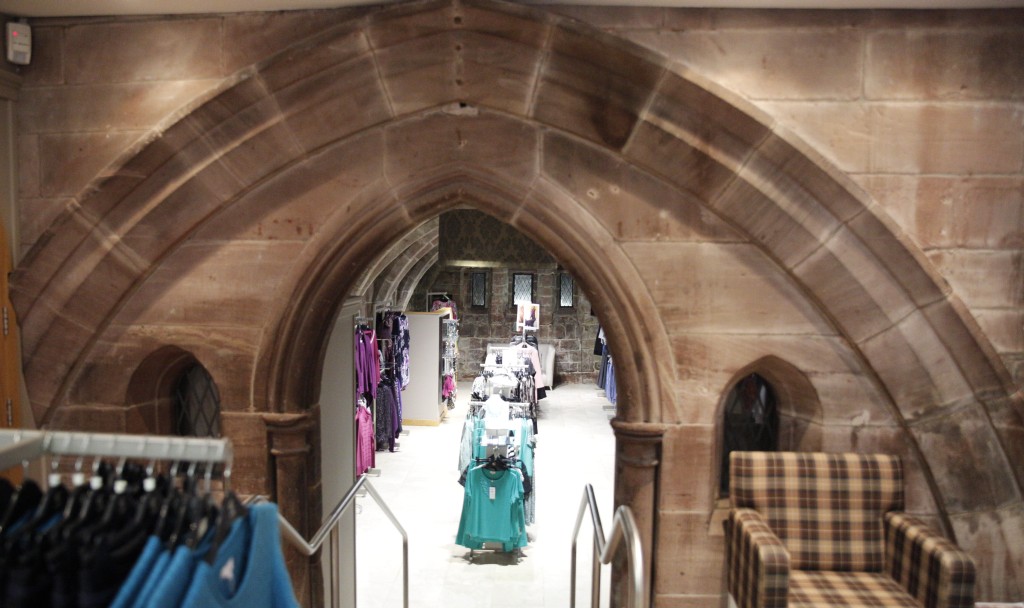
Original arches for 12 or 13th century shop
Peter then led us on a guided walk about the old city. Parts of the town date back to the days of the Romans, with the main streets laid out during Roman times. It was also a major commercial center with some structures remaining for shops from medieval times.
One of the major stops along the walking tour is the ruins of the Roman Amphitheater–which actually were discovered fairly recently by archaeologists. This is now one of the largest of the amphitheaters remaining in England, and it appears to be a real favorite of school kids as they receive their basic training from Roman centurions.
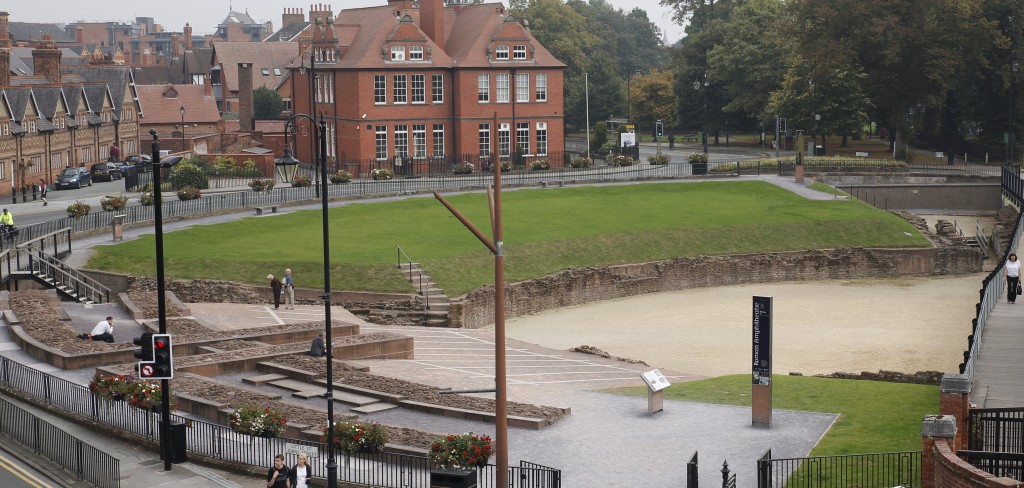
Roman amphitheater
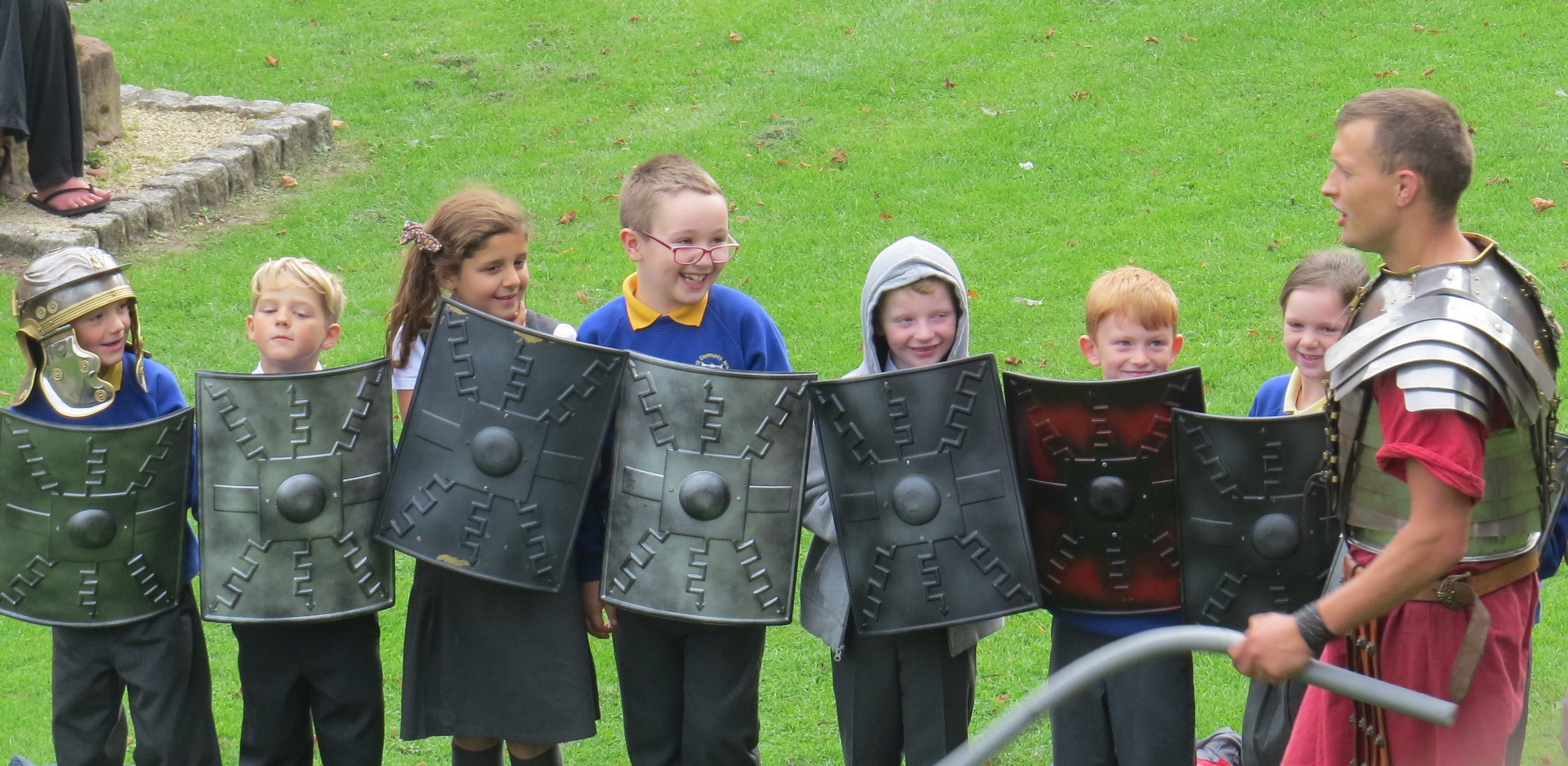
Roman centurion disciplining his troops
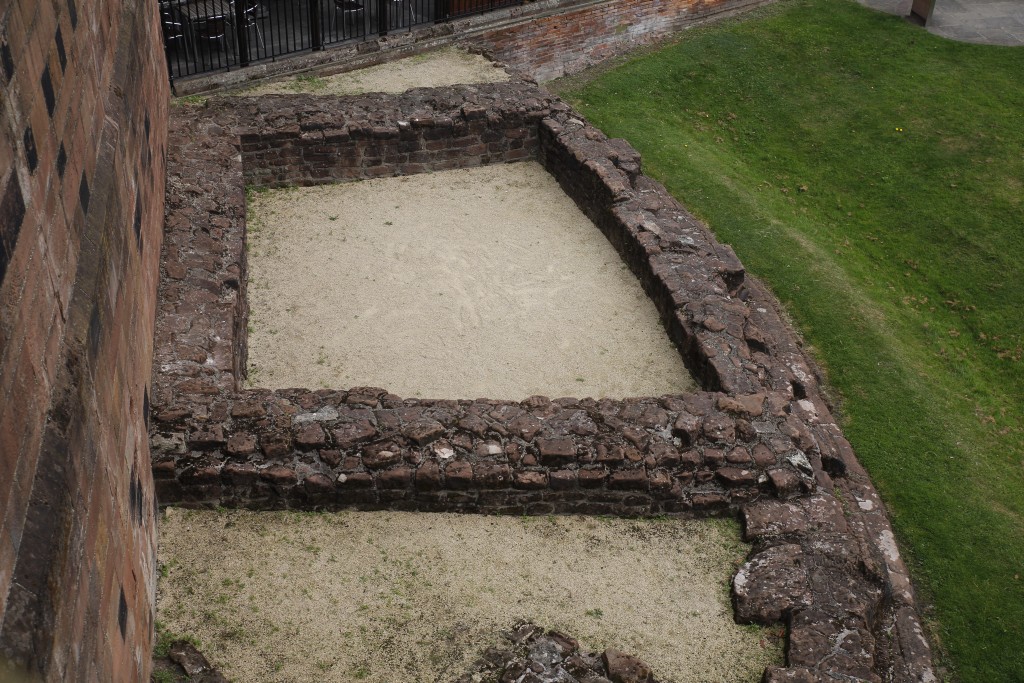
Base of Roman city wall tower
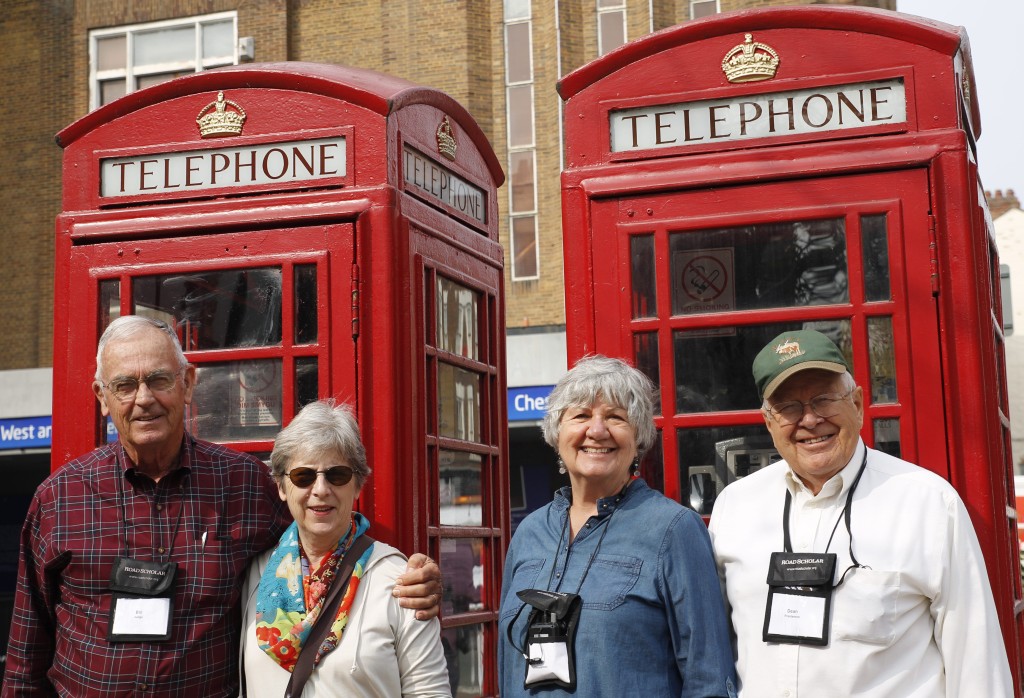
Our Iowa contingent
After a light lunch of tea and scones in the Chester Cathedral refectory, many of us elected to return to the hotel to relax and maybe take a short walk in the area; others in the group spent a couple of extra hours touring the sites of Chester.
Day 12: Sep 19 – Travel Chester to York
Travel day today, heading to York, so we had to put our luggage out by 7:15. Actually, I was rather glad to be leaving this hotel–our room was not air conditioned and I had trouble sleeping because of the heat. Another problem with the hotel was the unpleasant smell of manure used to muck the fields on two sides of the hotel. Our British friends didn’t seem to mind the aroma, but it was rough on our sensitive American noses.
The big news today in Britain is the No vote on the Scottish independence referendum. Many of the folks we met seemed relieved at the outcome. Even so, there was a large percentage of Scots voting for independence, and the referendum election will clearly have repercussions throughout the British Empire. Even though the election did not directly affect us, most of our group is probably happy with the result–I think we all would hate to see the dissolution of the United Kingdom.
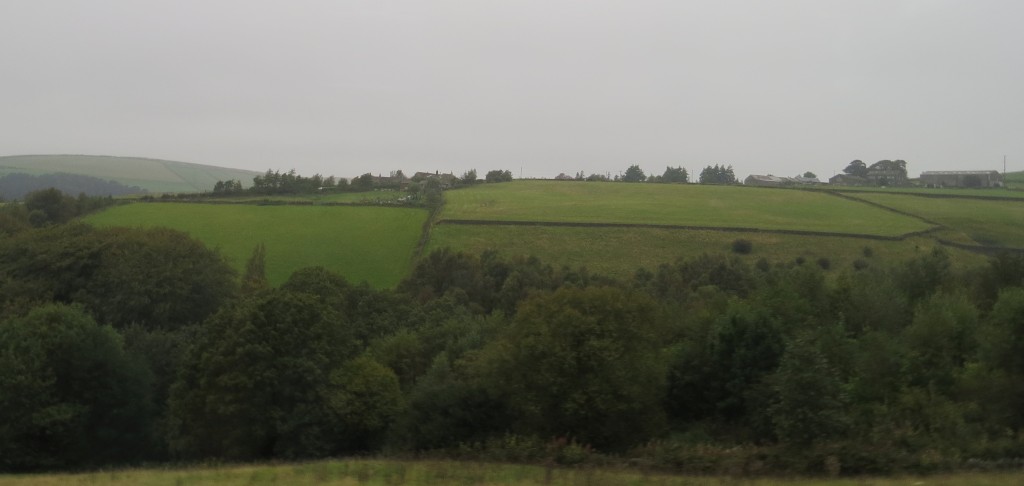
English countryside
After breakfast we headed out, east and north-east, entering Yorkshire county where we traveled through lovely countryside and several neat villages. We also began climbing in altitude and entered the moors, areas of poor soil that were cleared of trees in ancient times and now are mainly covered with thin grasses, thistle and heather.
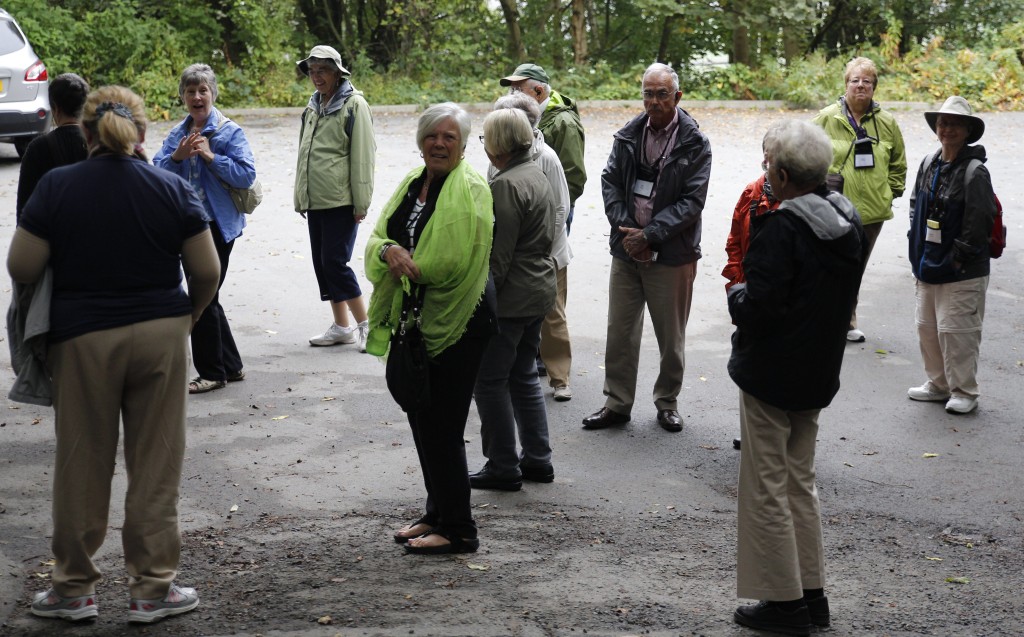
Group going into Haworth
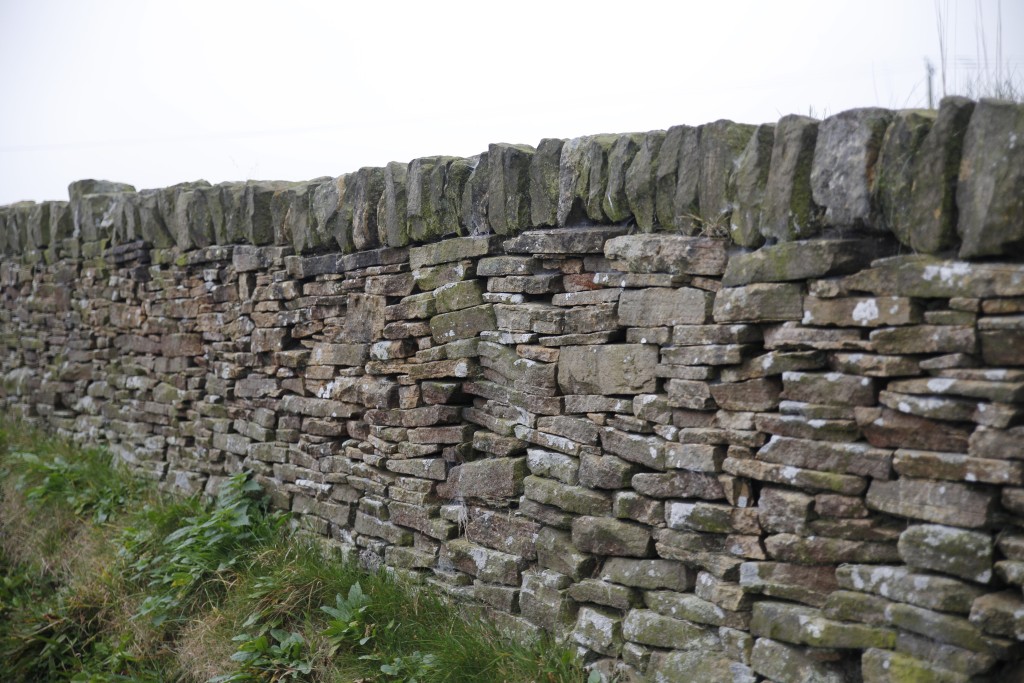
Gritstone wall near Haworth
Before lunch we reached the village of Haworth, home of the Brontes. About half the group went directly into the town while the rest took a short, mile and a half, walk on the moors. We stayed on the footpaths as we walked, and it is obvious that walking cross-country through the heather and grass would be very difficult. Our walk ended at the Penistone Moors Summit benchmark, where we had a group photo.
On the way into the village, we stopped at a half-buried set of stone books. Before telling us the name of the sculpture, which is “Literary Landscape”, Peter challenged us come up with a name. My two favorites were: Ed’s “Moor Books” and Jon’s “Fallen Leaves”.
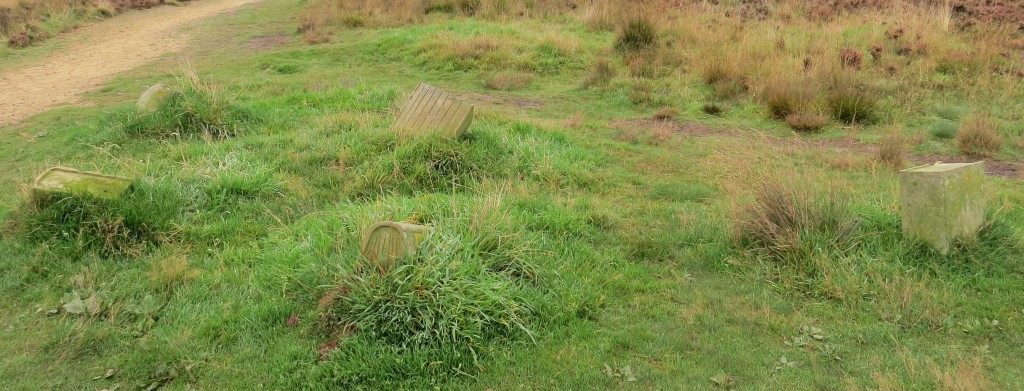
Literary Landscape
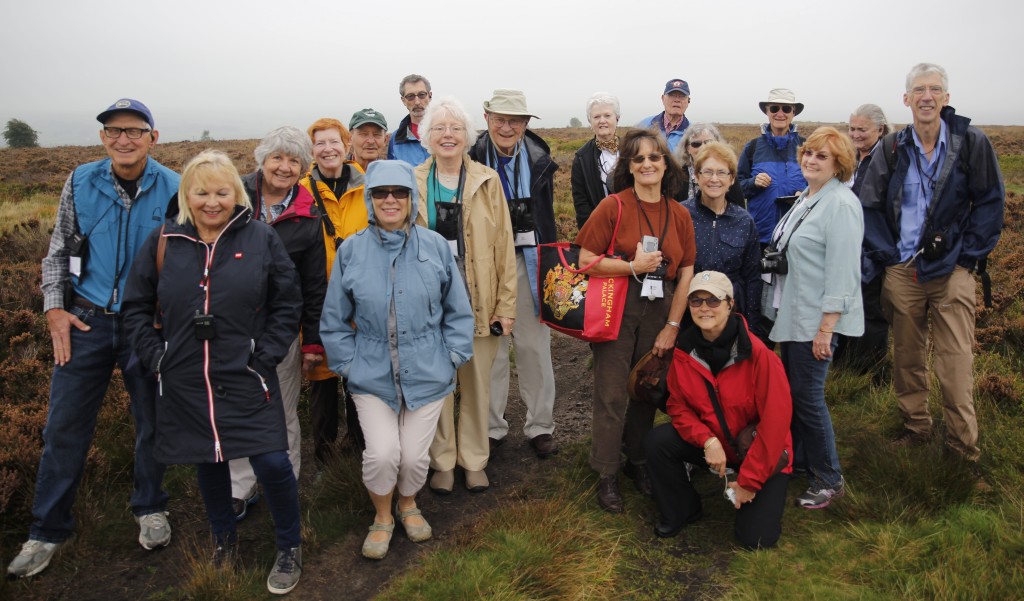
Group at Penistone Summit
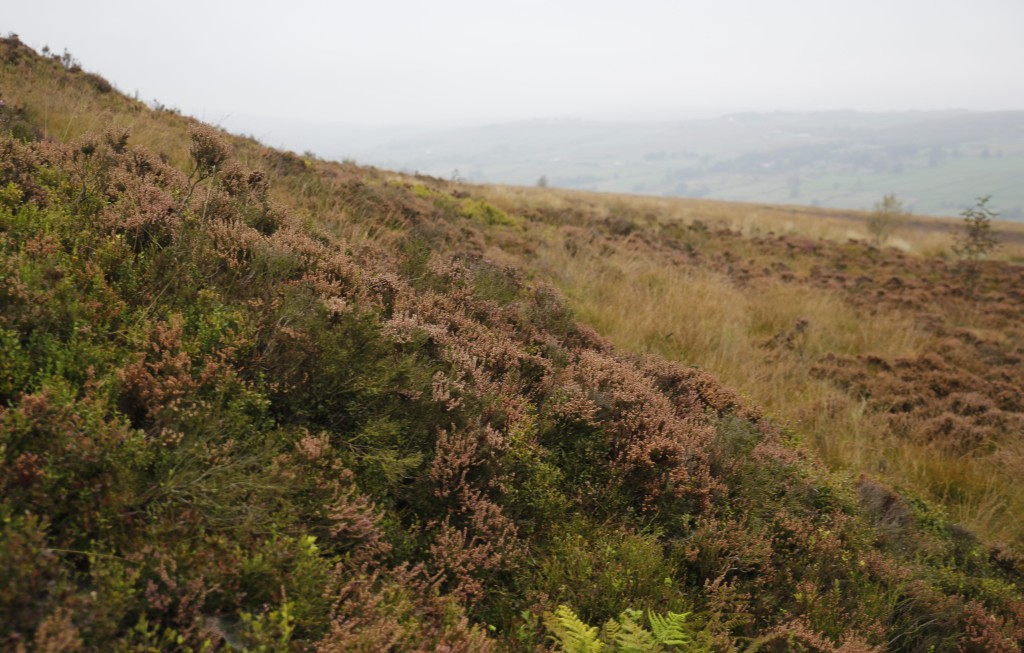
The moors walked by Emily Bonte
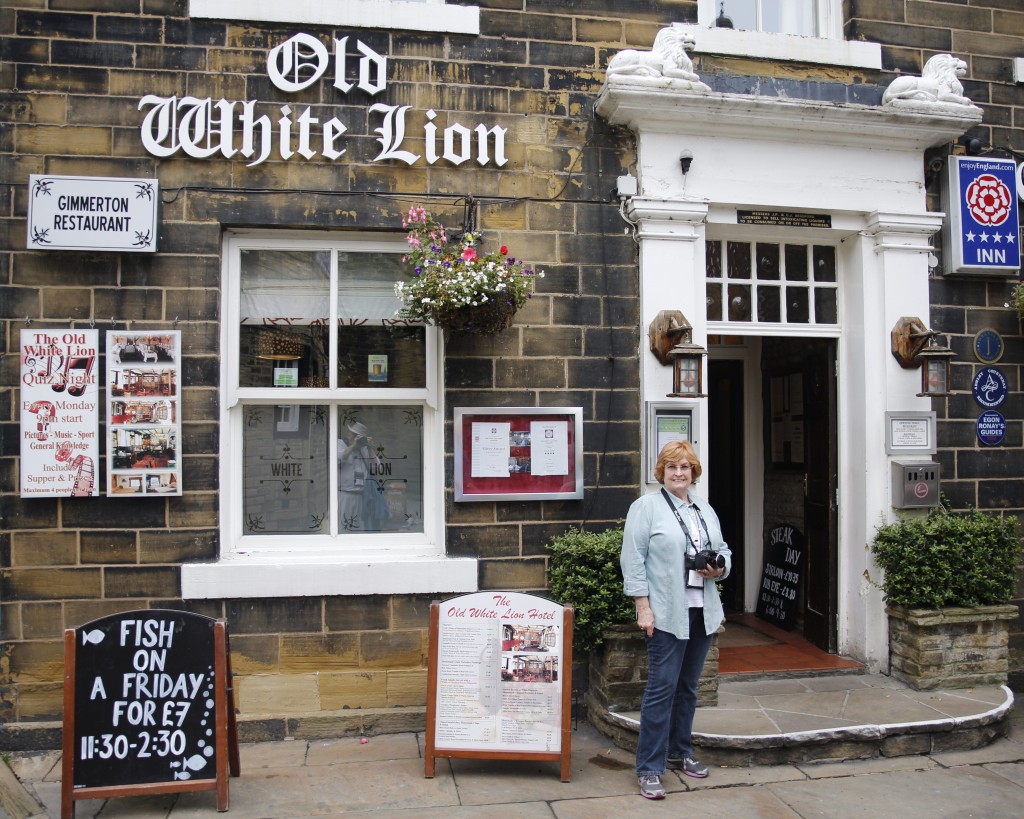
Linda at the White Lion
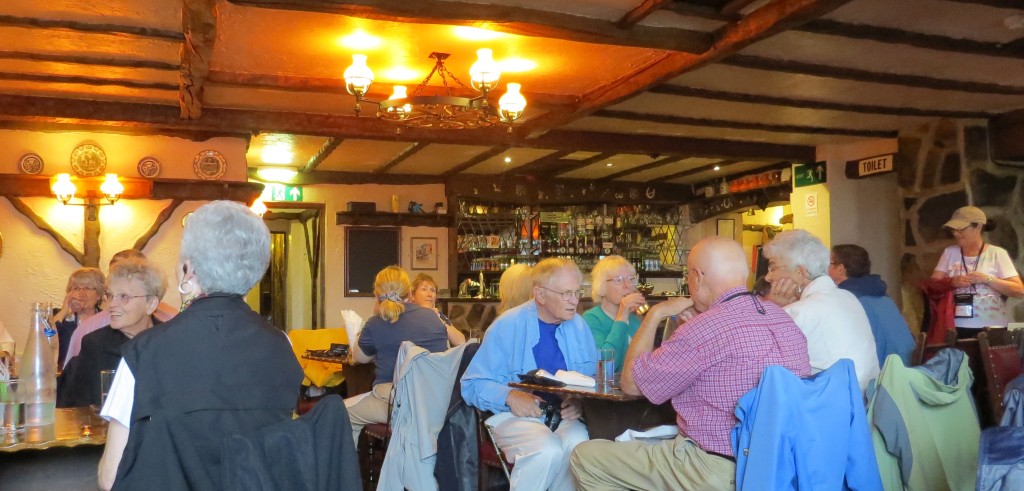
White Lion lunch
We had a nice lunch at The White Lion in Haworth and then toured the Bronte Parsonage Museum, where the six children grew up and where Charlotte and Emily wrote Jane Eyre and Wuthering Heights. Sadly, all six of the Bronte children died before their father and the entire family, except for Ann, is buried in the family vault in the church. It is just amazing to me that such works of literary genius could have been created by two young women in this small country village.
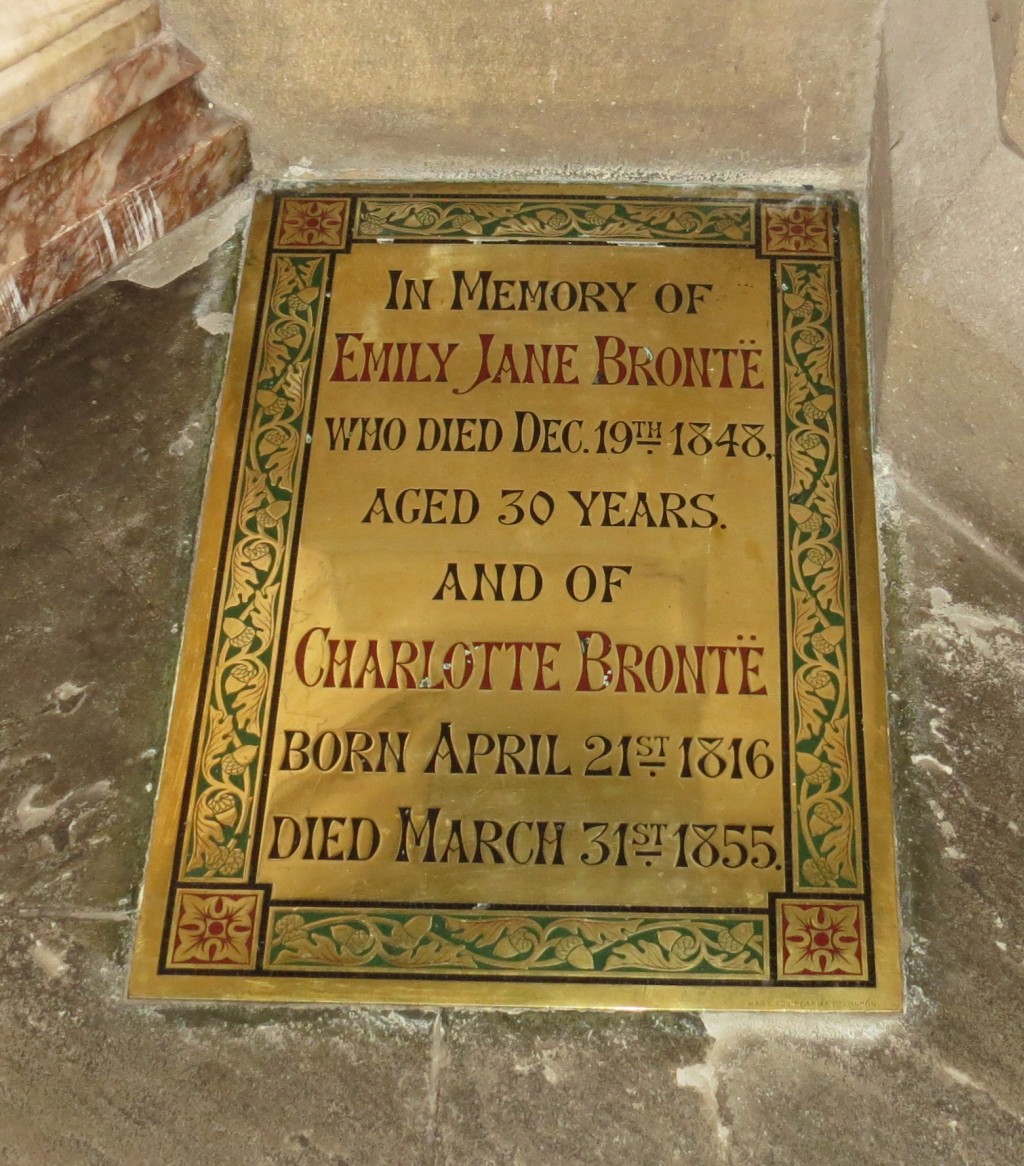
Emily and Charlotte plaque
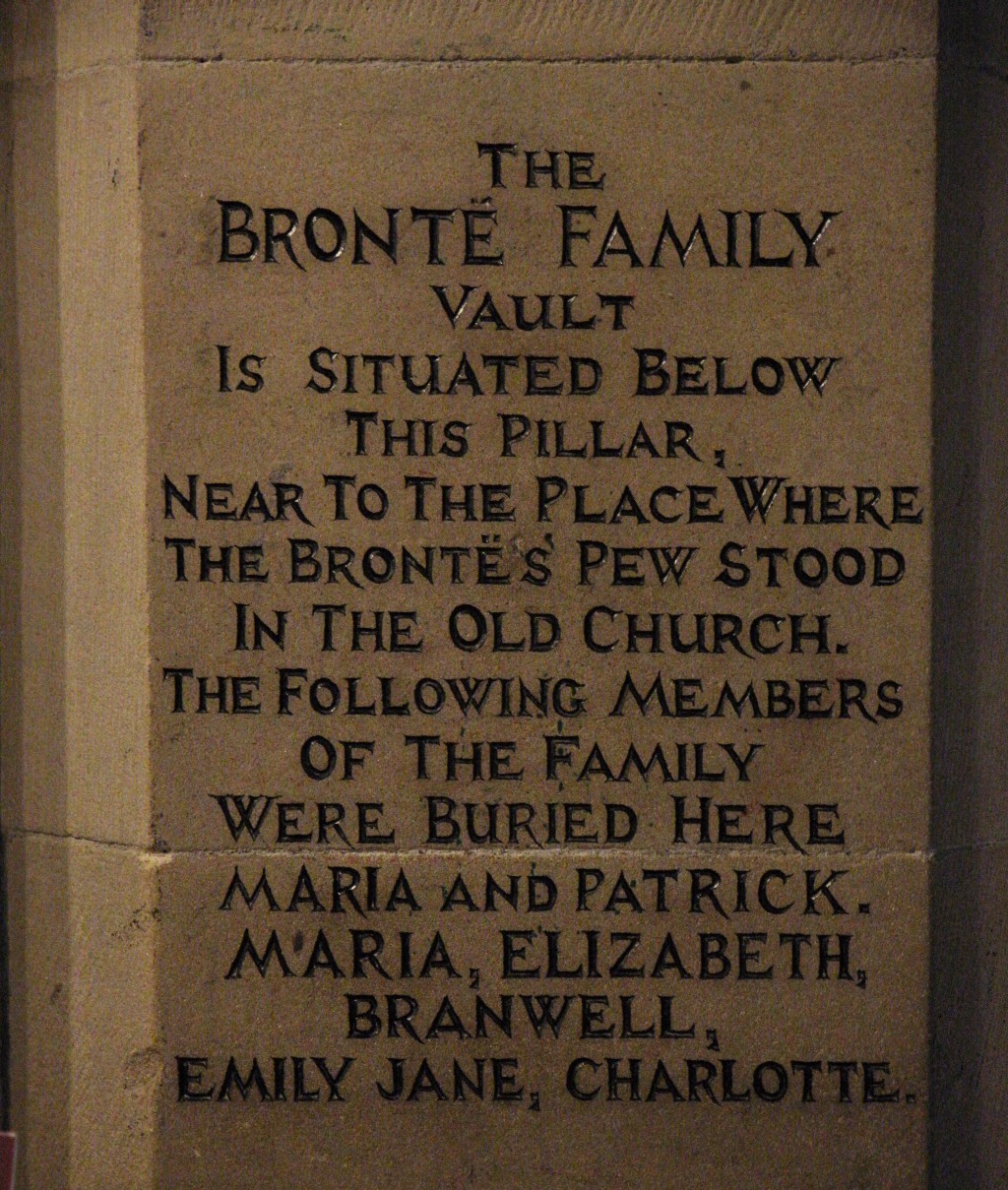
Bronte family vault
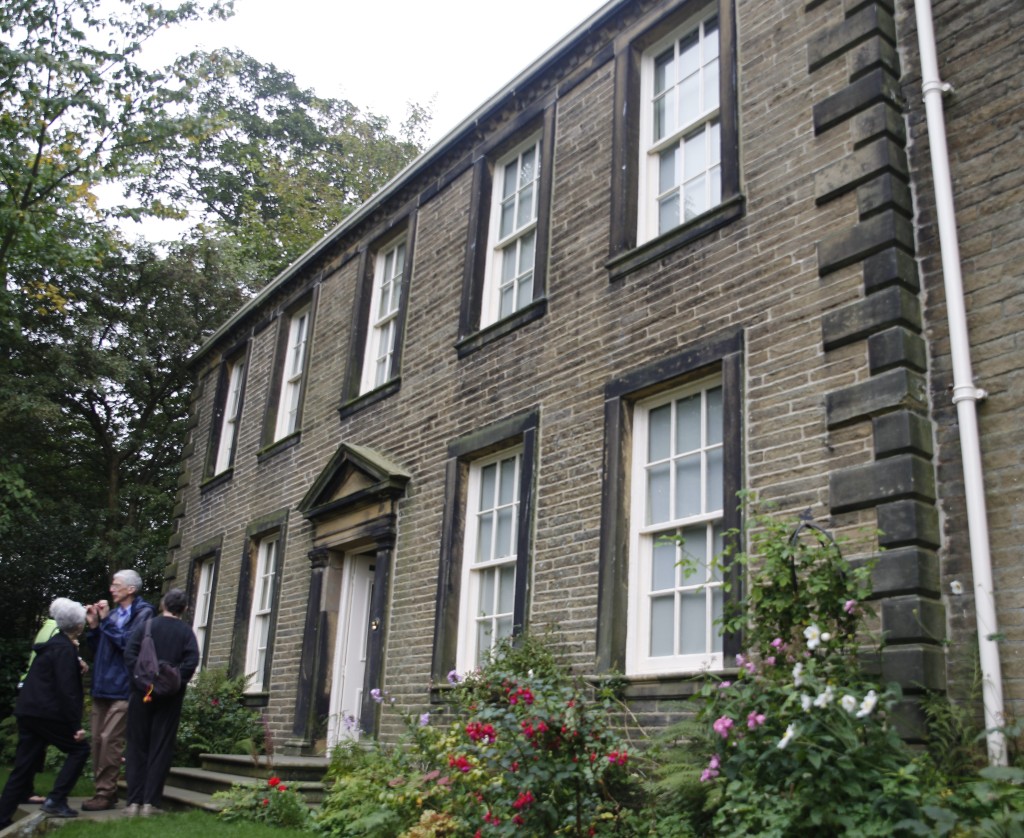
Bronte parsonage
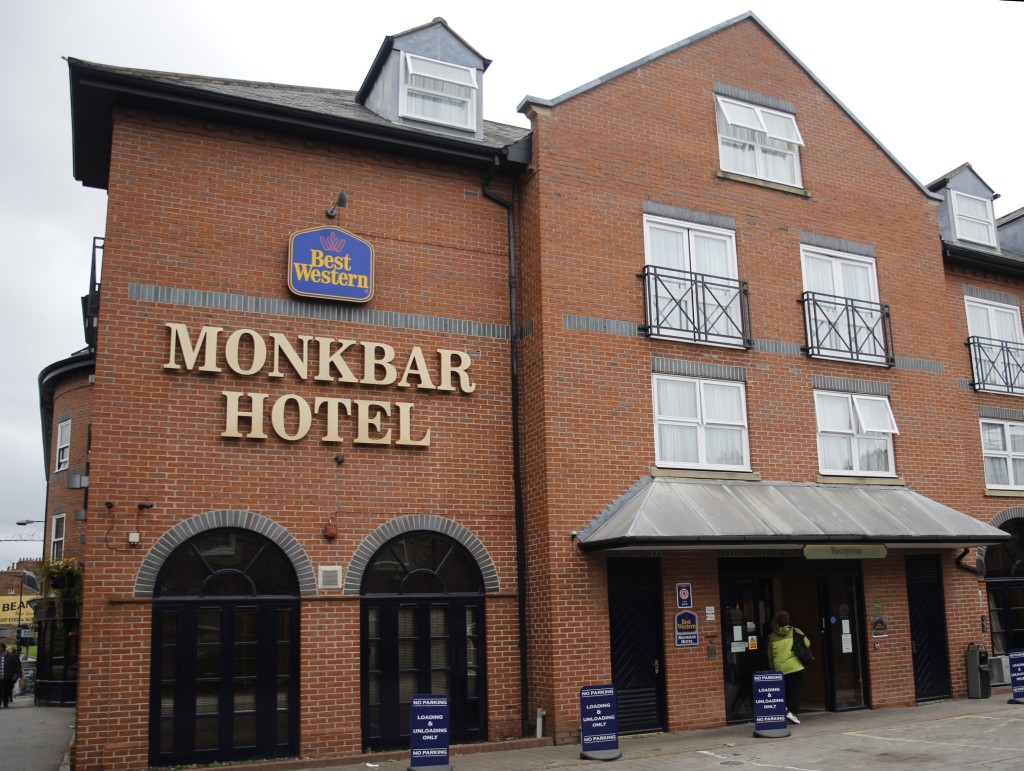
Hotel in York
We then journeyed on to York and checked into our ‘home away from home’ for the next three nights. Before dinner Peter gave us a nice lecture on Abbeys and Monasteries.
Day 13: Sep 20 – York
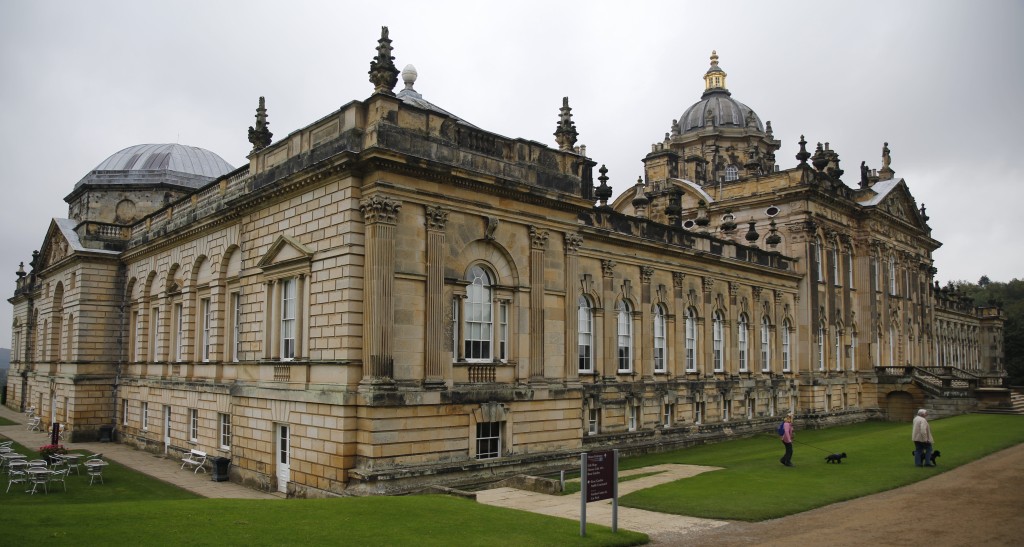
Castle Howard
First on the agenda today was the Castle Howard. This was a private estate built early in the 1700’s by the Earl of Carlisle. This is one of the 10-most important private estates in all of England. It was also one of the first of the major estates to be opened to the public in 1952. When I commented on the steady drizzle, one of the castle guides responded, “There is no extra charge for our British natural moisturizer.” Peter emphasized that the entire estate is man-made; nothing is in its original natural state.
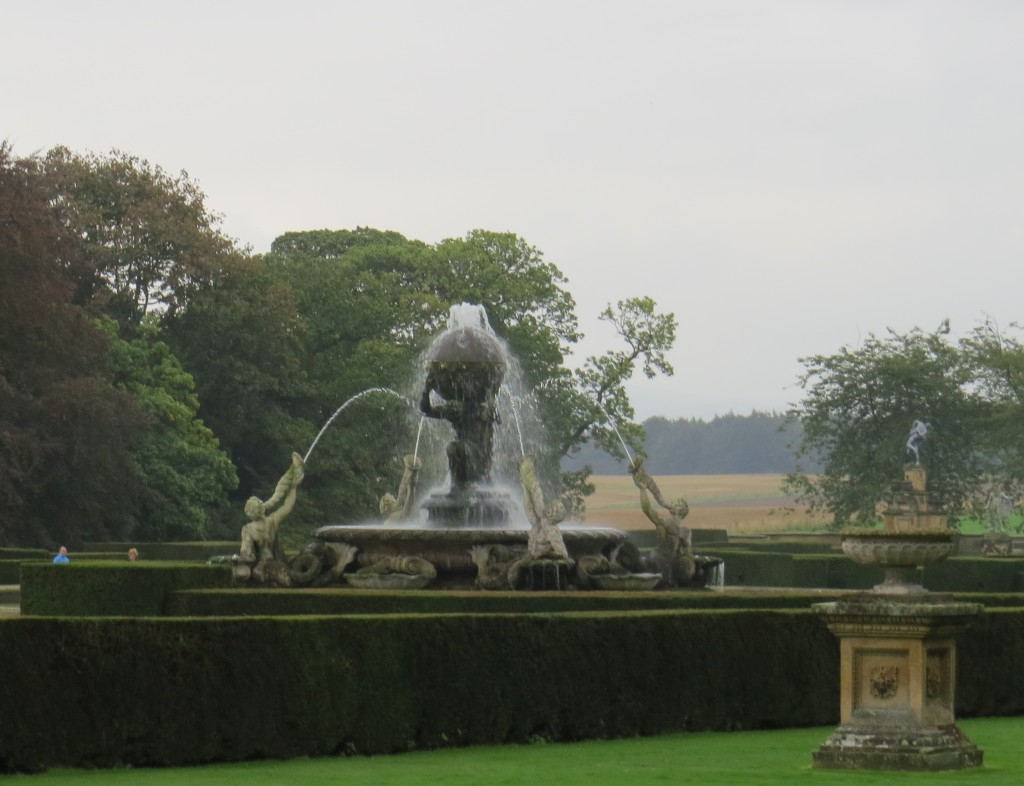
Fountain
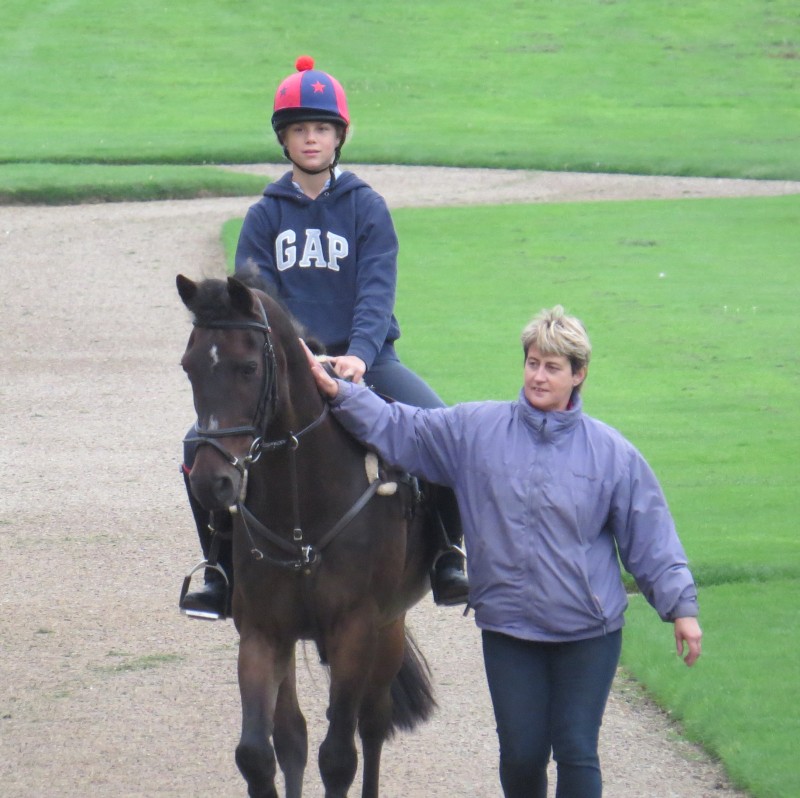
Octavia Howard on her pony
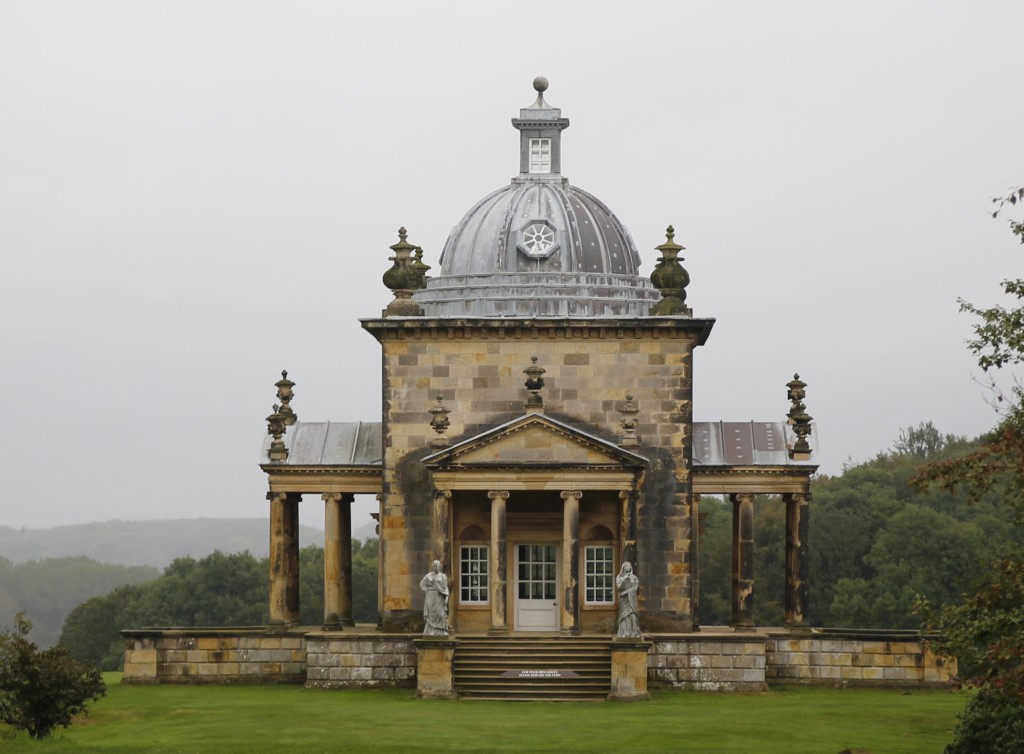
Temple of the Four Winds
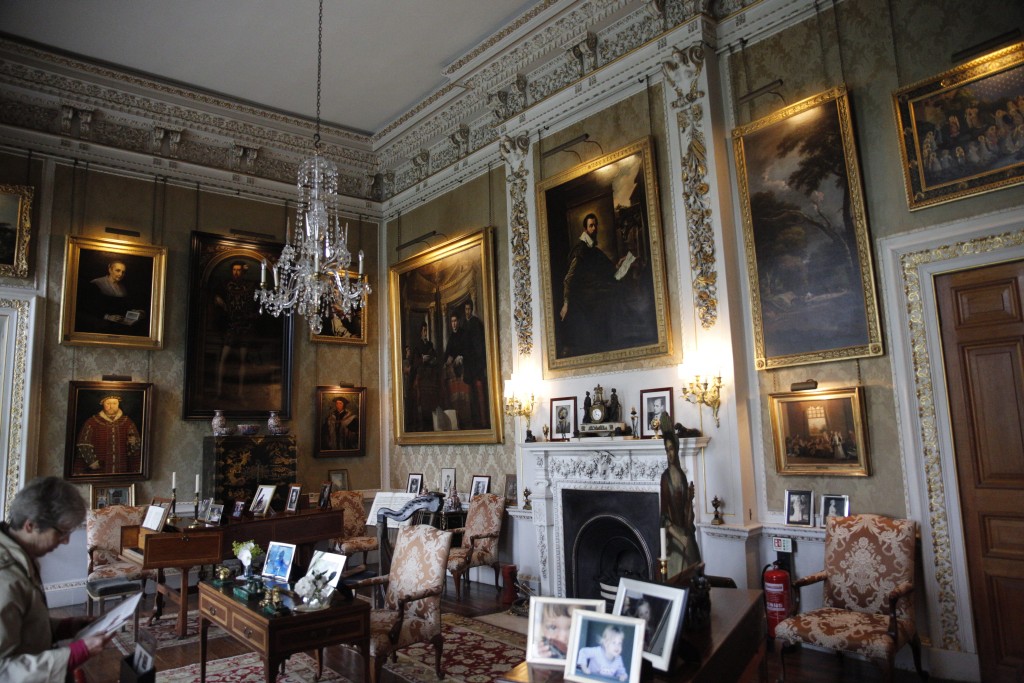
Portraits room
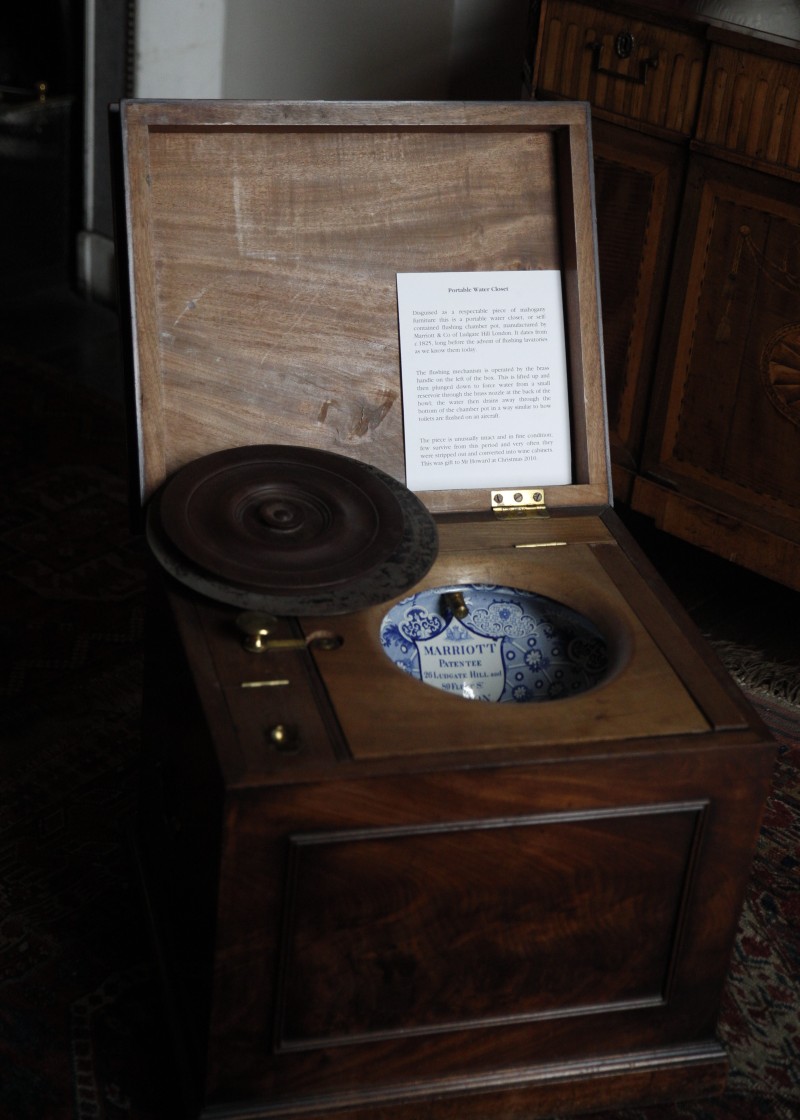
Early flush toilet
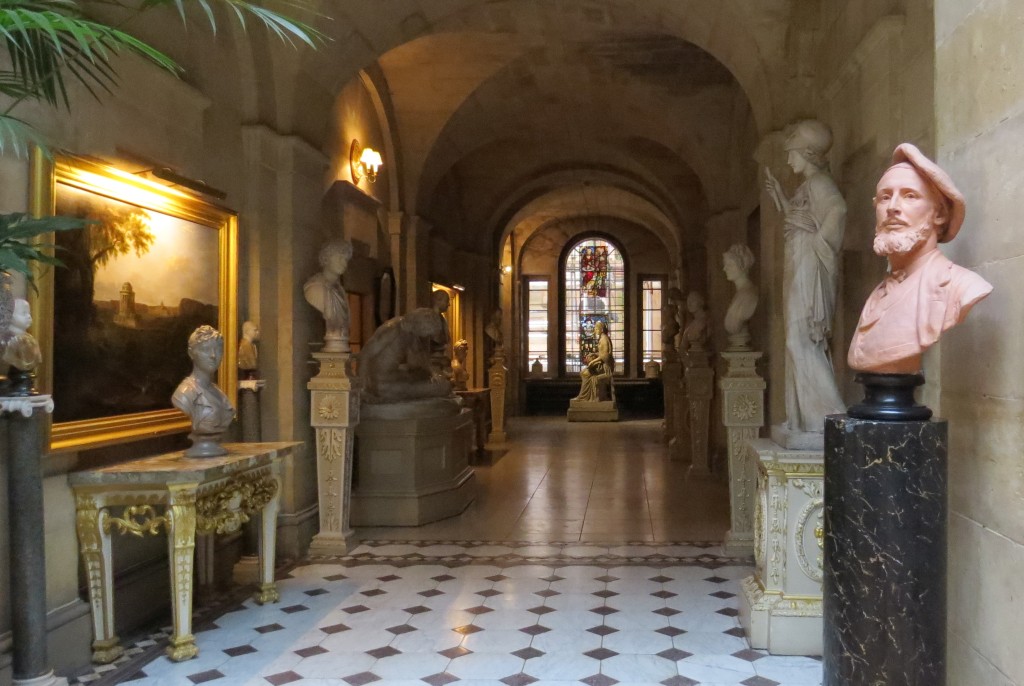
Castle hallway
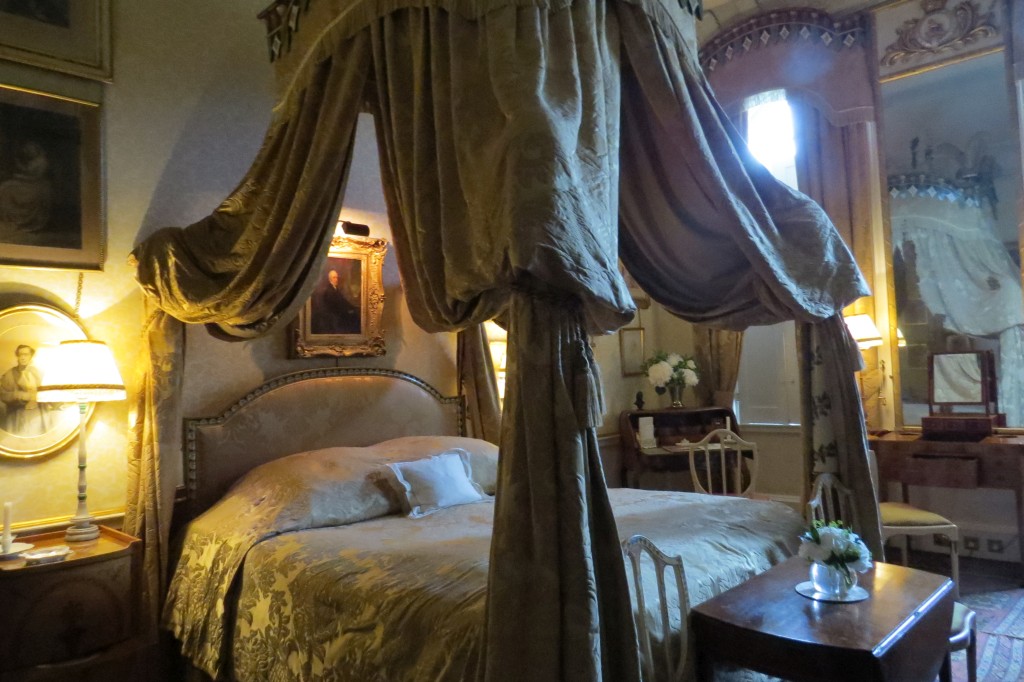
Guest bedroom
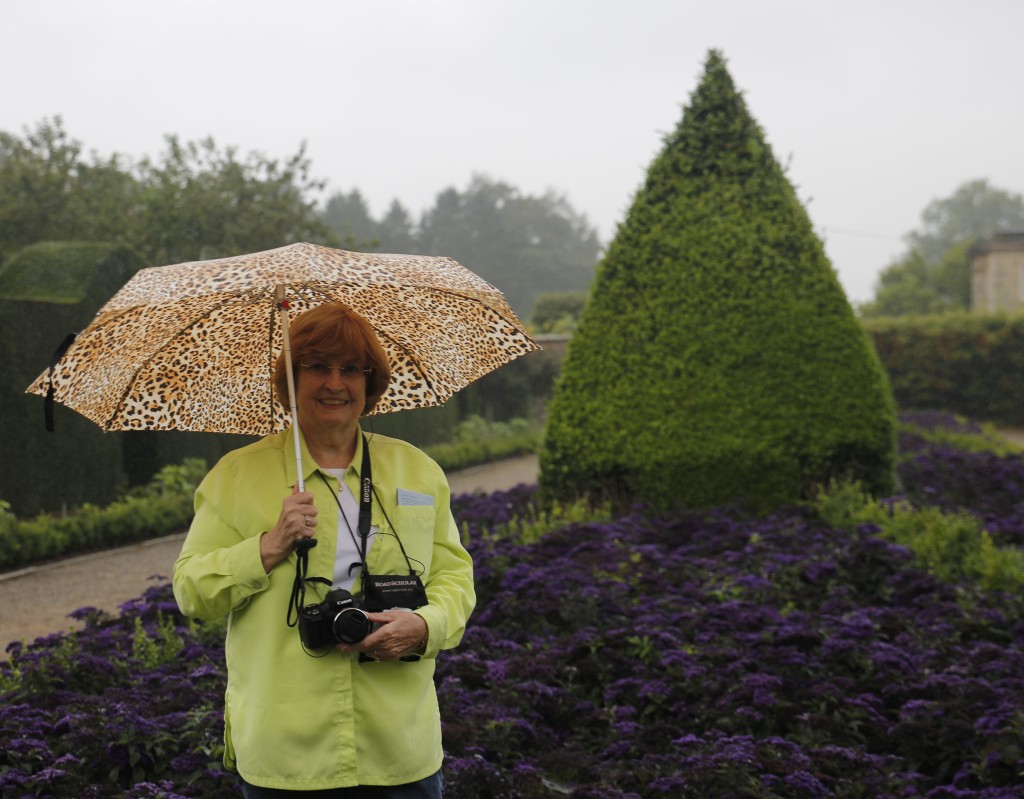
Linda in the Rose Garden
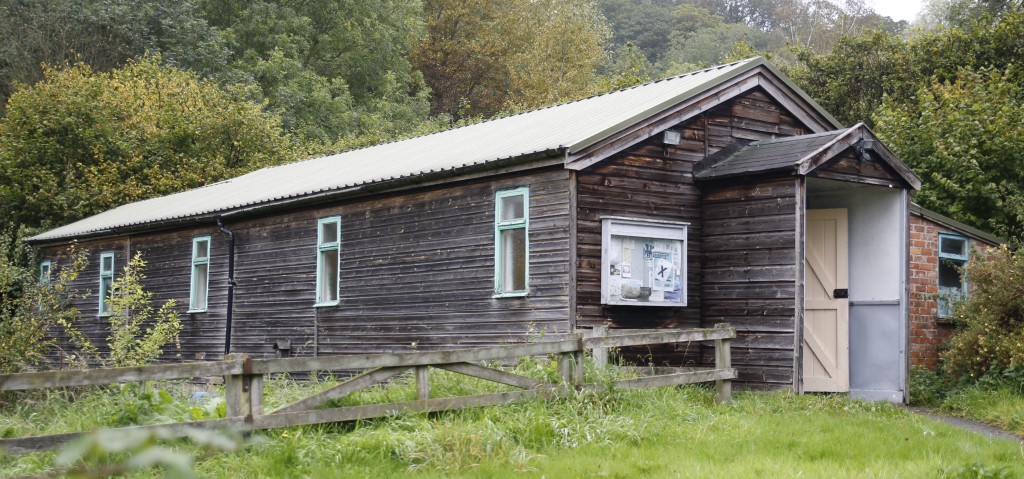
Rievaulx Village Hall for lunch
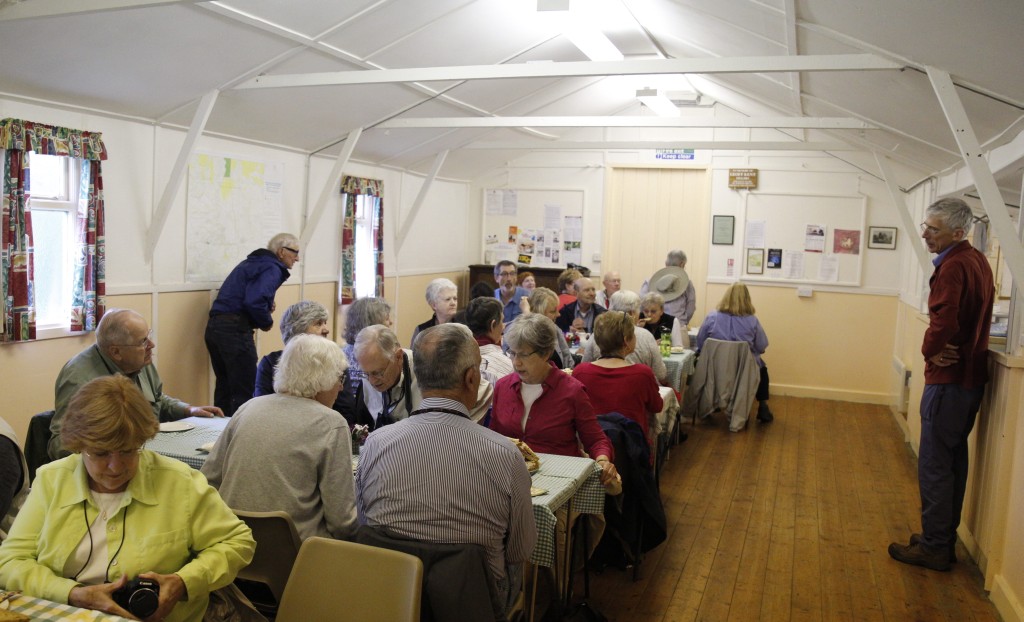
Lunch with the locals
We then visited the ruins at Rievaulx, beginning with “lunch with the locals” at Rievaulx Village Hall–village population of about 25, but with four babies. Our lunch was served in what was originally an army hut from WW II, where we had sandwiches, a custard and absolutely delicious tea cakes.
After this very nice lunch we walked down to the entrance to the ruins of the abbey. This site, out in the middle of nowhere, has to be the biggest surprise of our trip so far. The ruins are simply awesome! The earlier ruins in the Norman architecture were constructed by monks, and the later huge structure was built by masons. During Henry VIII’s dissolution of the monasteries, the abbey was destroyed by Henry’s men removing the roof. It is difficult to understand how people could do such terrible destruction, but I guess we have present-day examples of similar acts.
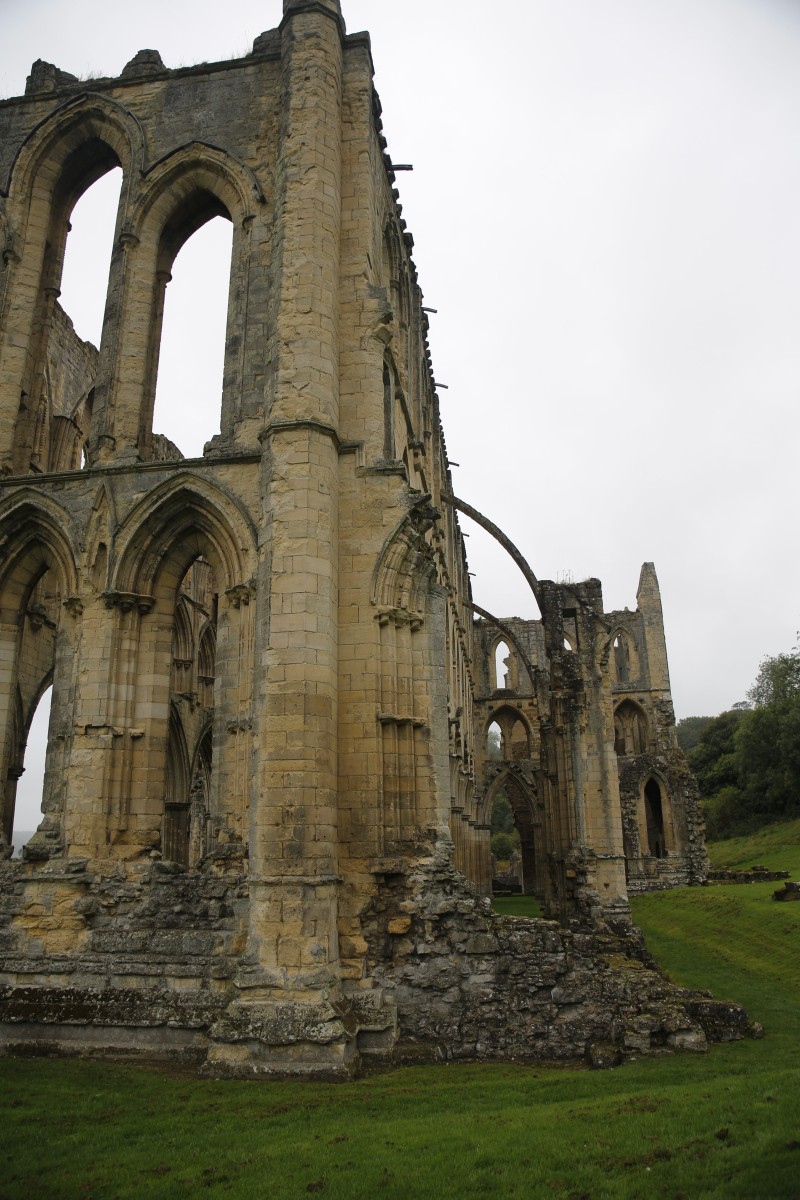
Flying buttresses
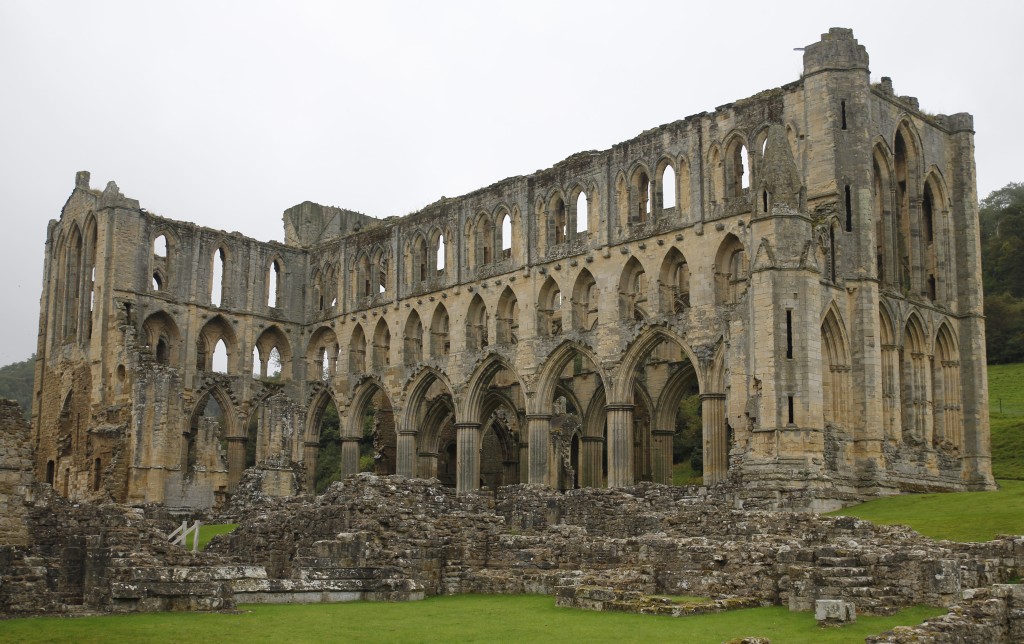
Abbey ruins
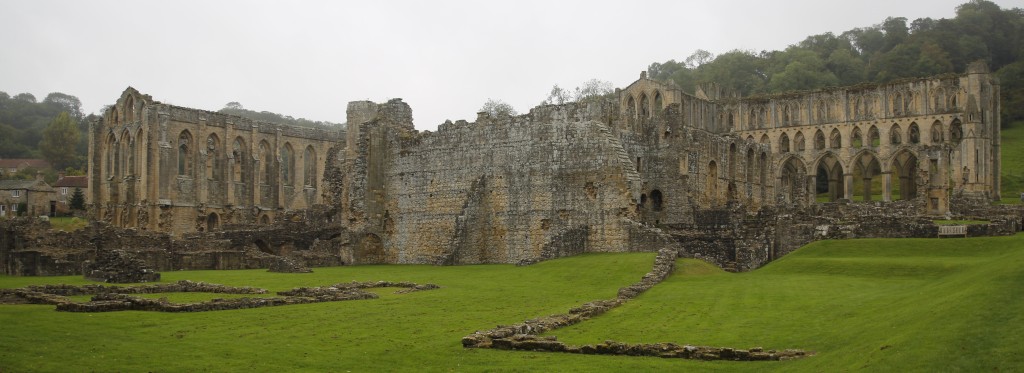
More ruins
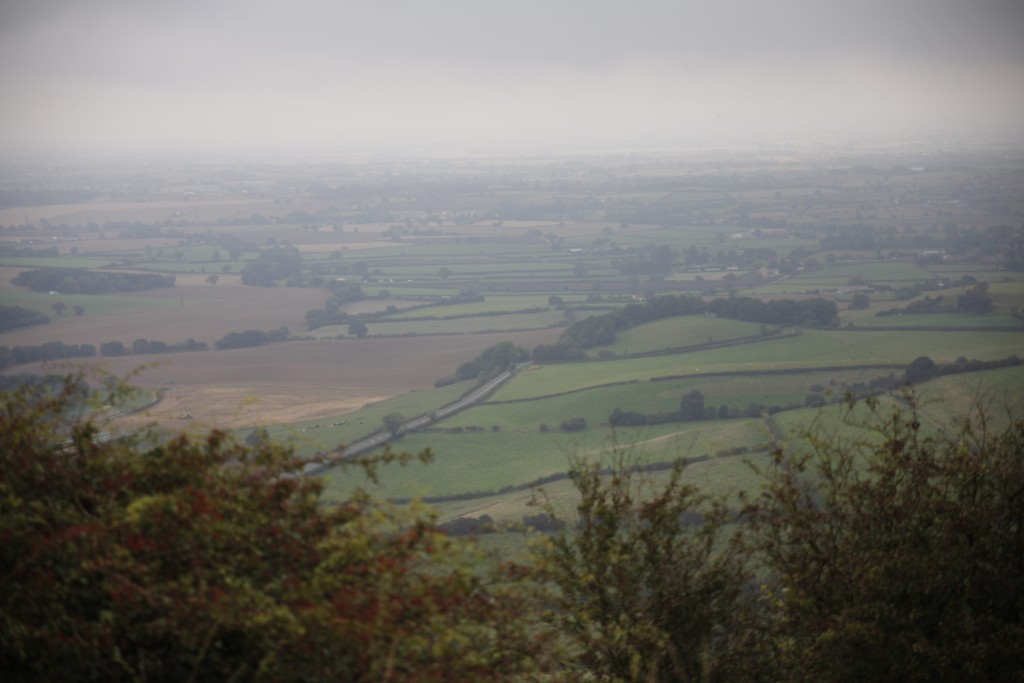
View from Sutton Bank
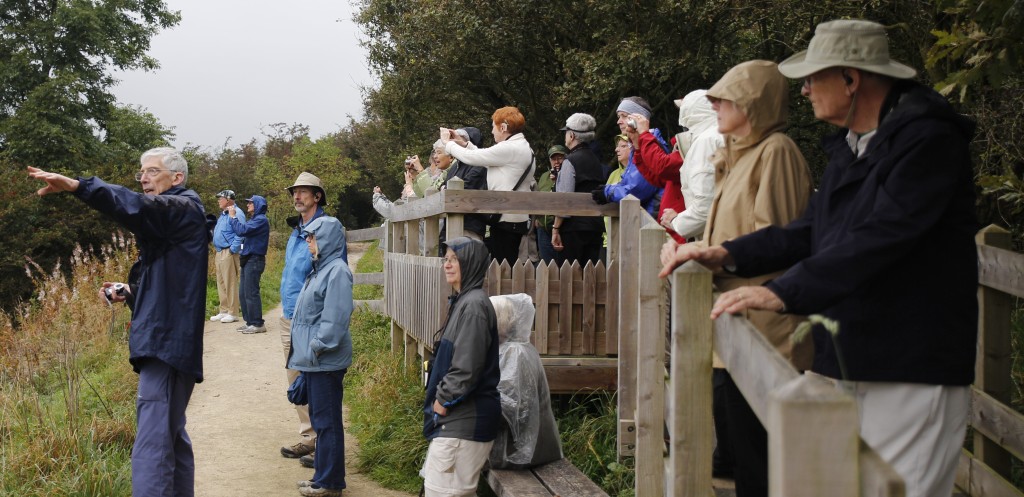
Group at Sutton Bank
Returning to the hotel, we visited the North York National Park Information Center and strolled out to Sutton Bank, elevation about 1000 feet, for what is considered by many “The finest view in England”. It is indeed a nice view, but on our visit the mist obscured the distance vistas and muted the colors. Some of us wondered if this view was really finer than that in the mountains of Snowdonia in Wales.
Day 14: Sep 21 – York
Today was mainly a tour of the old city of York. We divided into two groups, each with a York guide, and visited the notable sites about the city. Various streets and ruins still remain from Roman days, and there are also remaining structures, ruins and streets from the Saxons, the Vikings and the Normans. Of course the dominant structure in the city is the beautiful cathedral York Minster.
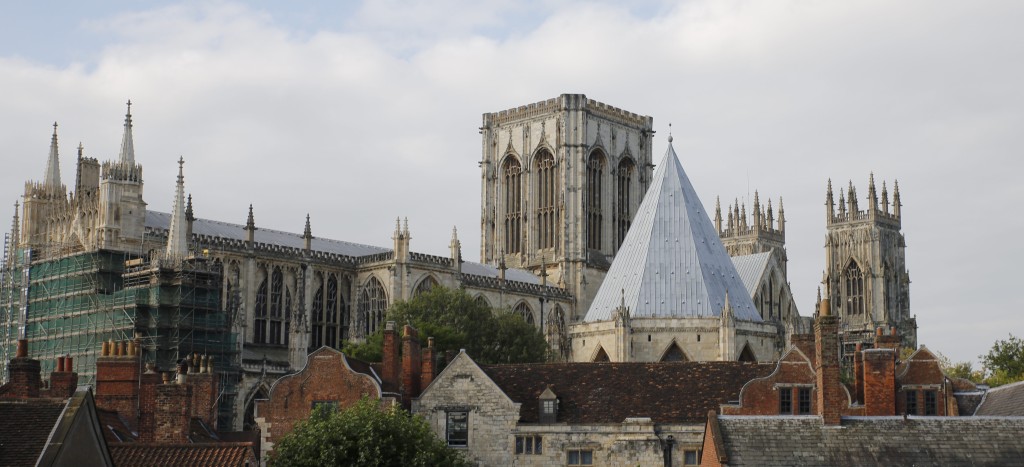
York Minster
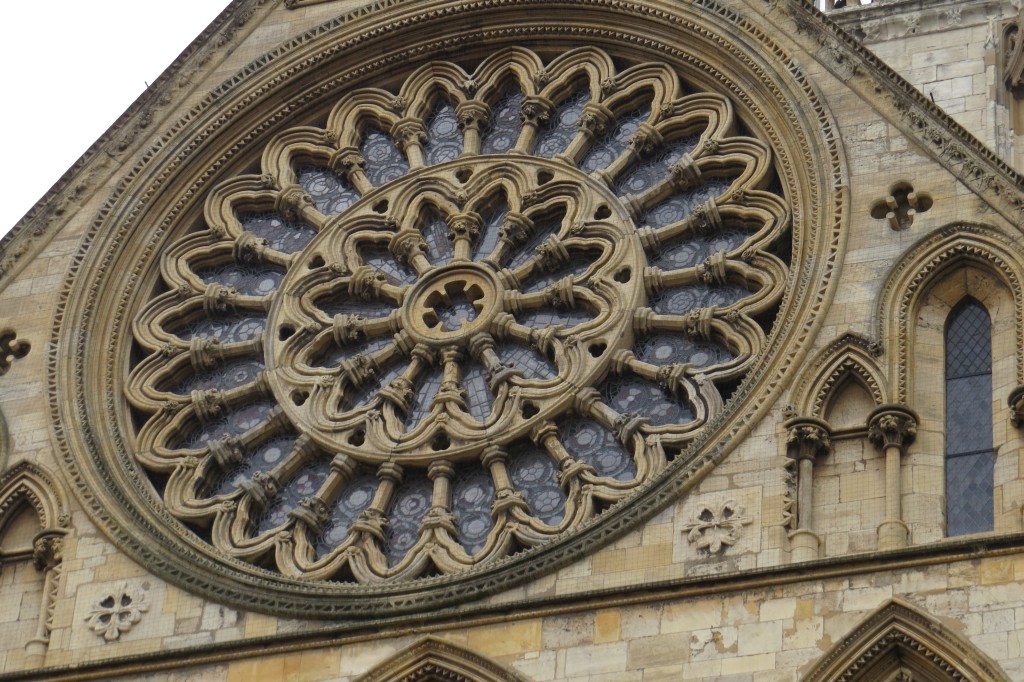
Rose window in minster
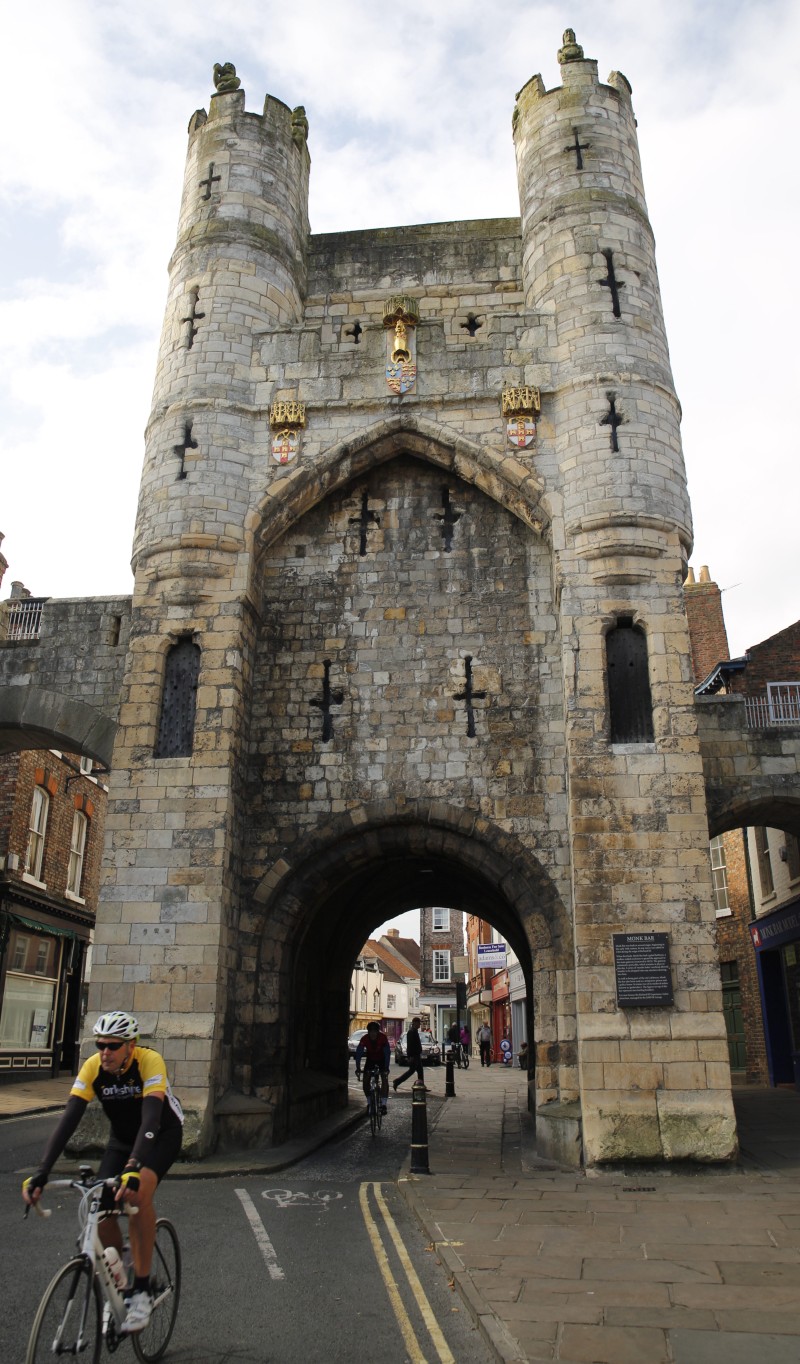
Monk Bar gate
The medieval wall built in many places along the original Roman wall is another of the key features of the city, and on our tour we walked along most of it. I was surprised at how favorably Richard III is looked upon here in York. Perhaps he is another victim, along with Macbeth, of Shakespeare’s plays. This reminds me of the saying, “You do not learn history from Shakespeare!” Another dominant structure is Clifford’s Tower, the site of a fort constructed by William the Conqueror. The stone tower dates from medieval times and was the scene of the tragic siege and mass suicide of 150 Jews.
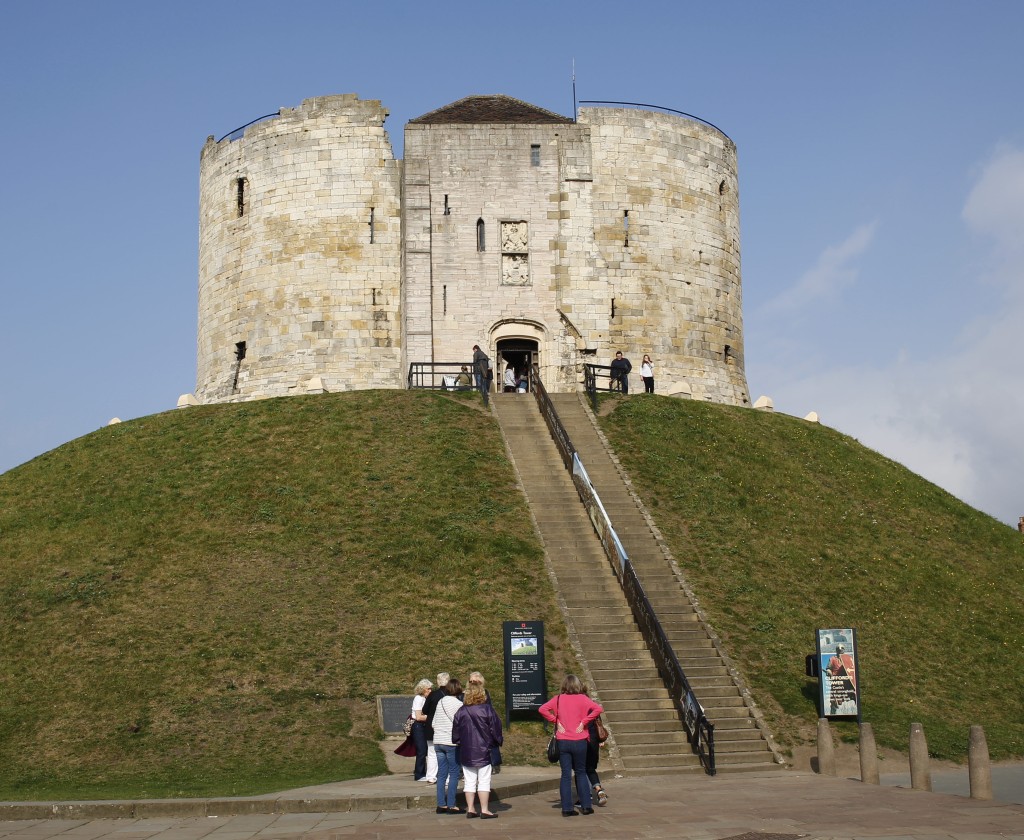
Clifford Tower
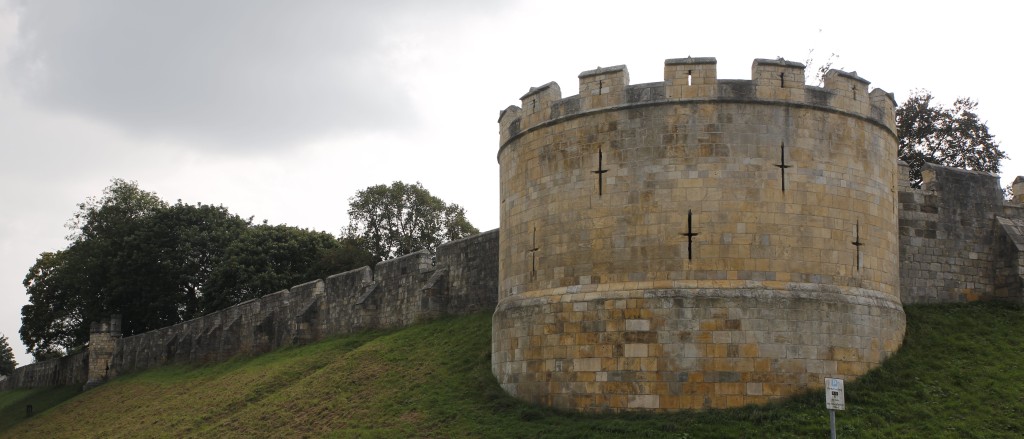
Medieval wall
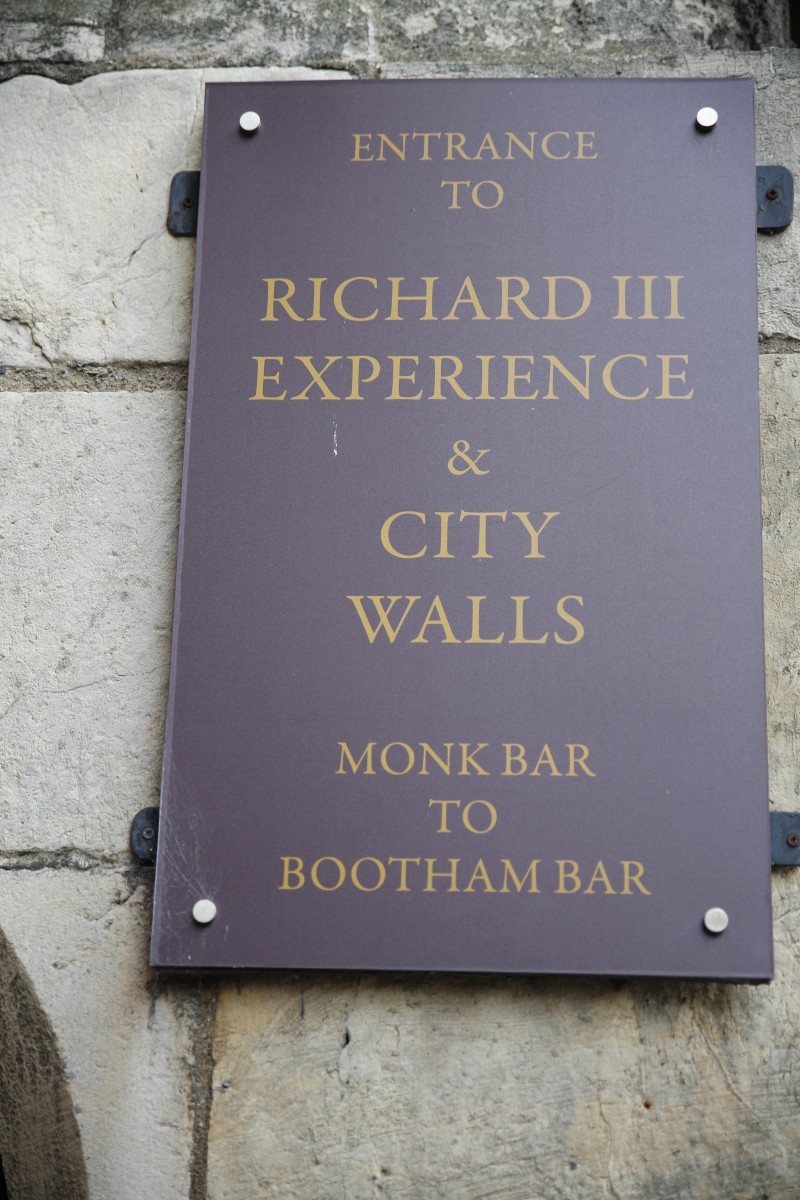
Richard III plaque
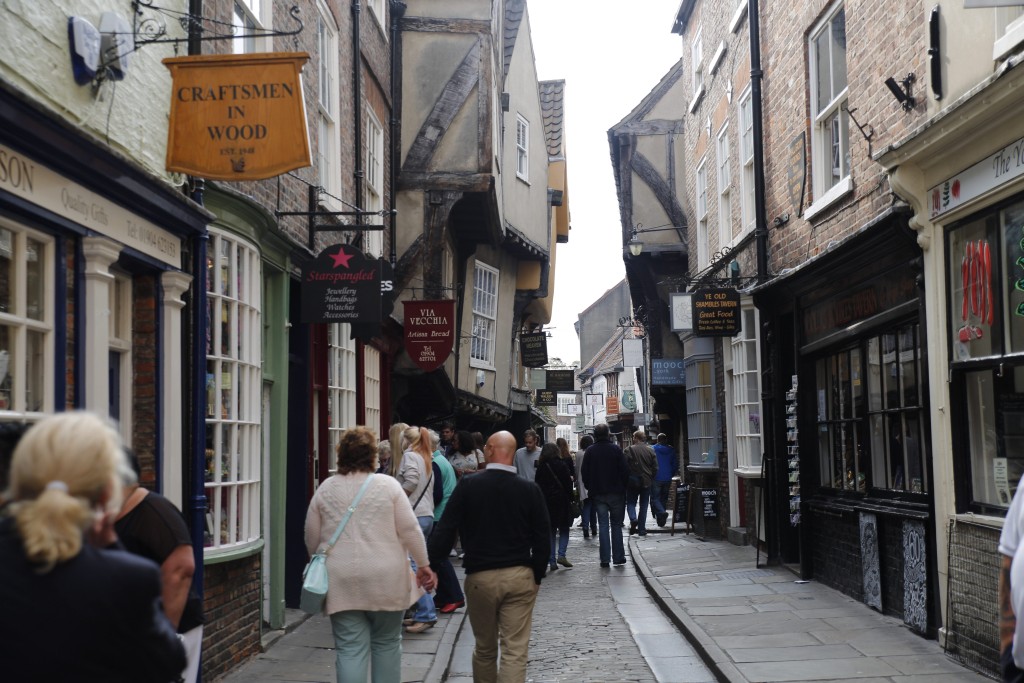
The Shambles – Diagon Alley
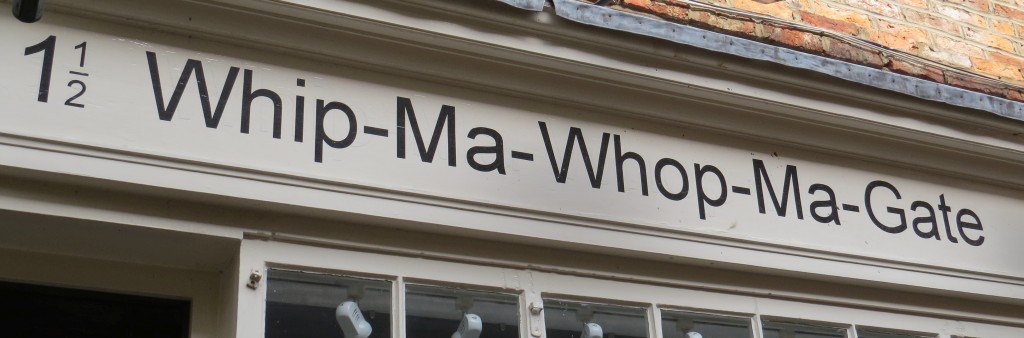
Shortest street with longest name
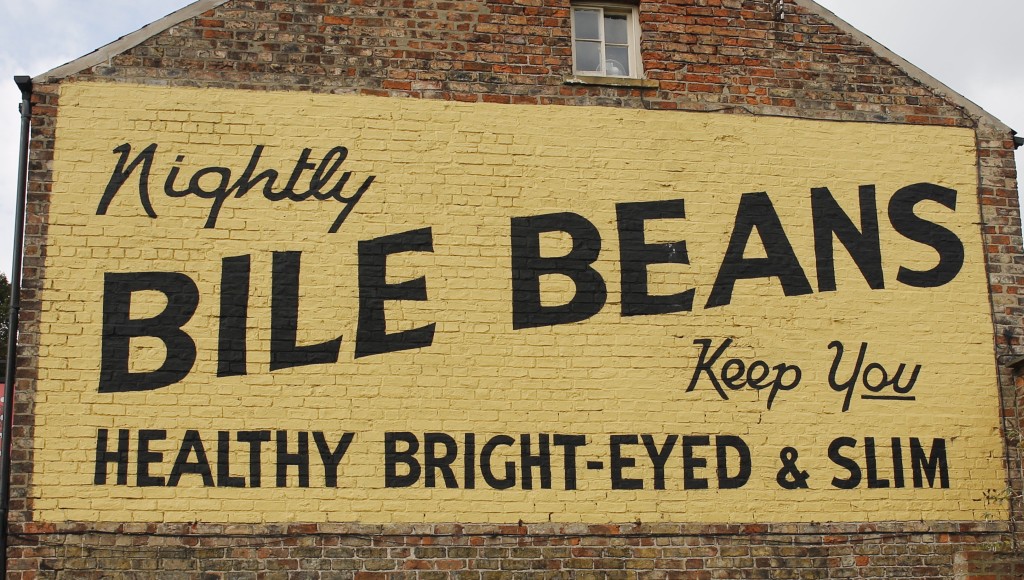
Advertisement on wall next to hotel
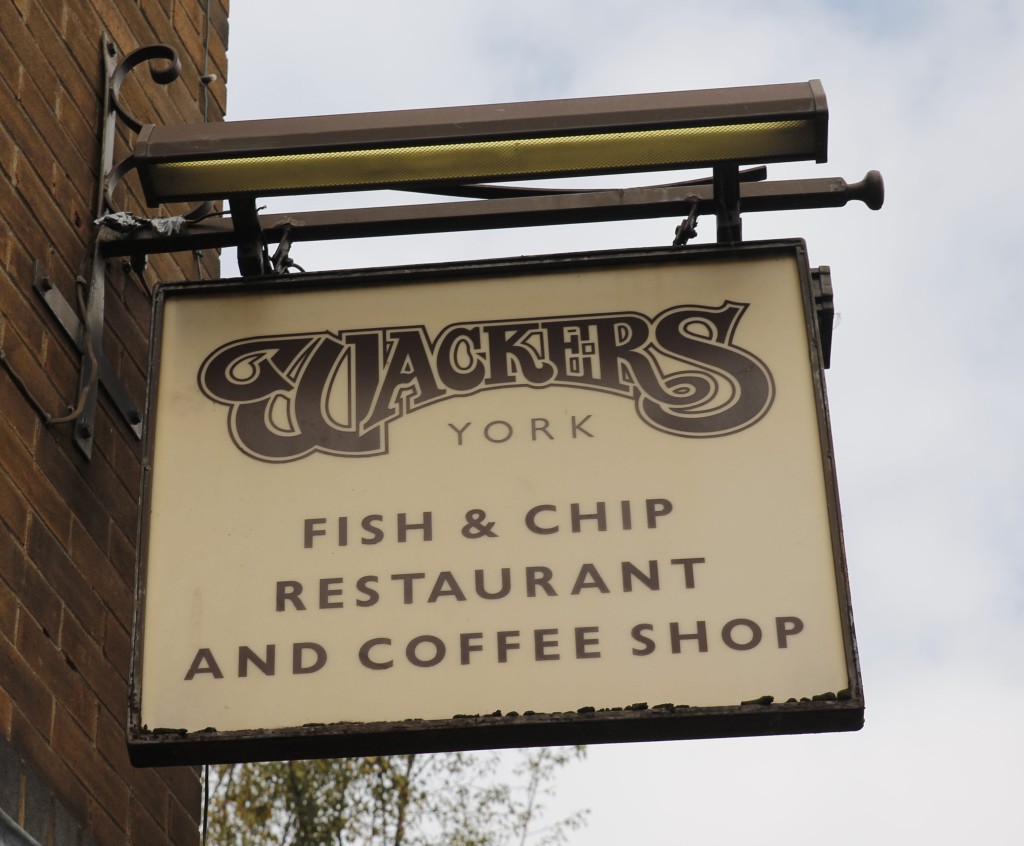
Lunch at Wackers
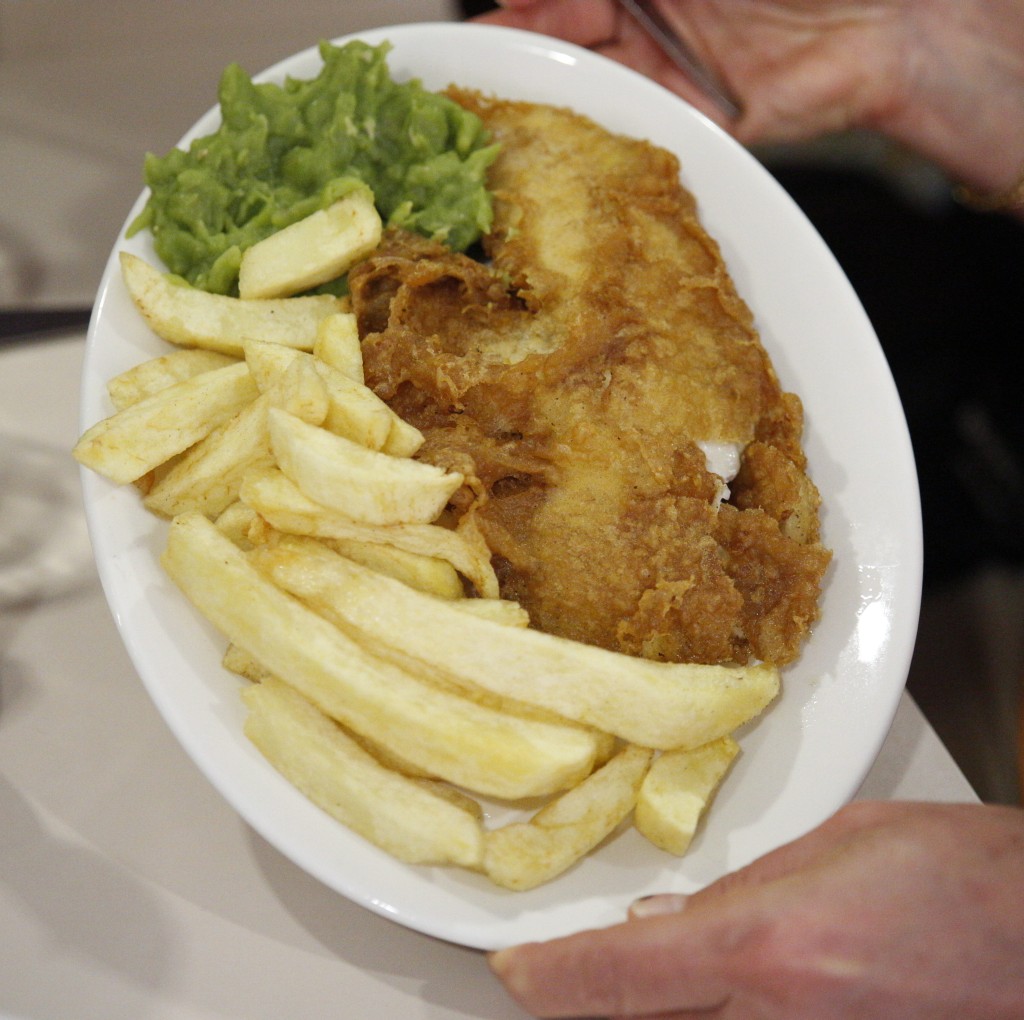
Quintessentially British fish & chips
For lunch we had the quintessentially British lunch of fish and chips, with mushy peas, at “Wackers”. Linda of course would not eat the fish so she had a steak-and-ale pie. It appears that most of us thought the ‘fish and chips’ were pretty good.
We had a free afternoon, but many of us joined Peter to attend the Choral Evensong in the minster. This was about an hour’s service with beautiful music. We then had dinner and prepared for our move to Edinburgh on the morrow.
Day 15: Sep 22 – Travel York to Edinburgh
Once again we packed our bags and journeyed forth on our Road Scholar adventure. Today we have a fairly long drive of about 200 miles ending in our final city of Edinburgh, Scotland. Despite several inquiries as to the proper pronunciation of Edinburgh, I still don’t have it down–the ‘burgh’ seems to be pronounced sort of like ‘buhrow’ with a rolling ‘r’. Maybe by the time we leave I will be able to say it correctly.
The weather was a little cooler this morning, and I wore a jacket with an Alabama ‘A’. Jon, a retired Lutheran minister–who has been ‘taunting’ me about next year’s meeting of Wisconsin and Alabama–spied the ‘A’ and immediately declared “Adulterer!” For some reason, association of the Crimson Tide’s ‘A’ with The Scarlet Letter had never occurred to me.
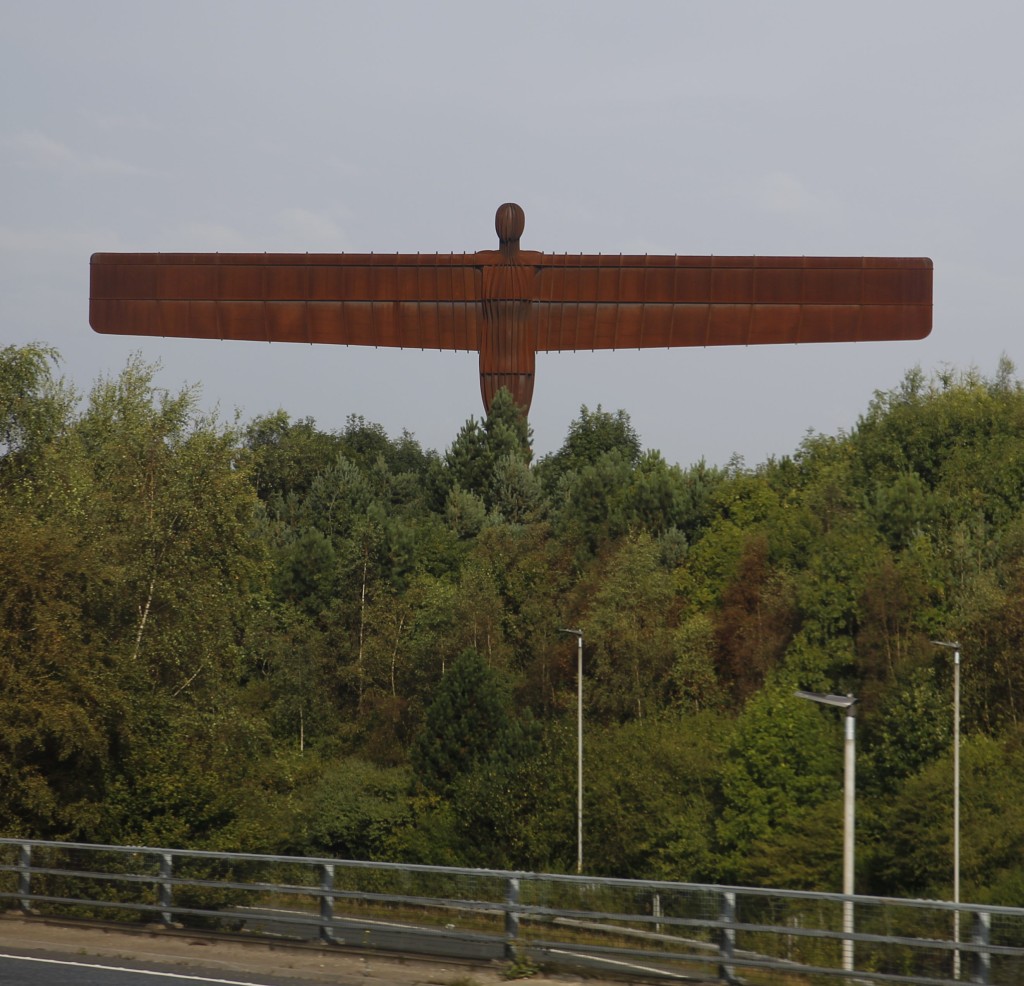
Angel of the North
We traveled mainly north out of York. Along the way we passed an archaeological dig. Peter explained that the area was being developed and that the cost of the dig had to be financed by the developer under the “Developer Pays” Act. We also passed a very large metal structure, called The Angel of the North. I am not sure what to say about it.
Eventually, we turned west a bit and traveled quite a ways paralleling the original Hadrian’s Wall. In most places the only visible remains of the wall is the large ditch, or bern, on the north side of the wall.
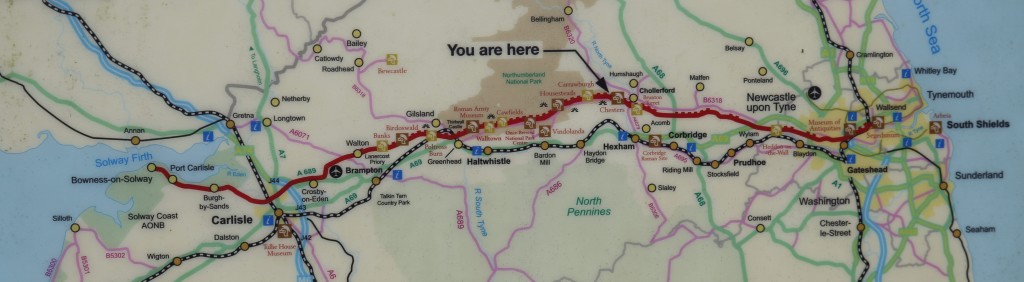
Hadrian’s Wall across England
Finally, we reached Chesters Roman Fort, the finest remaining ruins of one of many forts that the Romans built along Hadrian’s Wall. As has happened so many times on this trip, I was completely surprised by the magnitude of the ruins. This was a big place that housed 500 Roman soldiers. Linda made the statement that the Romans built this place to stay; one of the clerks in the gift shop said “They were here for 400 years, about the same as your country since the landing of the Pilgrims.”
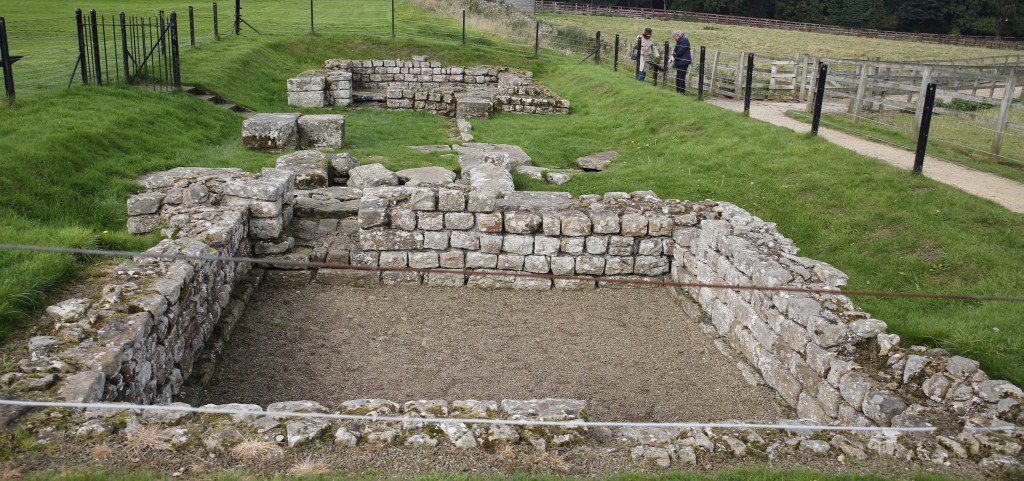
Foundation of north gate
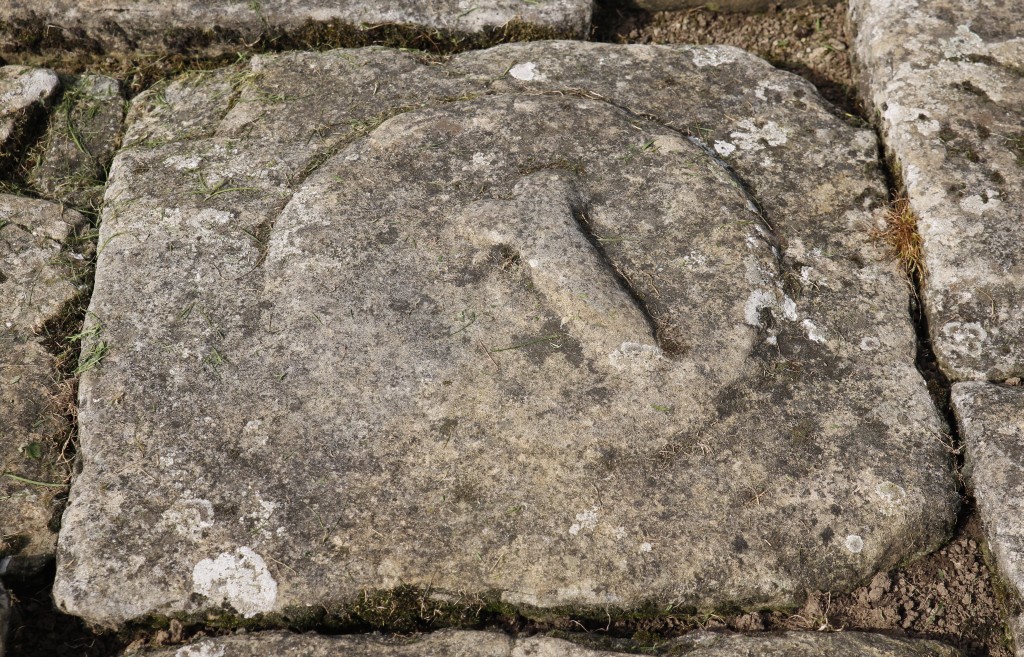
Good luck phallic symbol
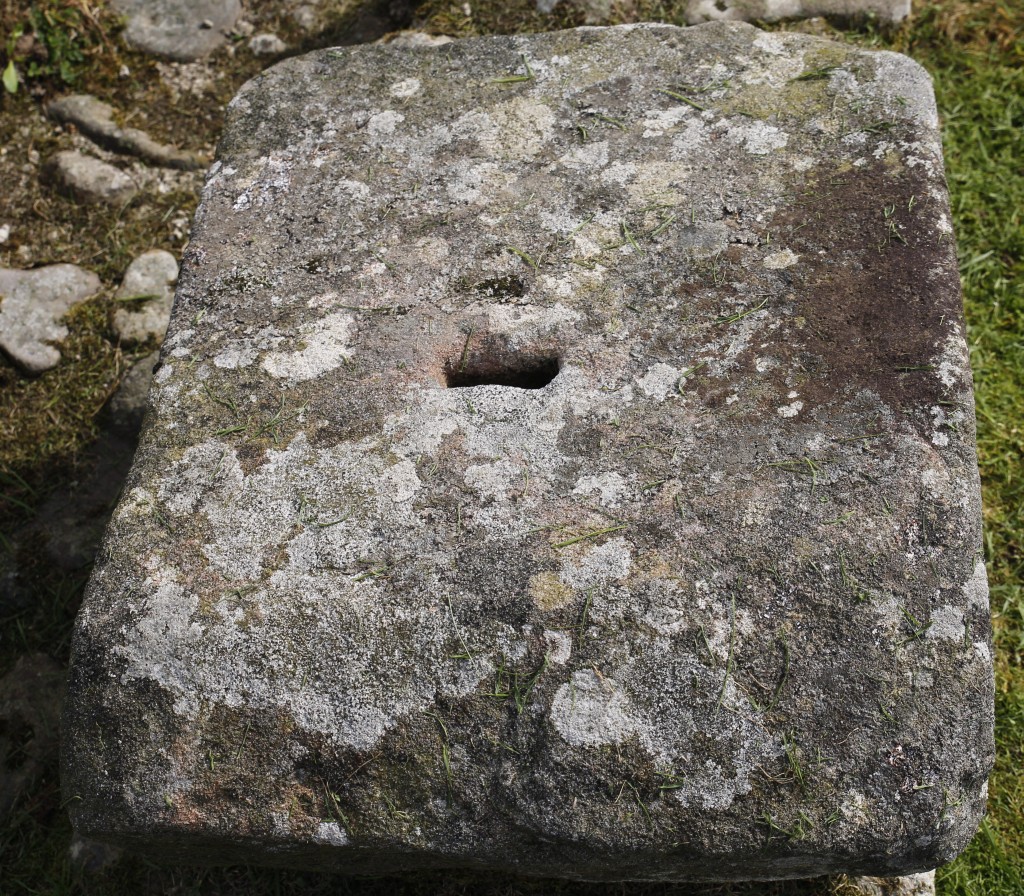
Lewis hole for lifting stone
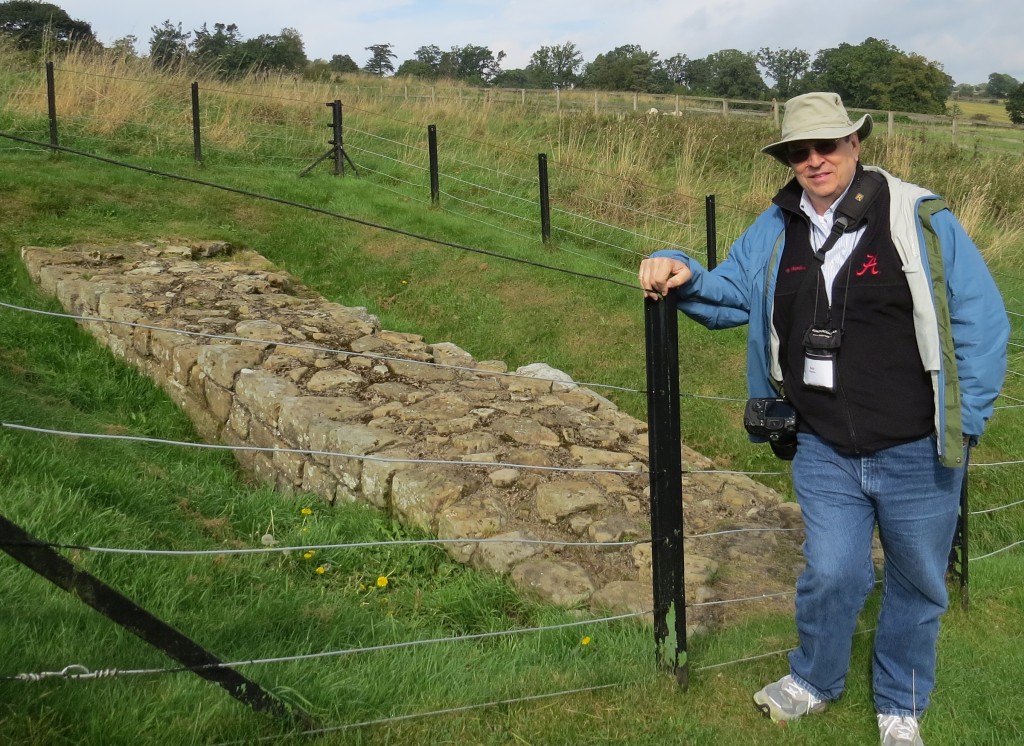
Bob at Hadrian’s Wall
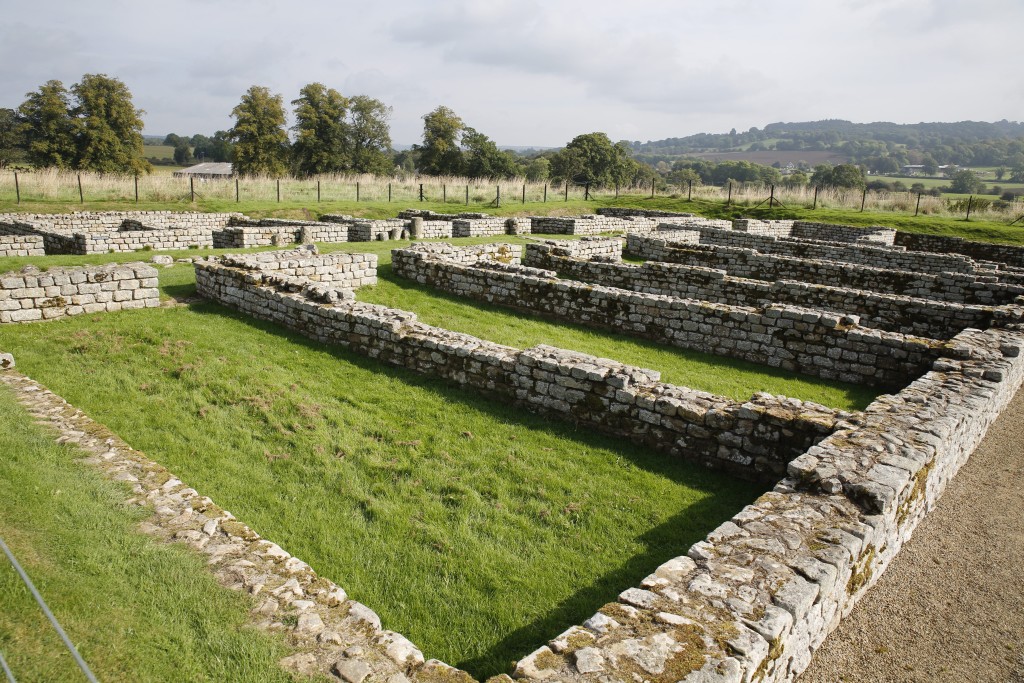
Barracks: 3 men & 3 horses in each enclosure
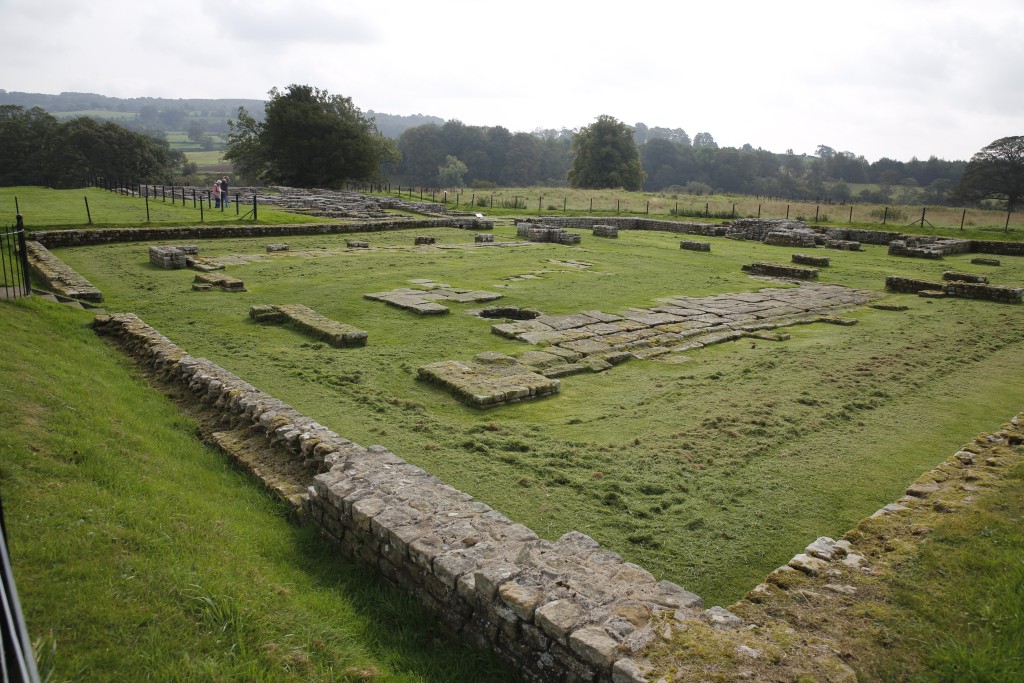
One structure’s foundation inside fort
A short distance from the fort, we had a nice lunch of sandwiches and cakes. We then voyaged on for about an hour and crossed the border into Scotland where we stopped for picture taking. The elevation here is 1371 feet, the highest point on our trip. Crossing into Scotland gave me a feeling of satisfaction: ever since we were first married Linda has been wanting to go to Scotland and I was finally able to say that she had made it there.
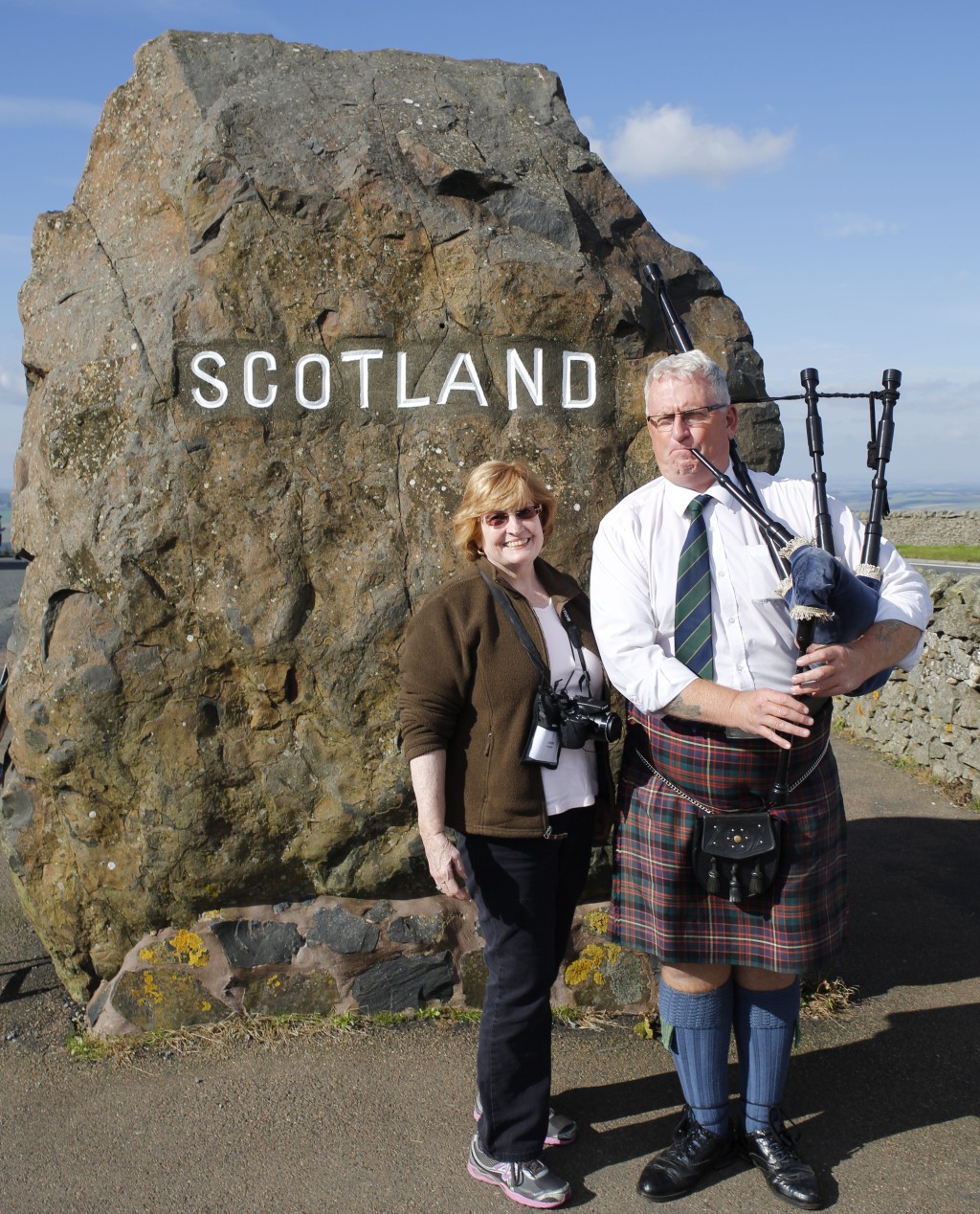
Linda being serenaded by bagpiper
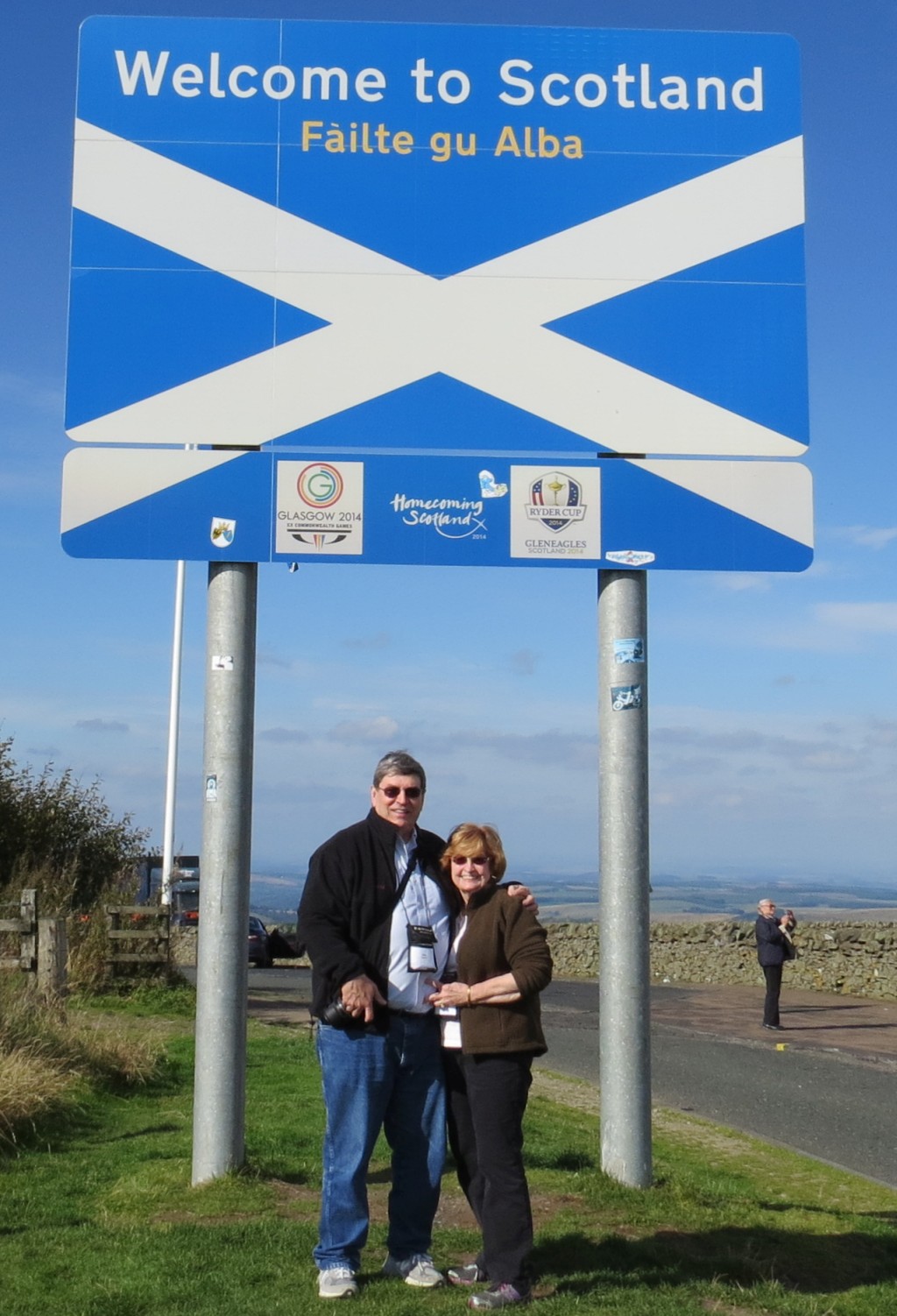
Bob & Linda at Scottish border
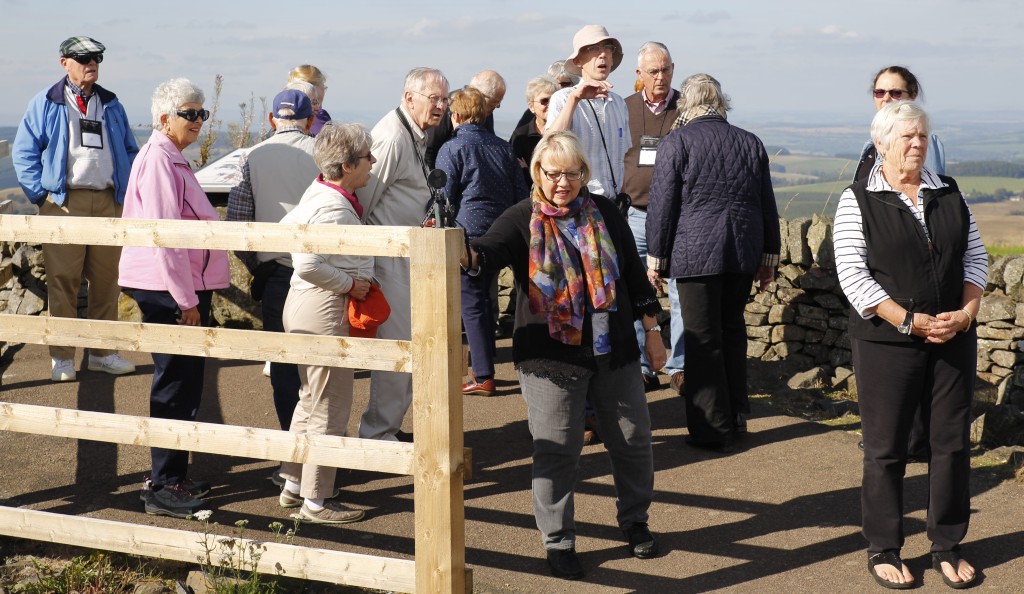
Peter herding cats
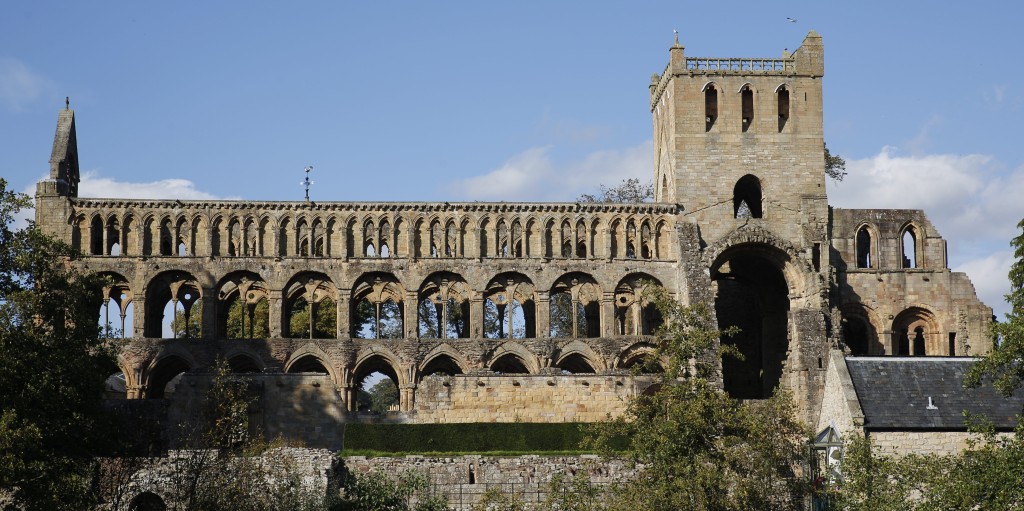
Abbey
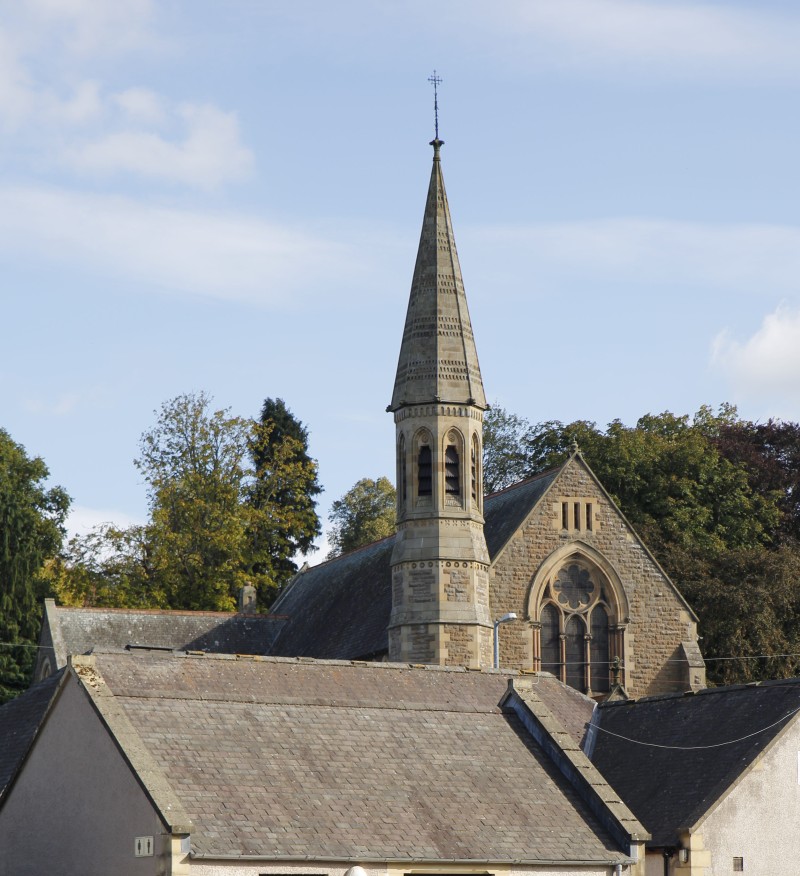
Presbyterian kirk
A little further on, we stopped at the small town of Jedburgh for a rest-room break. Just off the parking lot were the ruins of a beautiful abbey and also a Presbyterian kirk, the main church of Scotland.
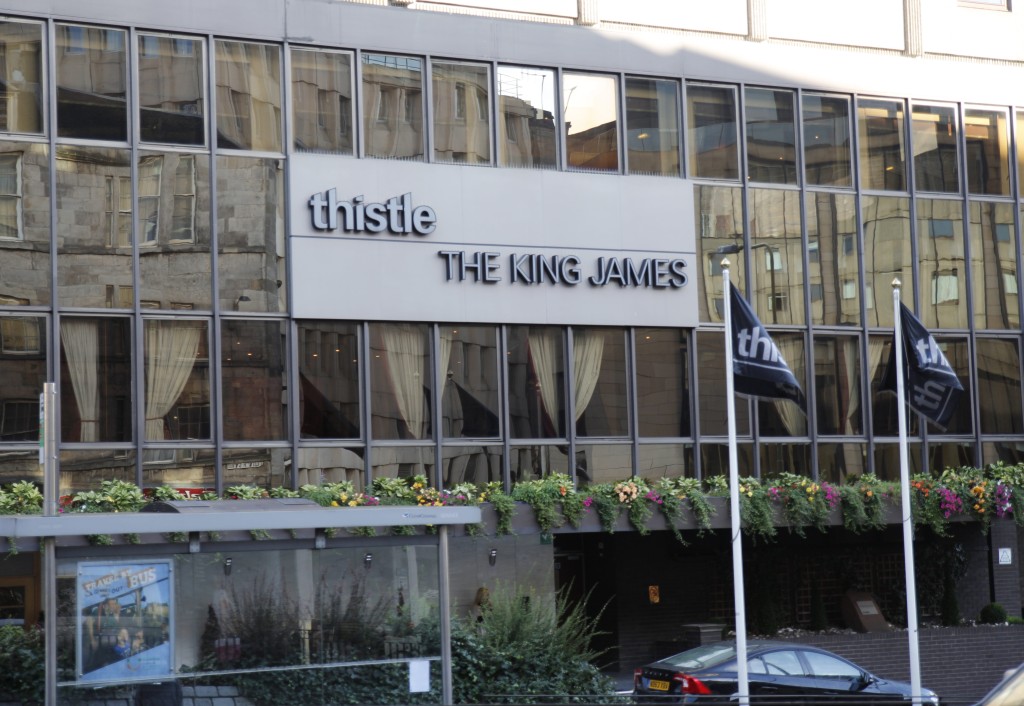
Hotel in Edinburgh
After a short break we then drove on into Edinburgh and checked into the last hotel of our adventure. Before dinner Peter gave us a talk on the history of Scotland. It was really full of very interesting information: I just wish I could remember even 10% of what he told us. We then had dinner, after which we retired for the day.
Day 16: Sep 23 – Edinburgh
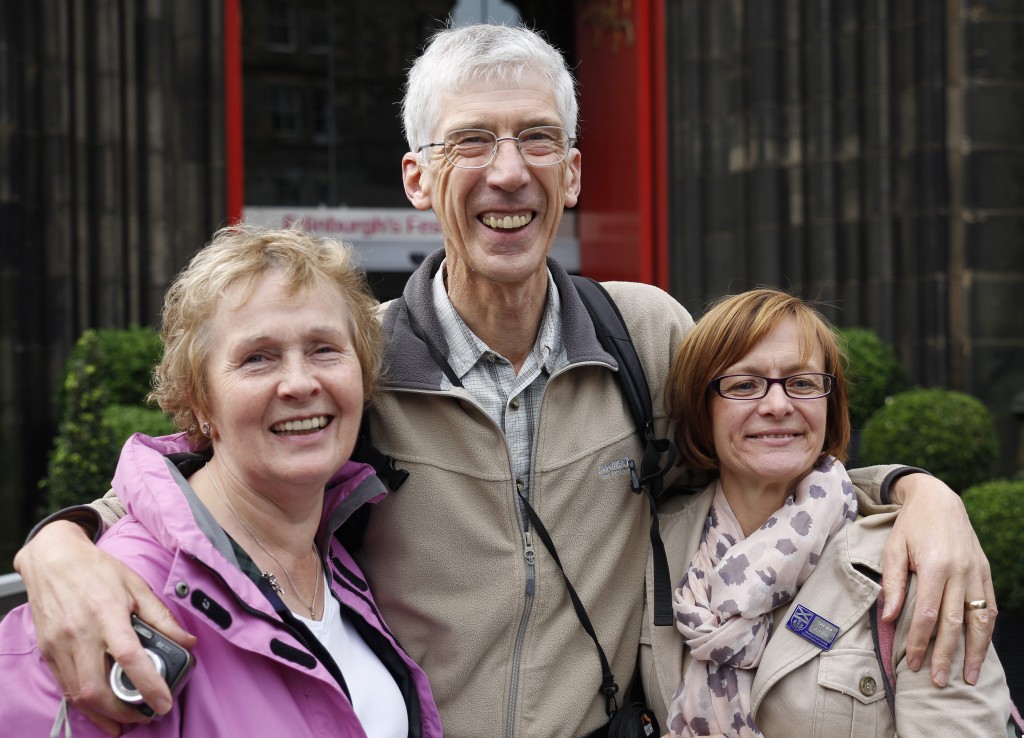
Peter with guides Jane and Shauna
Today we did not get on the bus–oops, make that coach–at all. Rather we spent the morning with walking tour guides, and then we had the afternoon free to wander about on our own. We had two guides, Jane and Shauna, and we divided into two groups with Jane leading the longer but flatter walk and Shauna taking the other bunch up to the top of Calton Hill.
In her introductory remarks about Edinburgh, Shauna explained, without anyone asking her, that ‘burgh’ in Edinburgh is not pronounced ‘burg’ and it is not pronounced like ‘bureau’. She said, “It is pronounced like ‘buhrow’ and don’t ask me why!” I guess that answers my question on pronouncing the city’s name.
On the top of Calton Hill there are a couple of monuments–an “unfinished” Parthenon and a monument to Nelson, an inverted telescope. The weather was beautiful and we did get a very nice panoramic view of the city of Edinburgh which I could not capture with my camera. We could also see the Palace used by the Queen when she is working. She has her own vacation home at Balmoral in the highlands.
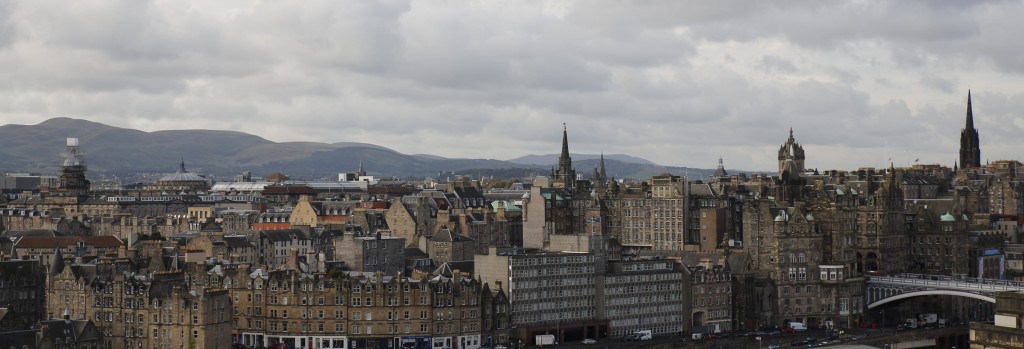
View of Old City from Calton Hill
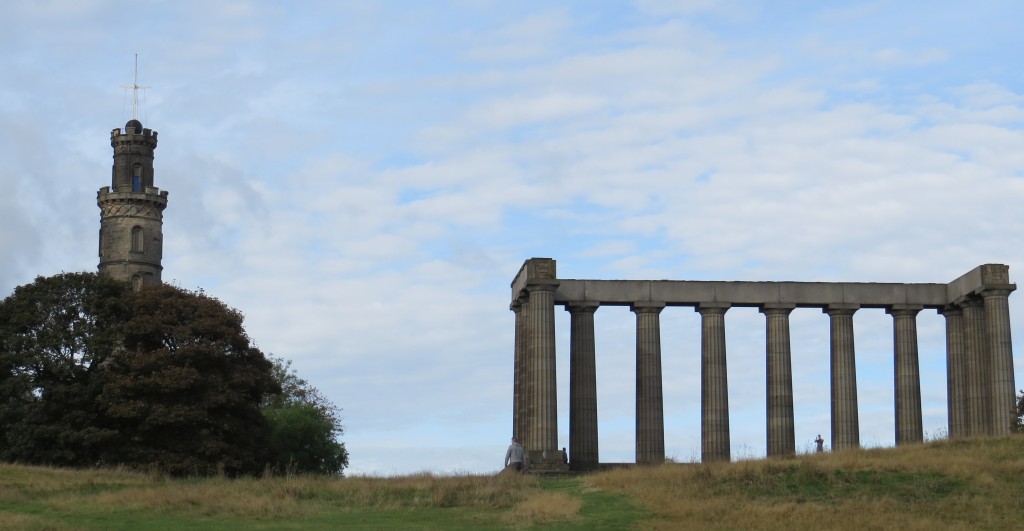
Nelson’s monument and the unfinished Parthenon
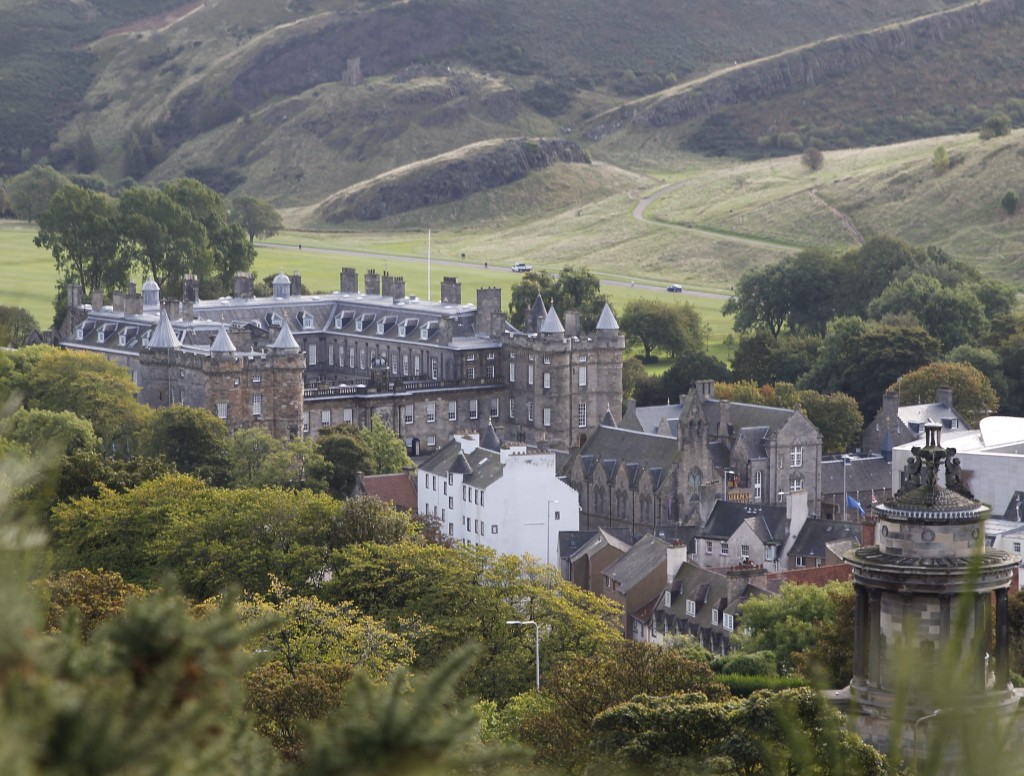
Palace at lower end of The Royal Mile
After we descended Calton Hill we began making our way over into the Old Town and walked up High Street–The Royal Mile. Shauna pointed out numerous buildings and monuments and she also mentioned many Scottish writers, including Robert Burns, Robert Louis Stevenson, Sir Walter Scott, Arthur Conan Doyle and J.K Rowling, to name a few.
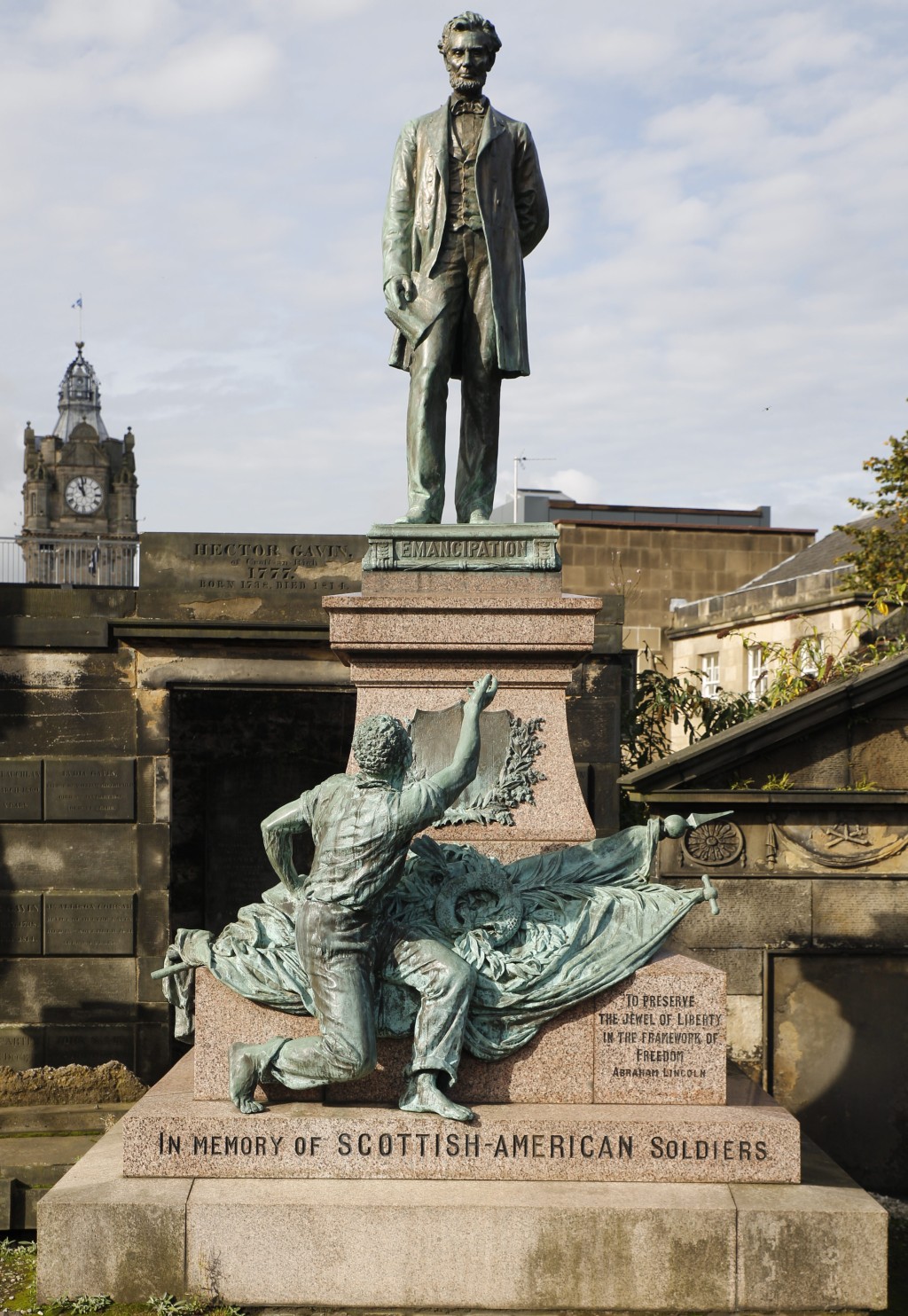
Statue of Lincoln
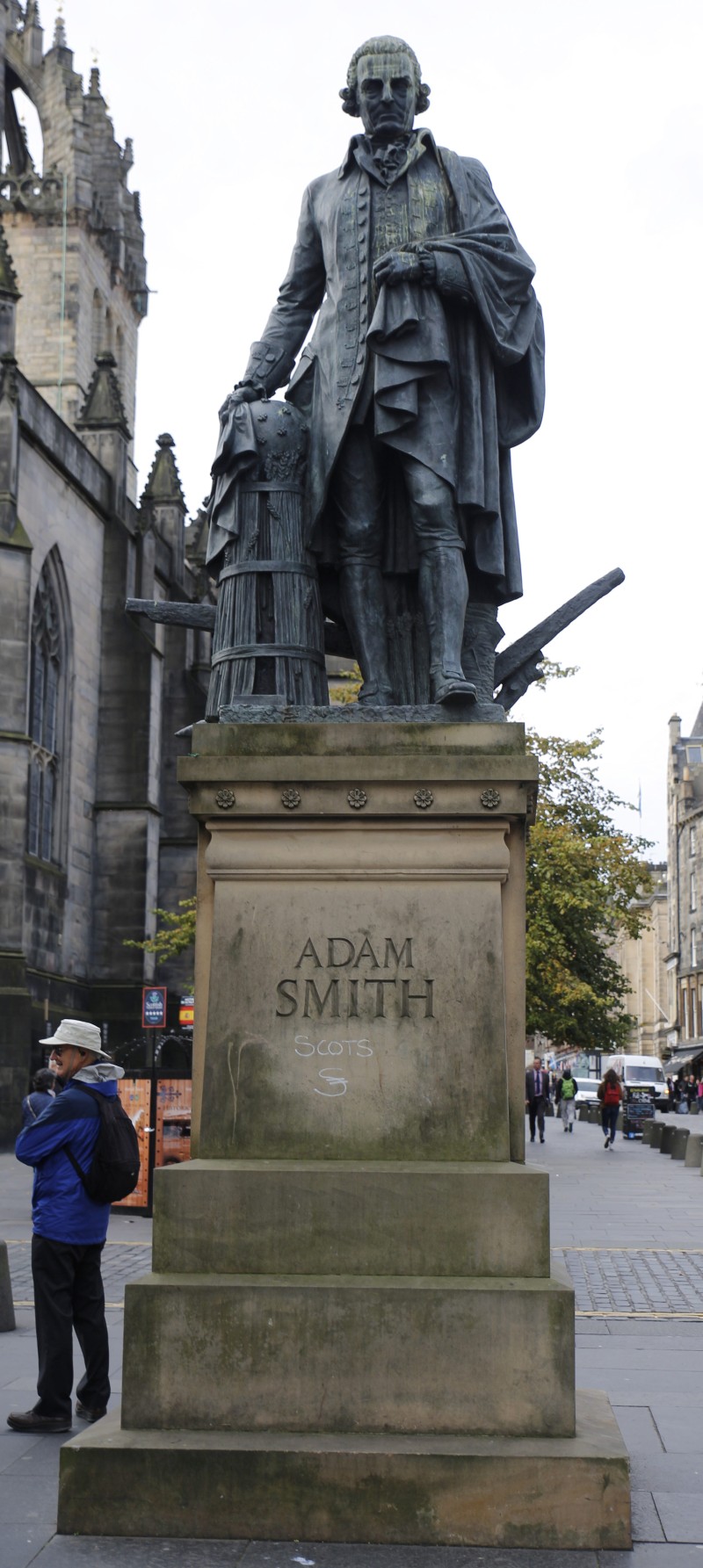
Adam Smith, the father of economics
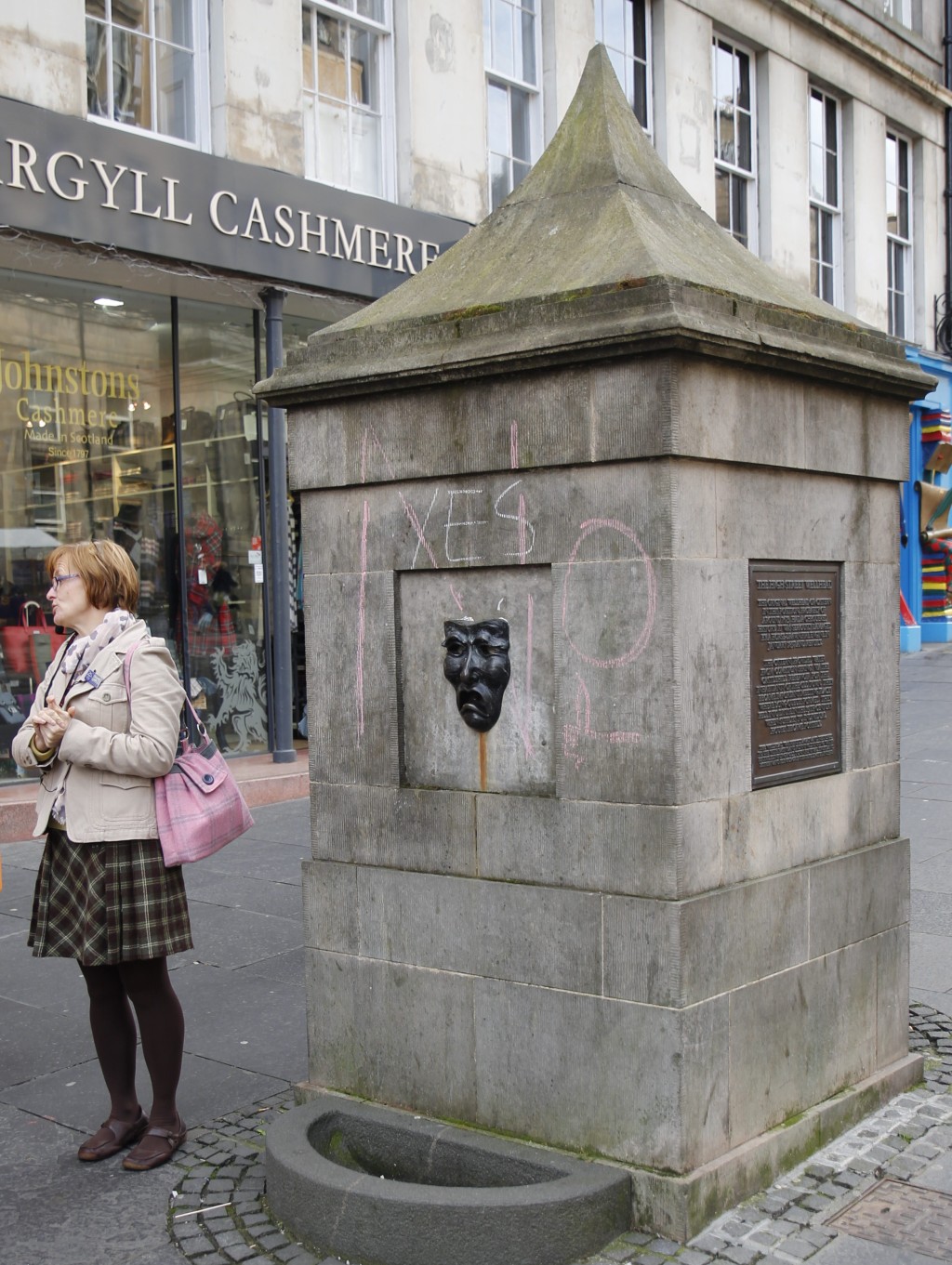
High Street wellhead
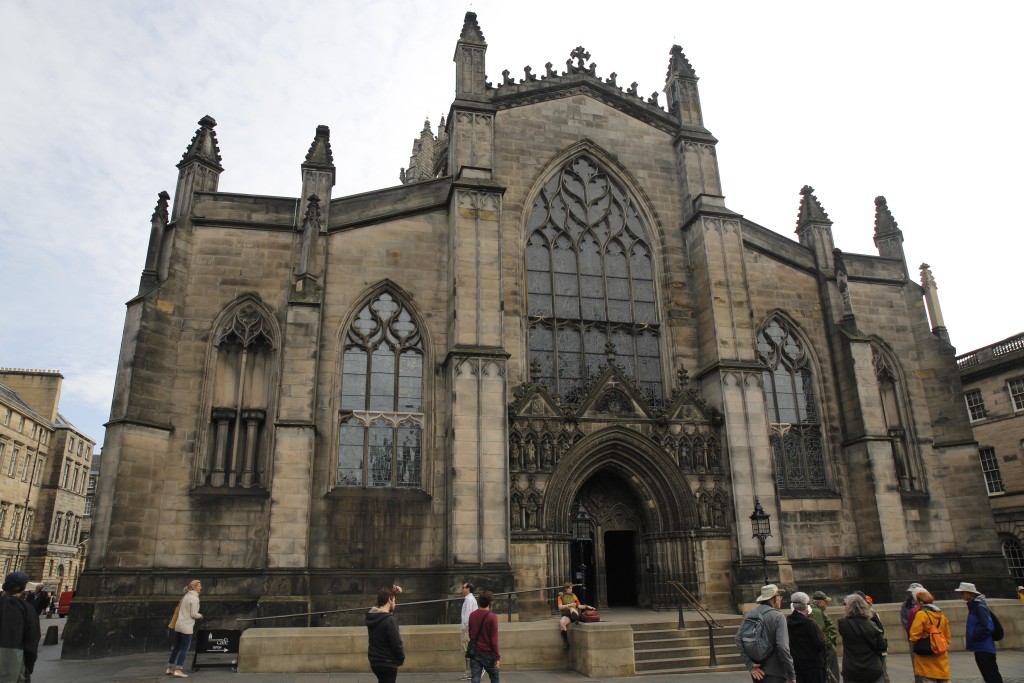
St. Giles, Church of Scotland
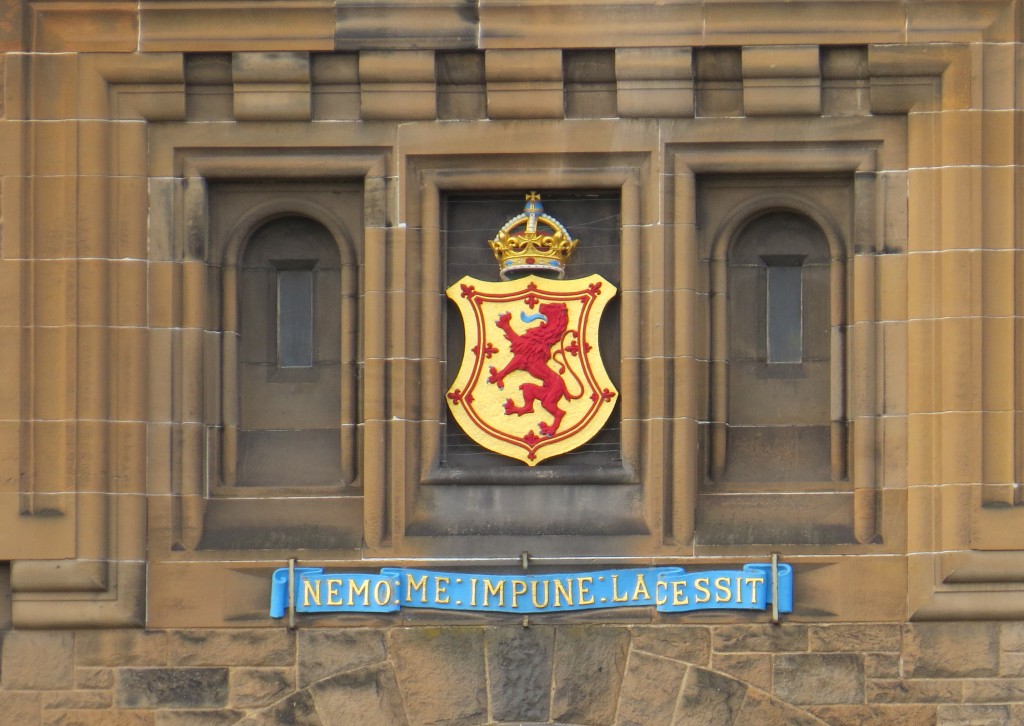
Motto of Scotland – essentially, “Don’t mess with me”
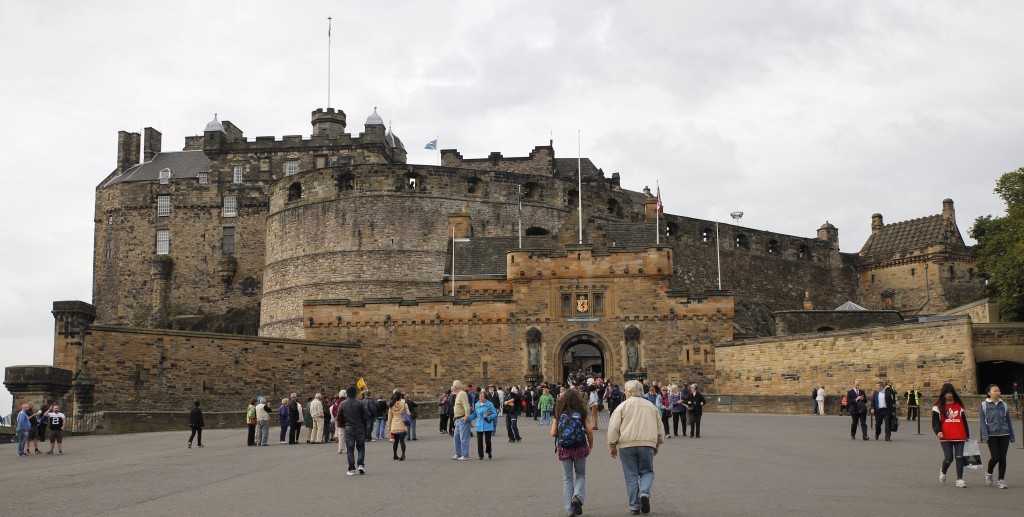
Castle at top of Royal Mile
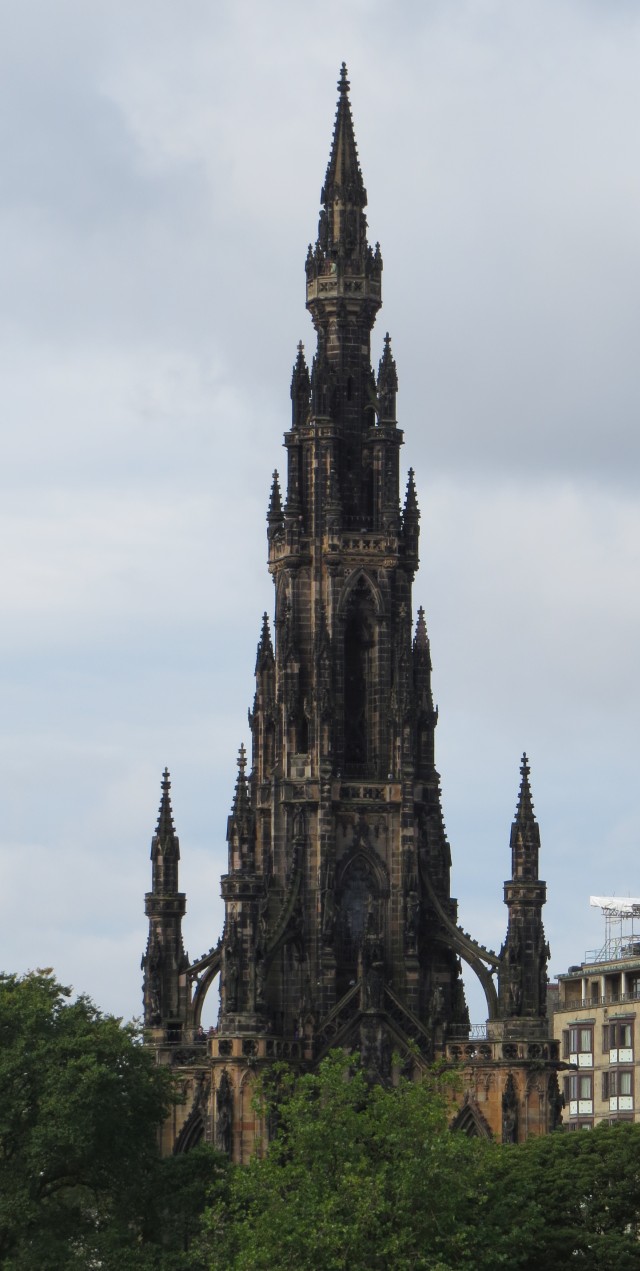
Scott Memorial – the Gothic Rocket
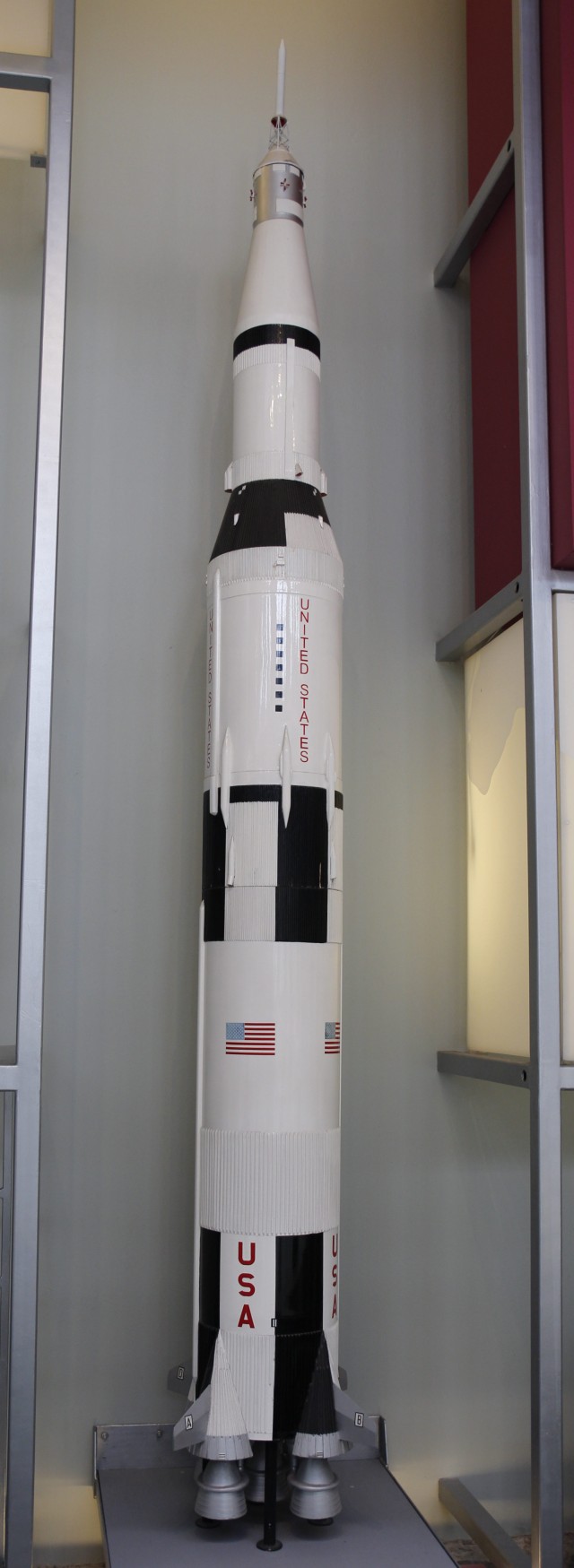
Saturn V Model in The Museum of Scotland
After the walking tours we all did a lot of exploring on our own. One of the monuments to Sir Walter Scott is referred to by the locals as the Gothic Rocket. We were surprised and amused by its comparison with another rocket of which a model is displayed in The Museum of Scotland–a Saturn V.
As we explored the city, we felt compelled to do the normal tourist things such as: rubbing David Hume’s big toe for luck, buying new hats to complete our wardrobes, and visiting the place where Harry Potter got started. It was nice easy day for for the Road Scholar adventurers.
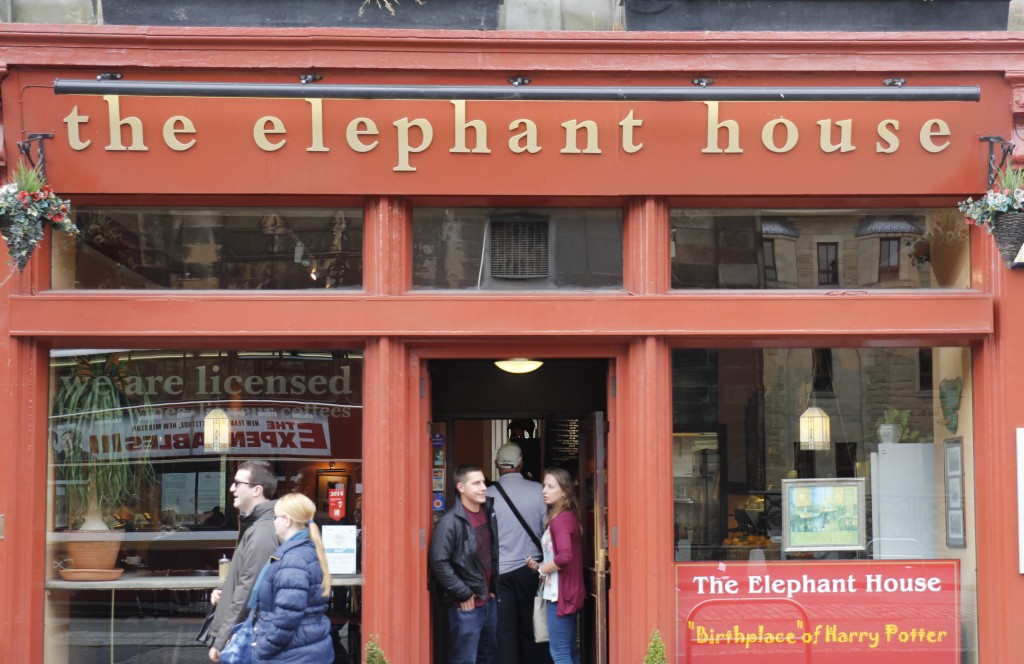
Harry Potter’s birthplace
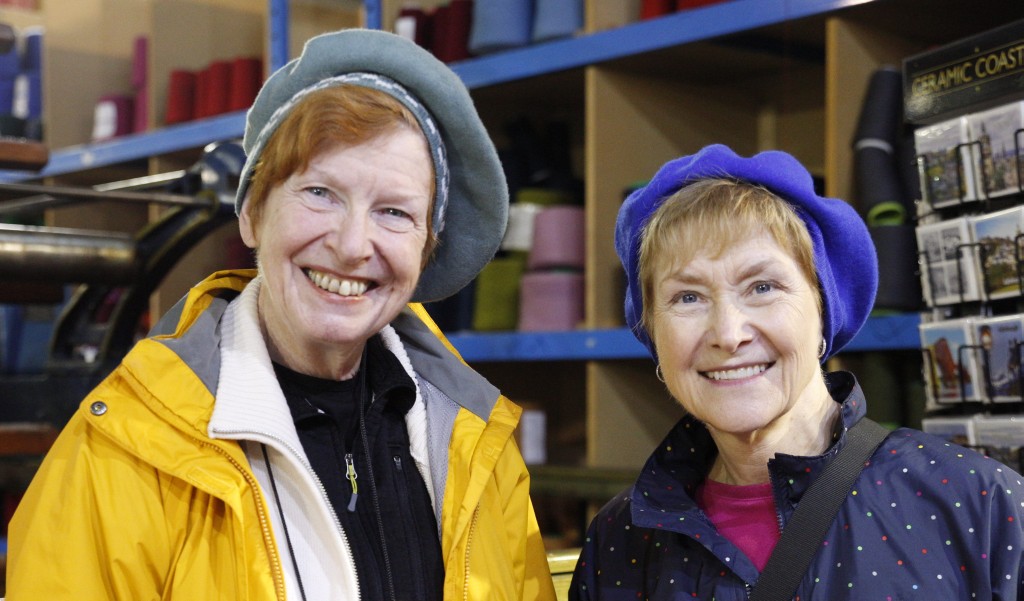
Heidi and Beverly sporting their new tams
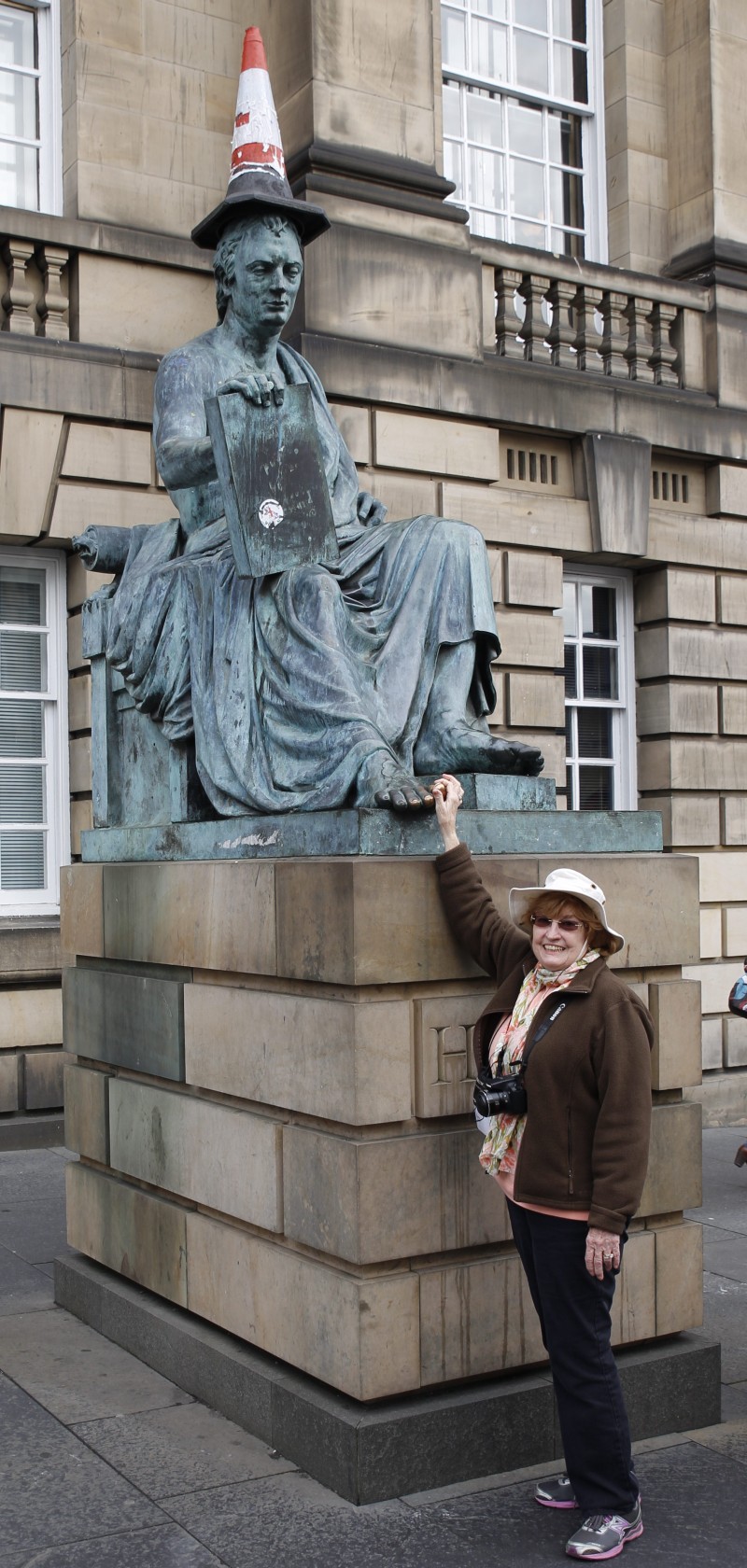
Linda rubbing David Hume’s big toe
Day 17: Sep 24 – Edinburgh
This morning we ventured forth heading north over the Firth of Forth by Fife to Perth. (Say that three times rapidly.) Our first stop is at Huntingtower Castle a little over an hour’s drive from the hotel. As we crossed the large road bridge over the Firth, Peter explained that the bridge is deteriorating badly and that a replacement bridge is being constructed. We all held our breath as we crossed it safely; however, we still have the return trip to think about.
We passed through beautiful rolling countryside with well-tended farms. Today we reach our furthermost point north, 56.5 degrees latitude. Further north in the distance we can see the Scottish highlands.
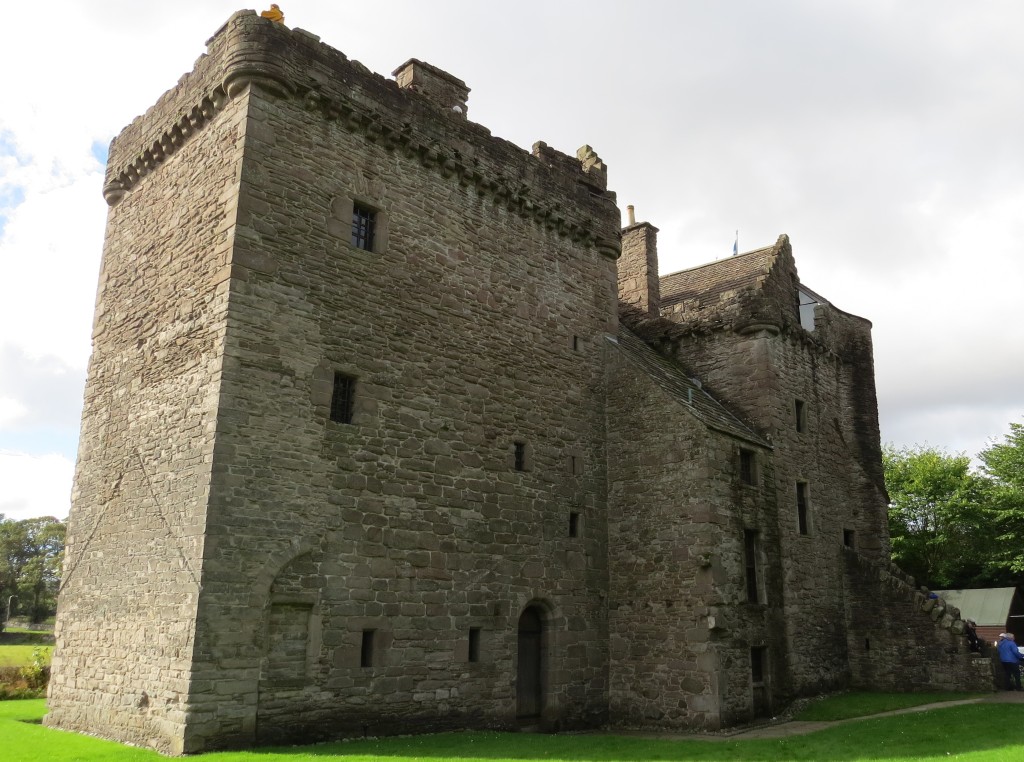
Huntingtower Castle
Beckie, the Huntingtower Castle custodian, gave us an introduction to the structure. The castle was originally two separate towers, the earliest built around 1480 and the later around 1500. The two towers were joined in the 16th century.
Beckie explained that the castle had a connection with Shakespeare’s Macbeth. James VI (James I of England) had been held prisoner in the castle and told several conflicting tales about his experience. When James assumed the throne in England, Shakespeare tried to get on his good side with the now-lost play Gowrie. However, the play was not very flattering to James, and it was stopped when the king expressed his displeasure. Shakespeare still liked the basic story, however, so he modified it and introduced the Scottish kings Duncan and Macbeth. Beckie assured us that Duncan died in his sleep at an advanced age and that Macbeth was a good king. Repeat after me: “You do not learn history from Shakespeare”.
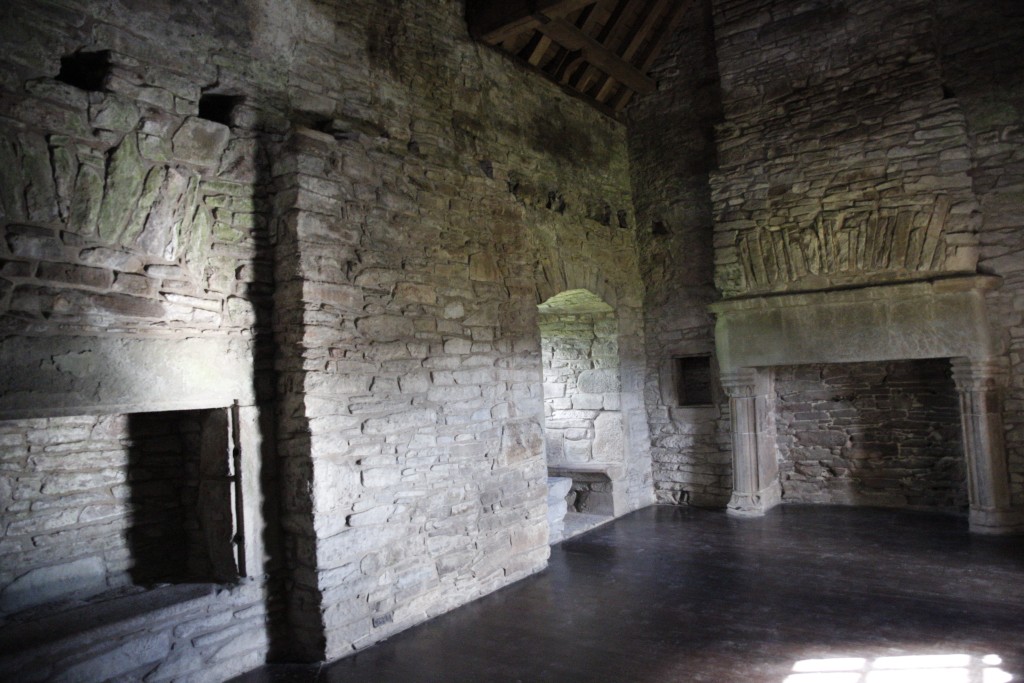
Castle interior
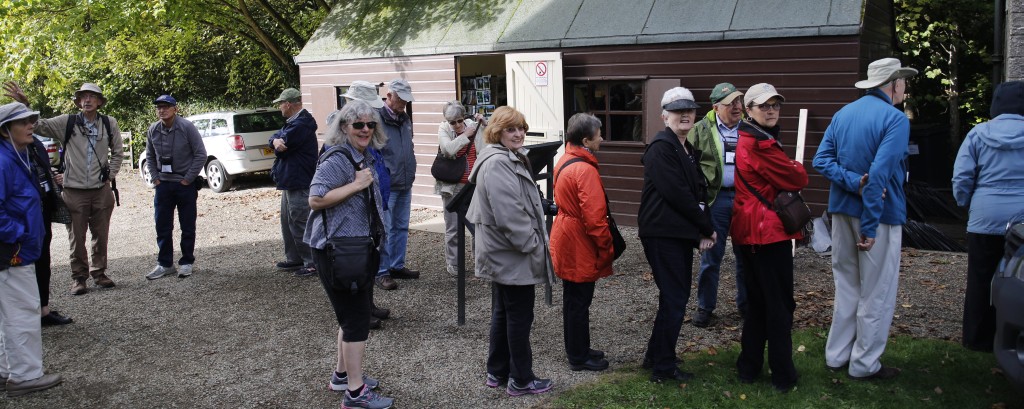
Typical queue for toilets
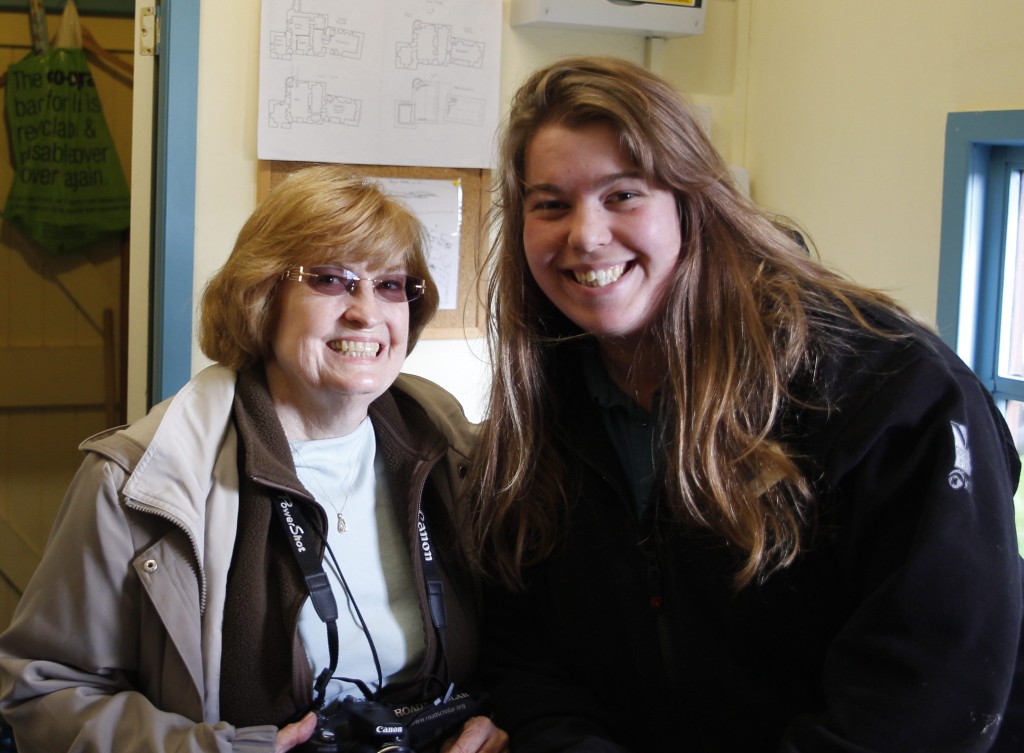
Custodian Beckie
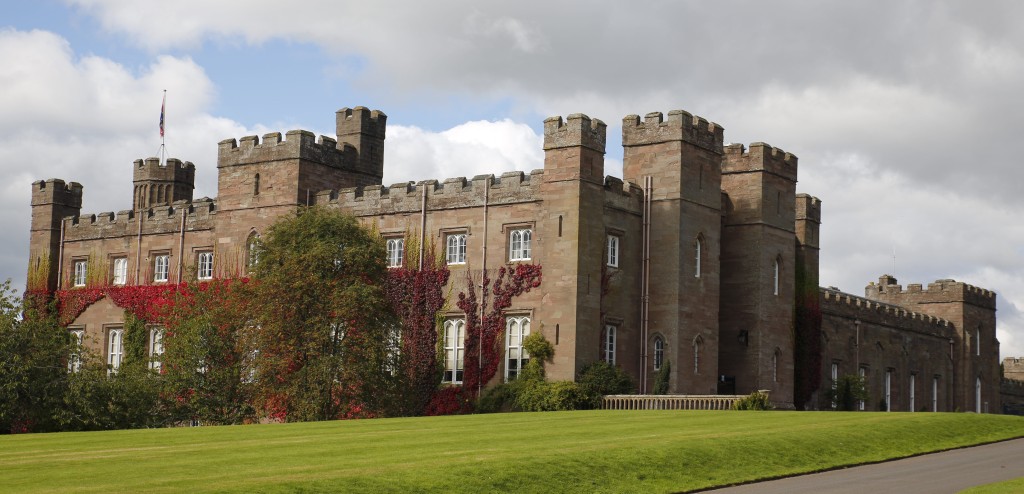
Scone Palace
We then drove a short distance to the Scone (sounds like scoon) Palace. This was originally an abbey and is now a beautiful private home. Other than the magnificent palace and the sprawling grounds, the first things we spied as we pulled into the car park were the animals. Numerous pea cocks and pea hens roamed freely about the place, and several very shaggy cows grazed in an adjacent pasture.
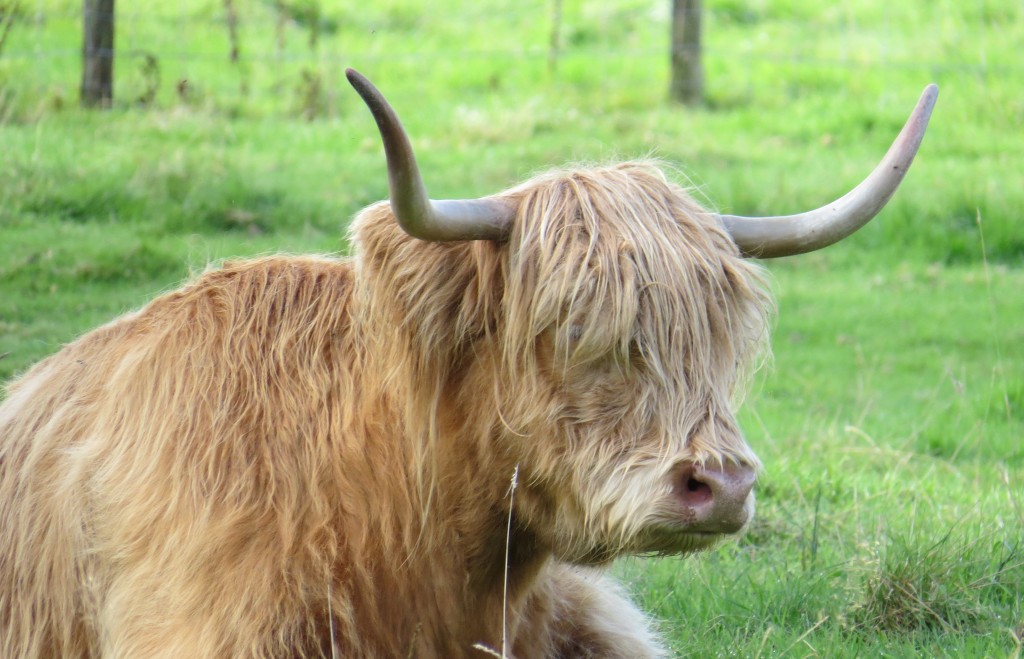
Shaggy beast
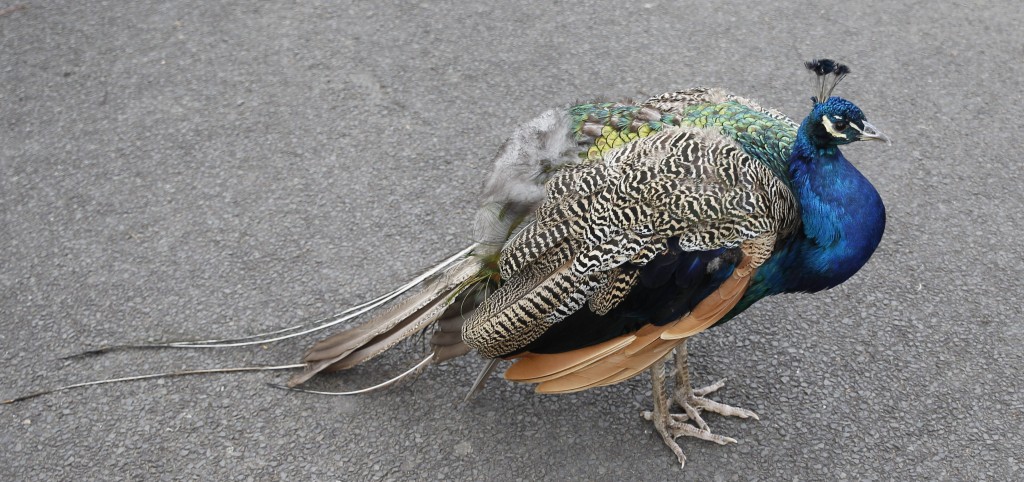
Peacock
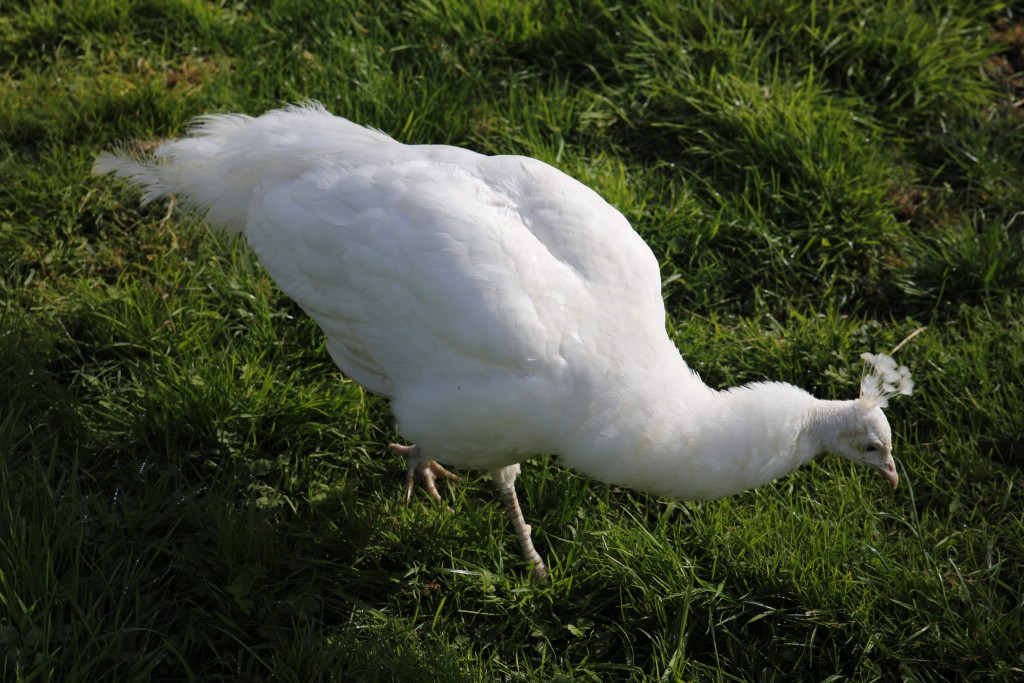
Albino
The real importance of Scone Castle is that this was the location where the Scottish kings were crowned. The coronation occurred on Moot Hill with the king sitting on the Stone of Scone, or Stone of Destiny. The story of this stone is fascinating but too long to go into here. Just Google “Stone of Scone” to learn more about it.
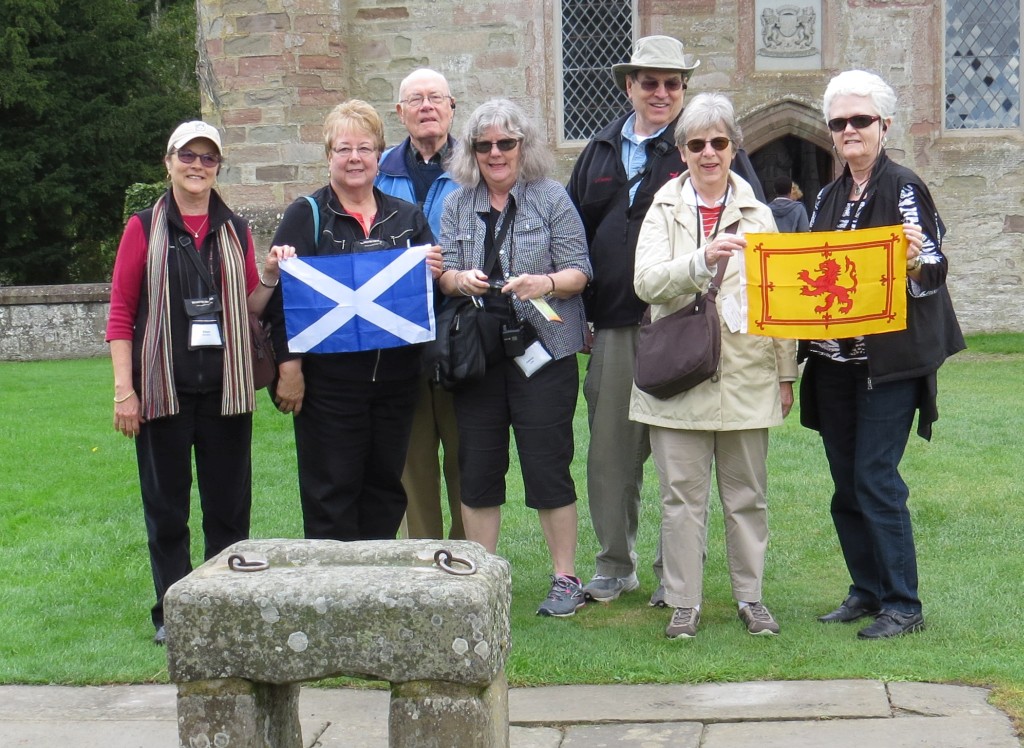
Folks with Scottish blood at the Stone of Scone
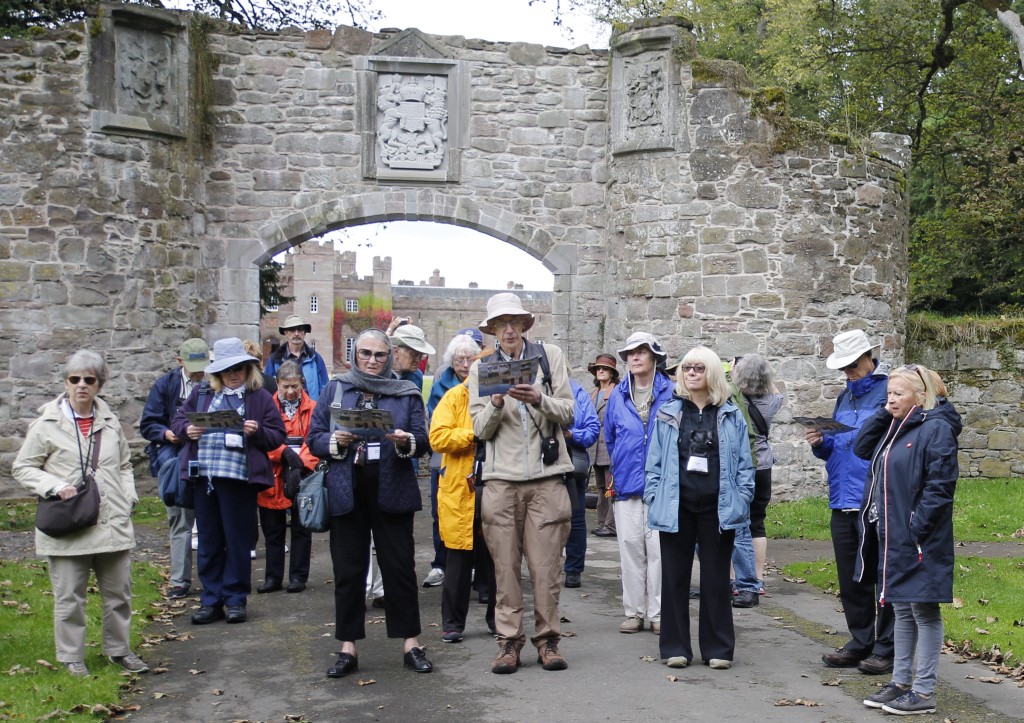
Group at the main gate
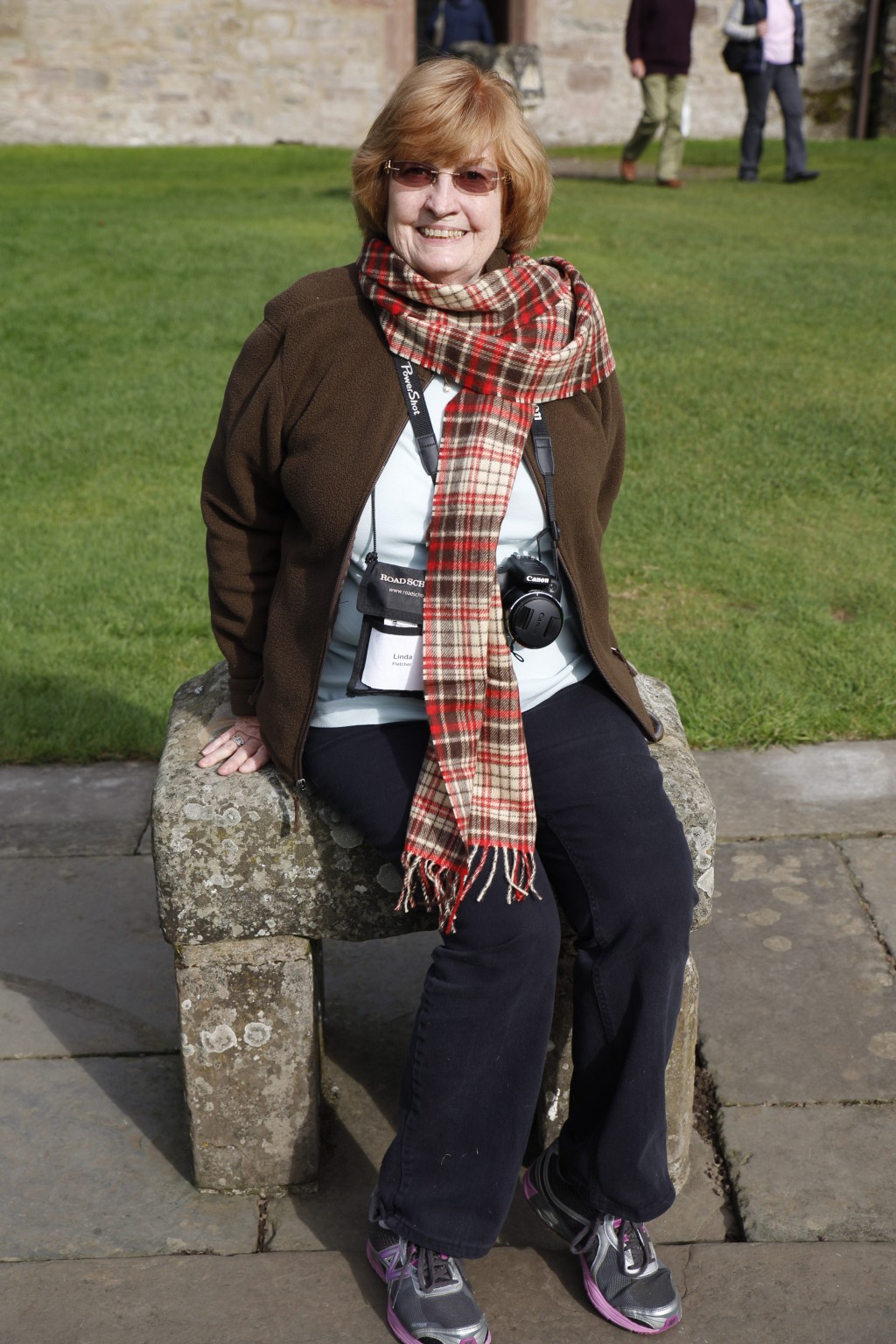
Linda on the Stone of Scone
The grounds were well cared for and had a couple of other monuments and a cemetery. It also contained a surprisingly complicated maze. Linda and I ventured into the maze right after lunch, before our tour into the castle. After quite a bit of wandering around, we started to worry if we would make it back by the scheduled meeting time. We did finally find our way out and when we mentioned this to Ros, she told us the secret for finding your way through the maze. When we asked why she didn’t tell us this before we entered it, she said, “Well, you didn’t ask.” I think she was trying to get rid of us!
Linda at the center of the maze
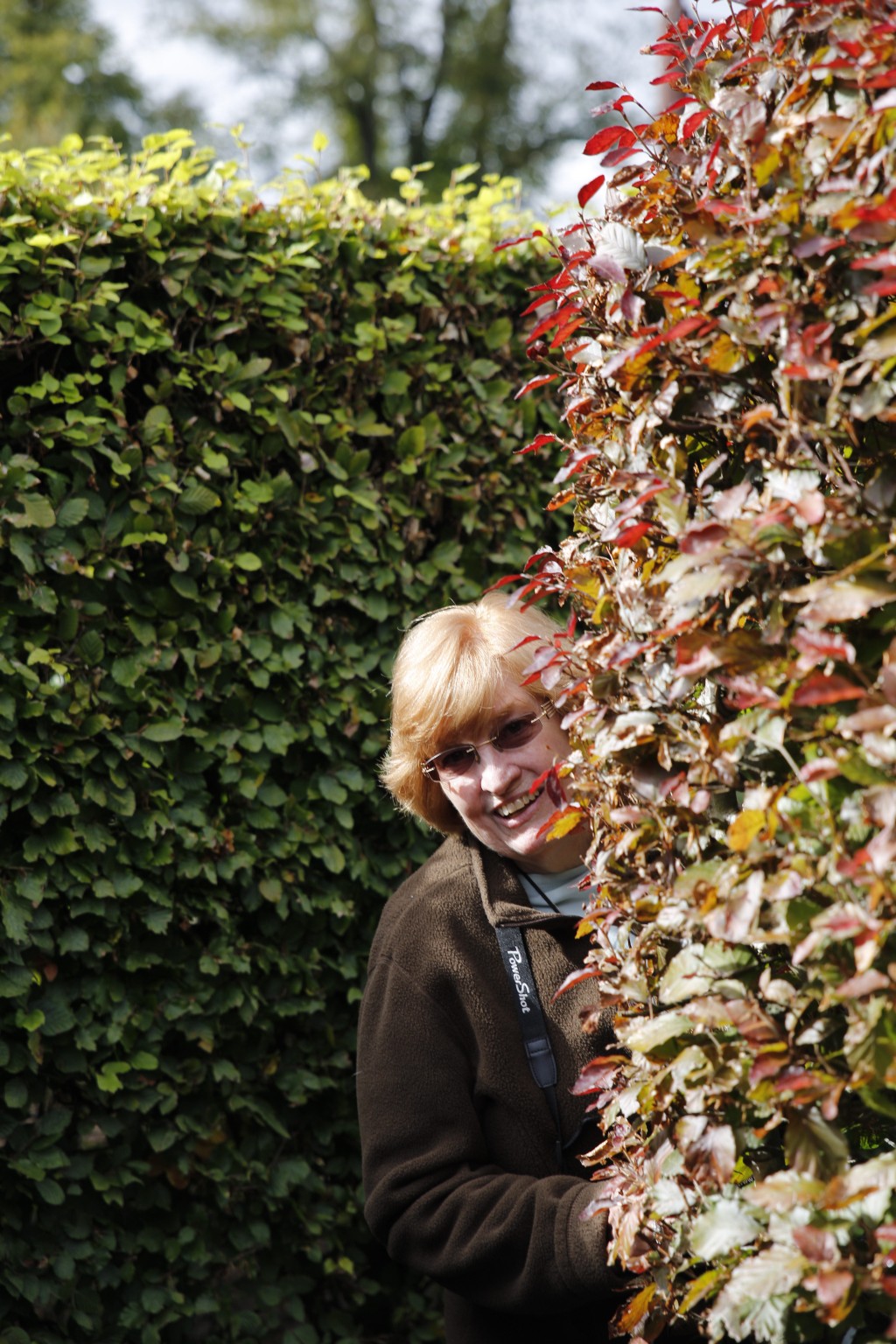
Linda lost in the maze
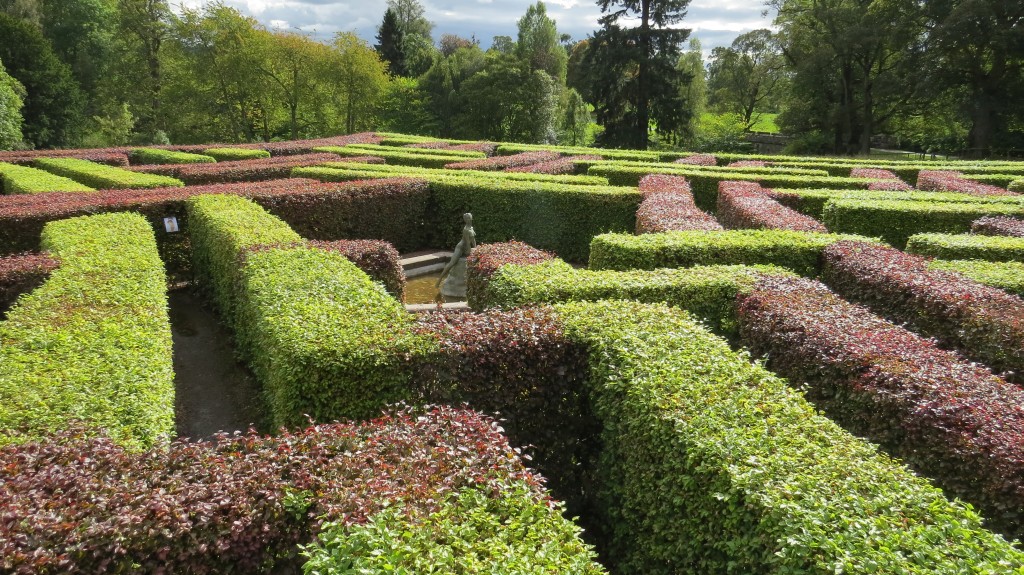
The maze
We then returned to the hotel, safely re-crossing the deteriorating bridge over the Firth. After another good meal, many in the group visited a local pub for a beer and socializing before turning in.
Day 18: Sep 25 – Edinburgh
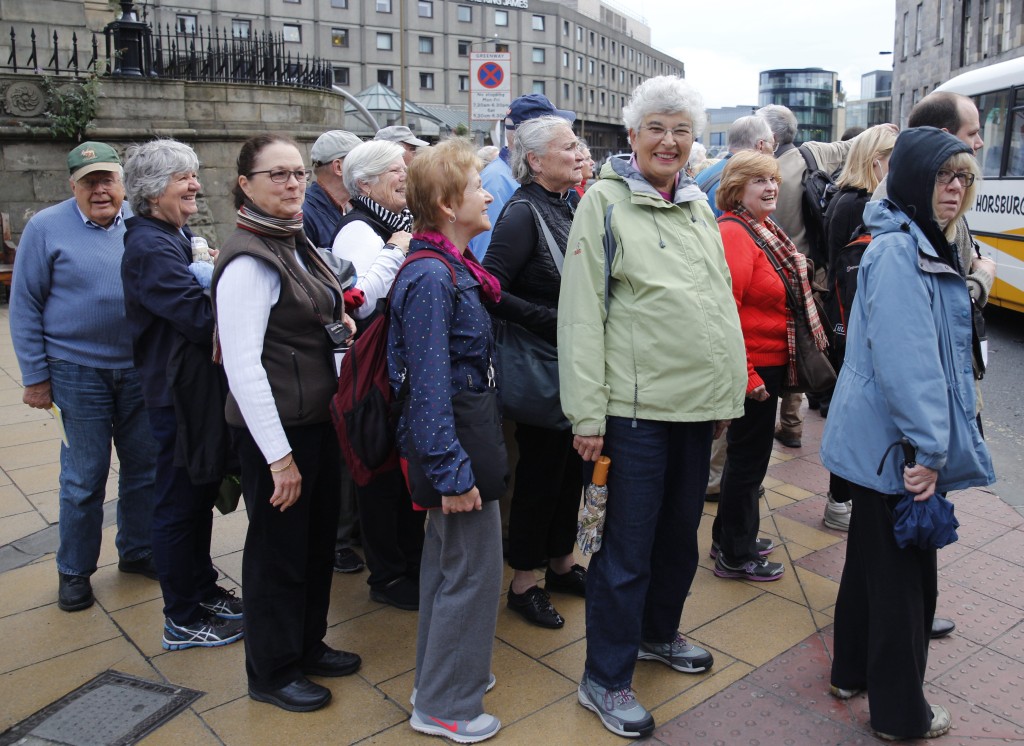
Our last ‘boonch up’
This morning, our last day to travel as a group, we had to take a short walk to get to the coach. It was the last opportunity for Peter to tell us to ‘boonch up’ as we crossed a busy street, and it was a little sad to think that this was the last time we would hear that gentle command.
It was a fairly long ride today, about two hours, as we traveled west to Loch Lomond just outside Glasgow. Again, the countryside is covered with neat gentle hills and farms; but Peter explained that forty years ago much of the area was heavily industrialized with factories and mines and that the land had subsequently been reclaimed for agriculture.
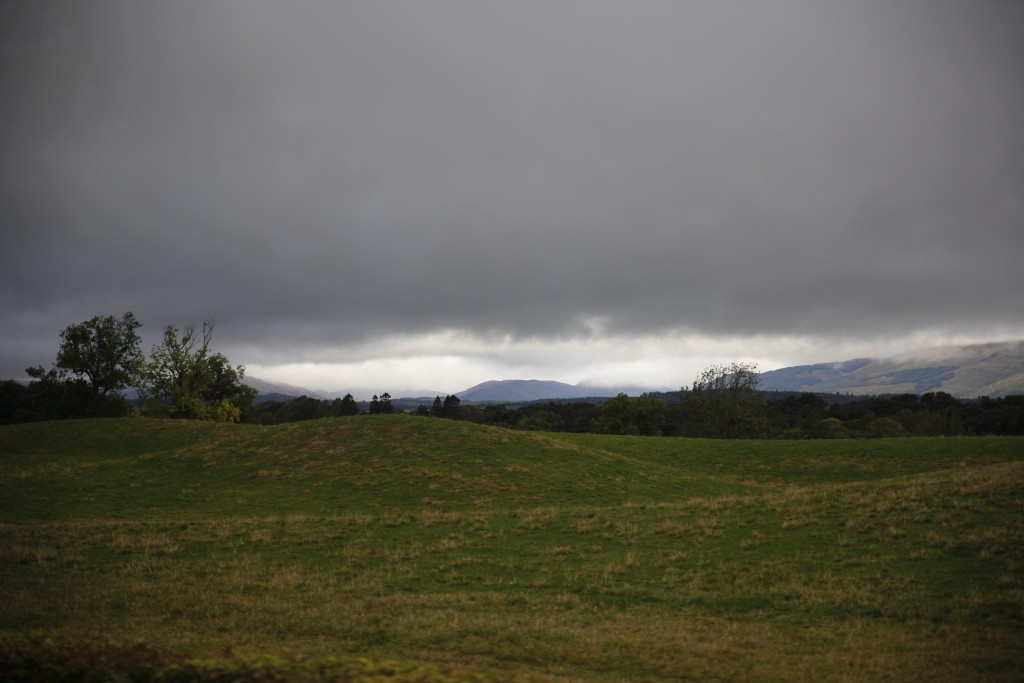
Threatening clouds
As we drove west we were a little concerned about the weather; the temperature was pleasantly cool but the skies were overcast and threatening. We’d had very good weather for the entire time, except for one dreichy day at Stratford-upon-Avon, and we all hoped that the rains would hold off for one more day.
Shortly before reaching Balmaha on the banks of Loch Lomond, we participated in another group sing. We had some very good voices on board, but folks at the front and rear of the coach kept singing at different tempos. The net effect was rather strange–it sounded as though we were singing a round. Naturally the song we sang was “The Bonnie Banks o’ Loch Lomond”, which sounds like a hauntingly sweet song about a lost love, but there is a little more to it than that. It was supposedly written by an anonymous soldier who died while imprisoned during the Jacobite rebellion.
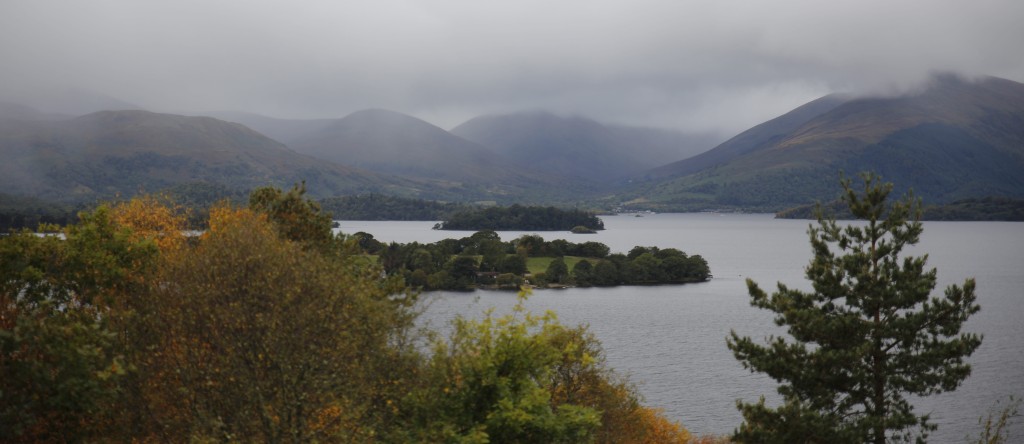
Banks o’ Loch Lomond
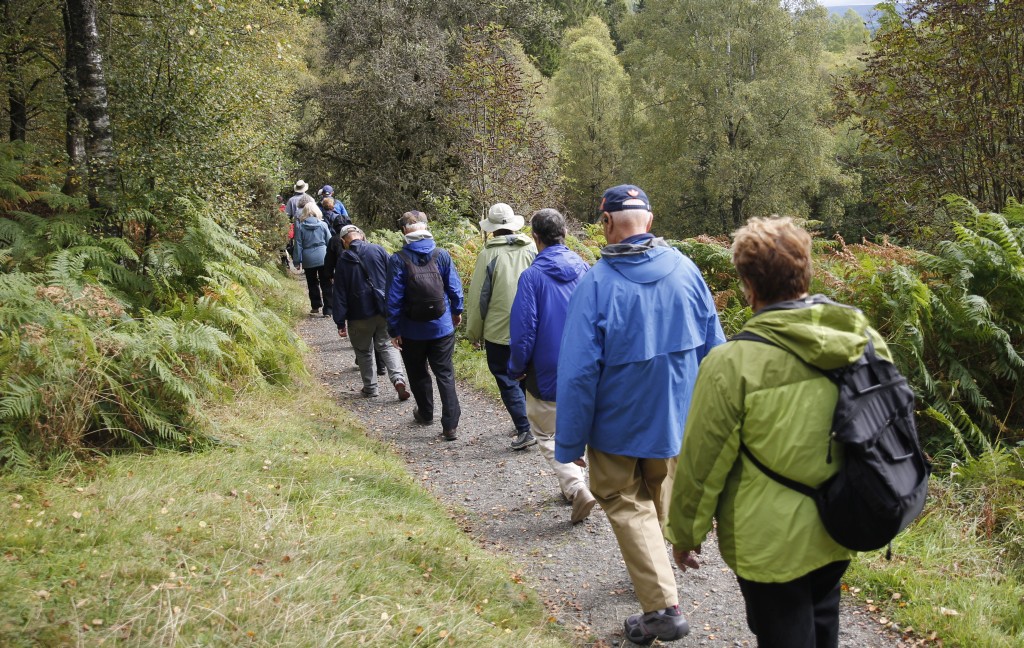
Highlands hike
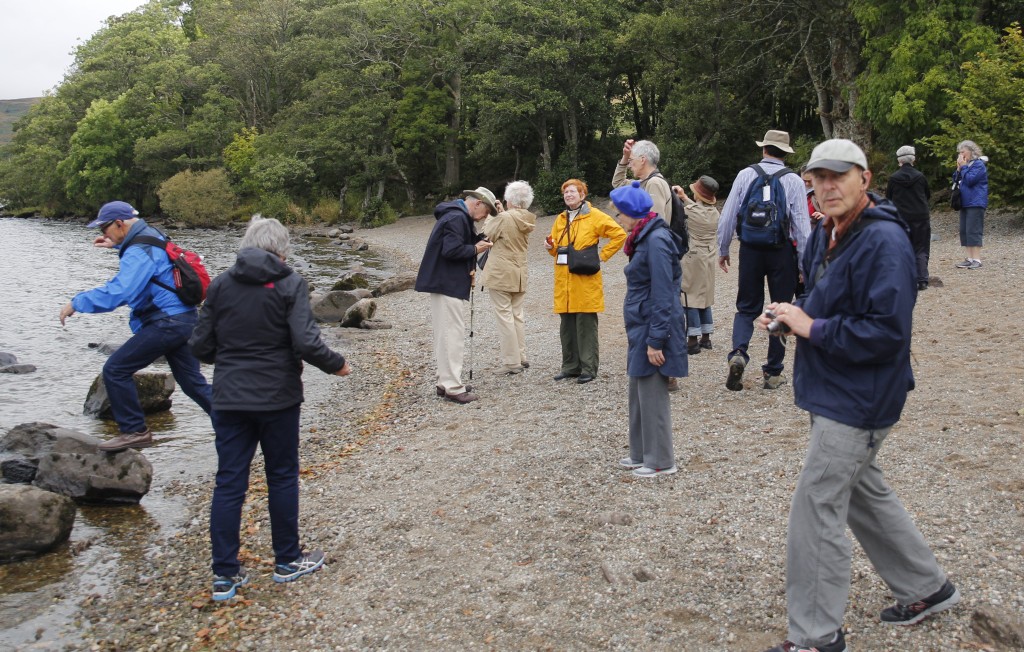
Loch Lomond beach
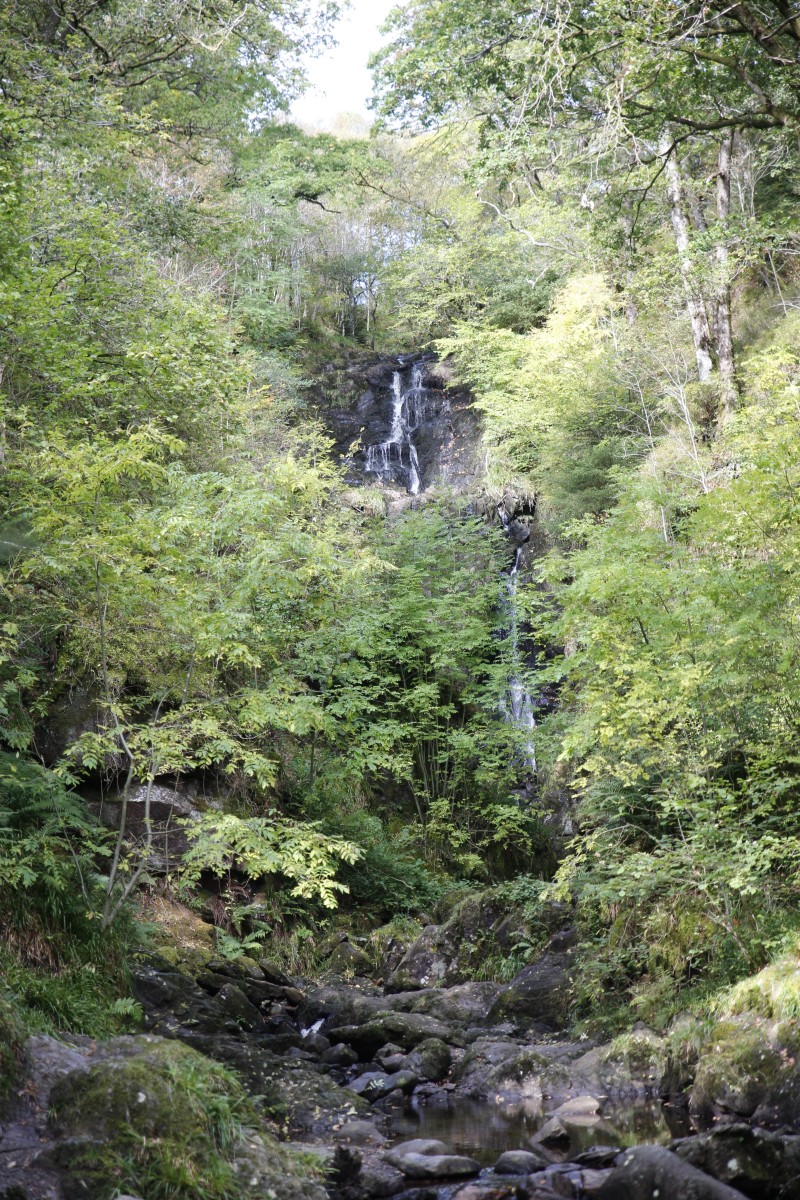
Little Fawn Waterfall
The weather improved when we reached the loch, and we had some nice views, although the peak Ben Lomond remained stubbornly cloud covered. Most of us took a walk along the shore of the loch, but Fred disappointed us by refusing to wade in the lake as he had so bravely done in the Irish Sea at Llandudno. Even so, we could at least claim that we took a hike in the Scottish highlands.
We then had a lunch of sandwiches at the David Marshall Information Center, followed by a gentle stroll to a pretty, near-by waterfall, known as the Little Fawn Waterfall.
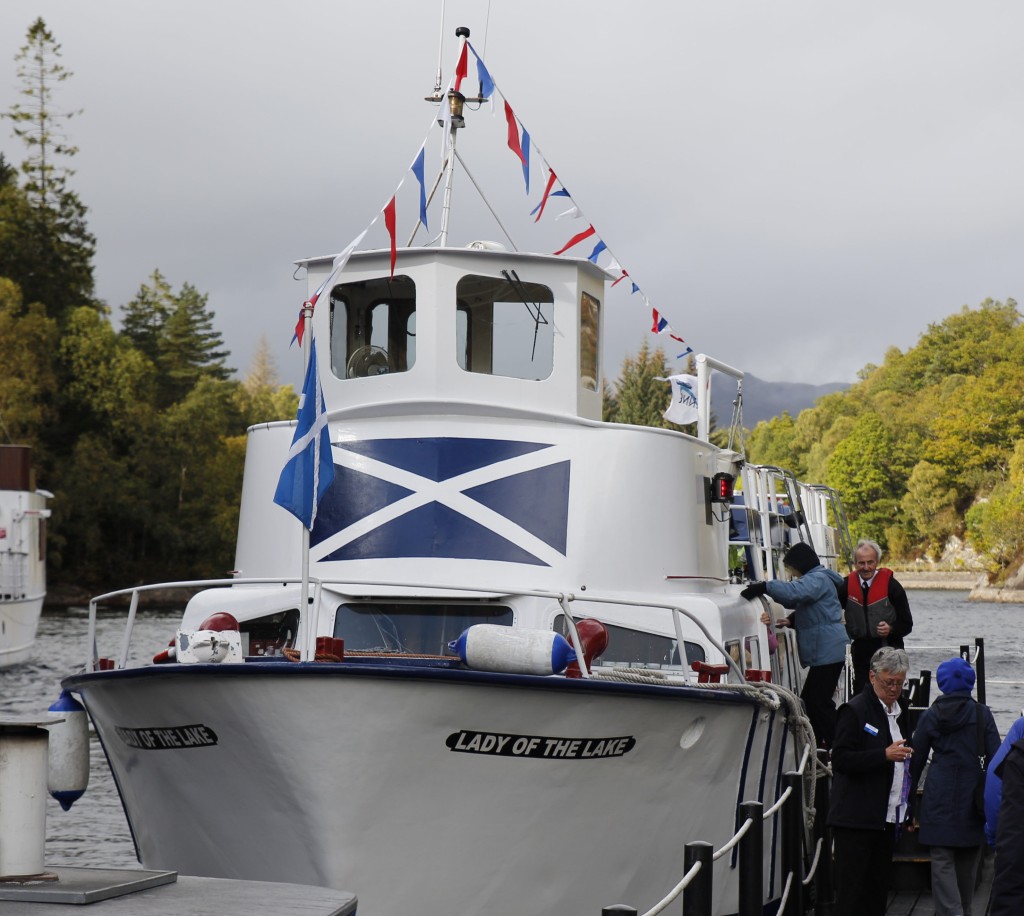
Lady of the Lake
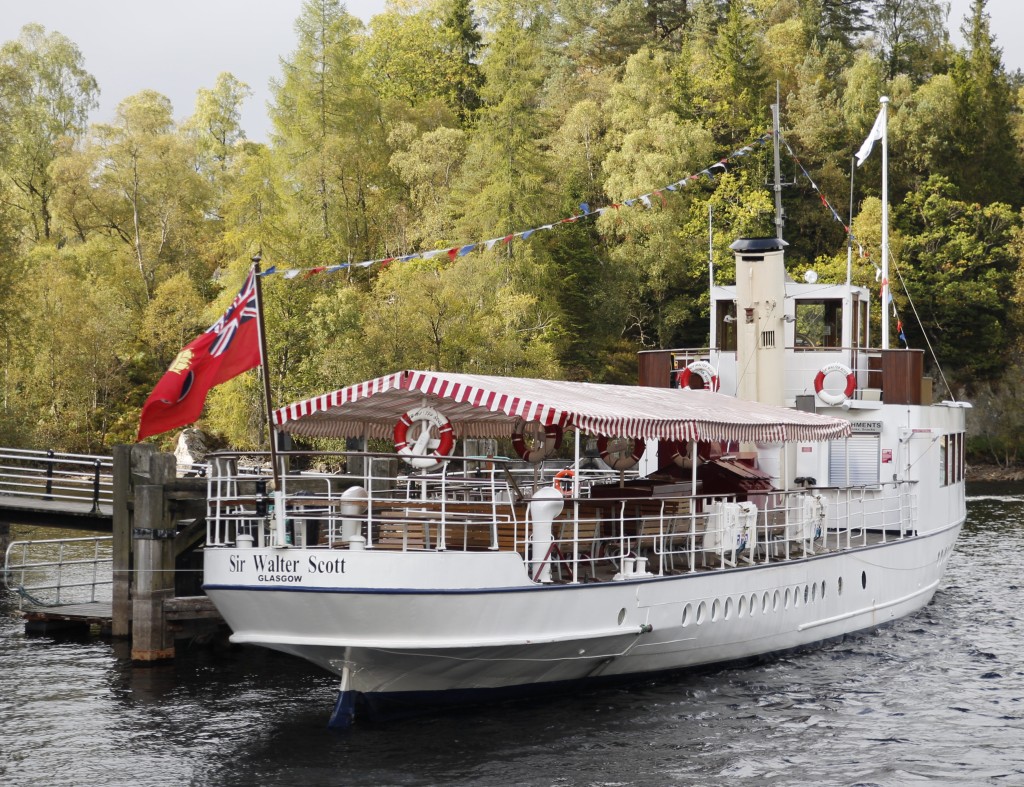
Sir Walter Scott
Our next activity was a boat ride on Loch Katrine, where we were supposed to sail on the steamship ‘Sir Walter Scott’. The skipper announced, however, that the engineer showed up drunk–staggering like he was on the North Sea. Since we couldn’t go out in the big boat without an engineer, we sailed on the smaller ‘Lady of the Lake’ instead. The rain continued to stay away, but the wind was strong and chilly, especially as we sailed out into the lake, and we had a bunch of sissies who stayed below in the enclosed cabin. They probably never realized that two of our group, Sharon and Jon, took turns driving the boat. Their only instructions from the skipper was, “Keep us off the grass.”
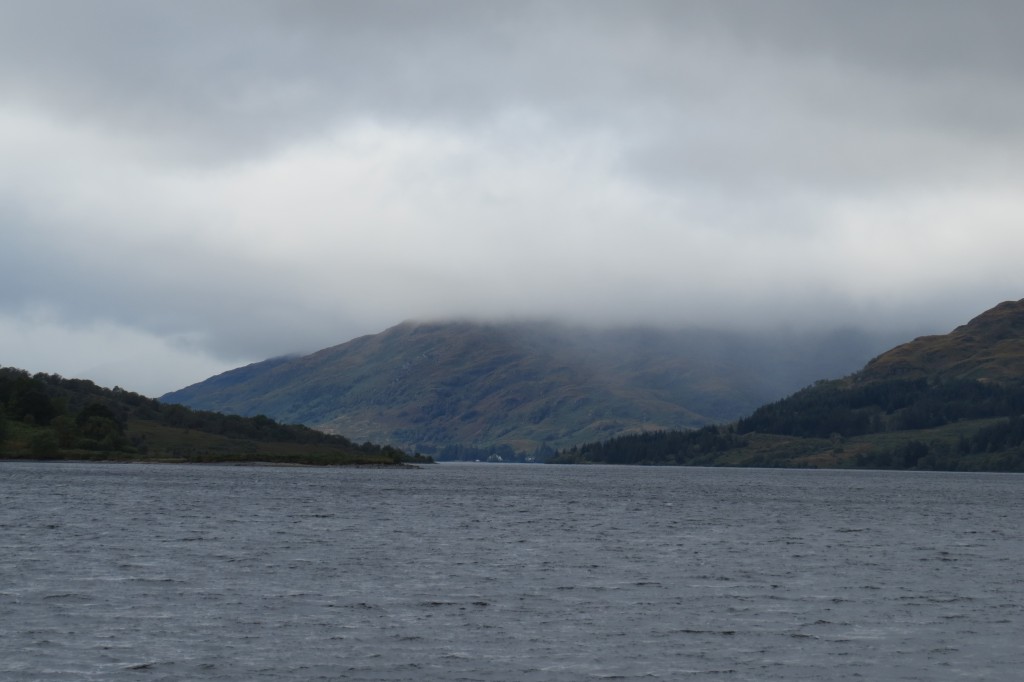
Lake Katrine from boat
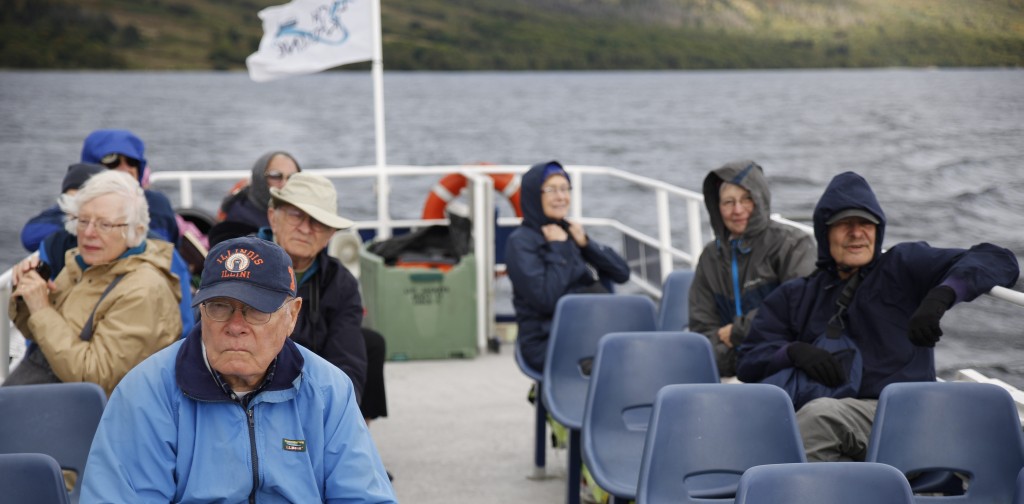
Braving the elements
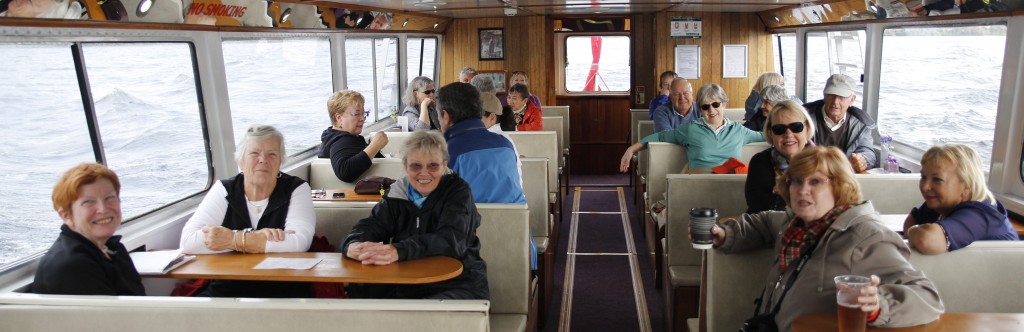
Sissies inside
We made good time getting back to the hotel in Edinburgh, and along the way Peter brought up the ten quintessentially British things that he presented to us nearly two weeks earlier.
- Real ale
- Fish and chips
- Ridges and furrows
- Field boundaries
- Castle or abbey
- Village pub, church, thatch
- British sport
- Cooked breakfast
- Royal family
- Narrow, twisty, windy roads
- Ten Quintessentially British things
There was considerable debate about which items should be replaced by what other quintessentially British things, but I lost track of what we decided. Actually, it probably didn’t matter because I don’t think Peter was going to change his mind–even though we all know that ‘Driving on the wrong side of the road’ should be on the list.
We had our final group dinner at the hotel and then followed this with our ‘Farewell Do’. Ros gave a quick overview of all the different things we had seen and done in the past 18 days. It was really sort of amazing when everything was put in such a short summary but perhaps the most surprising was that we had traveled 1670 road miles on the bus–Rats! make that coach. Peter then completed the program with a short slide show of group photos taken along the route. We all then said our sweet/sad goodbyes to our fellow adventurers, knowing that we would probably never meet again, and returned to our rooms to prepare for the long trip home in the morning.
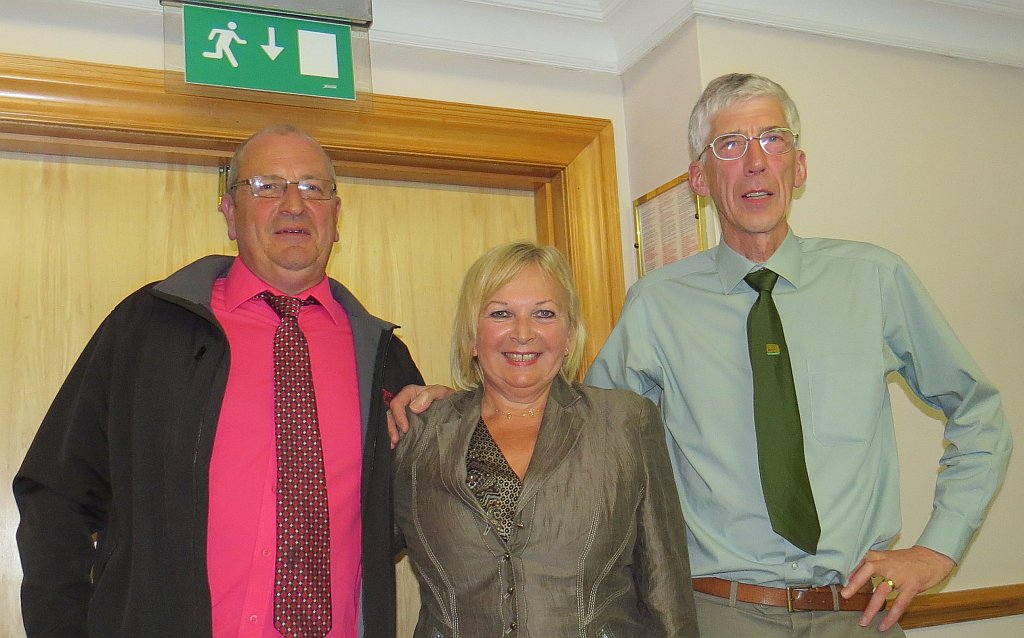
Stuart, Ros, Peter
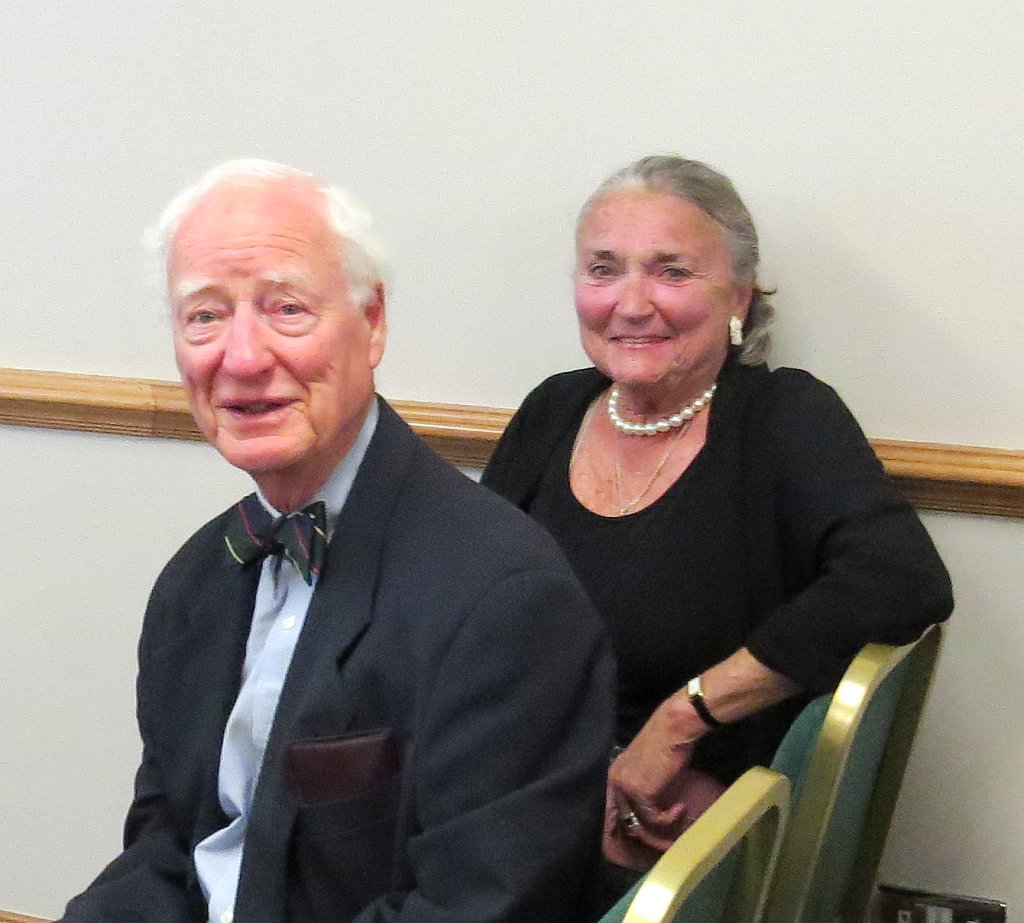
Dressed for the occasion
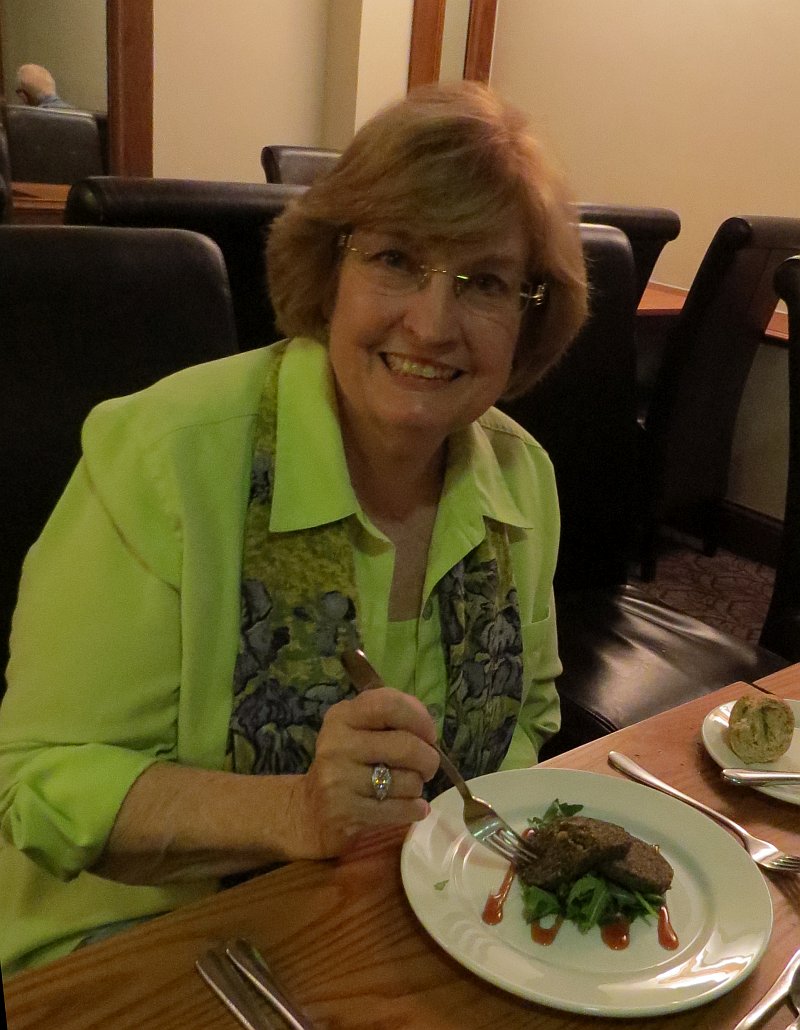
Linda eating haggis
Day 19: Sep 26- Travel Home
Our travel day started out early for most of us, with Stuart taking a group to Edinburg airport at 6:30 am. It was nice having plenty of time to get through customs, but getting up so early sure made for a long day of traveling
In spite of the normal hassles of flying that generally irritate the heck out of me, I have to admit that the return trip went smoothly with no surprises. In fact, our luggage also made it back with us, so I guess I have nothing to complain about.
I am too tired right now to try to summarize my thoughts on this Quintessential Britain adventure. Suffice it to say for now that it was a very positive experience, and I hope to find the energy to really organize my thoughts and enter them here in the near future.
Afterword:
It has been a week since we returned from our Road Scholar Quintessential Britain adventure, and it is time to put down our final thoughts on the trip. We have nothing very profound to offer here, just some brief observations about different aspects of the program. Obviously these are just our opinions, and many of the group may feel differently about some of the things mentioned.
Group leader: Ros was an excellent group leader. She always seemed cheerful and incredibly patient with the multitude of questions and strange requests from the members of the group.
Trip Directors: Our two trip directors, Kevin in London and Peter for the rest of the journey, were both superb. Their depth and breadth of knowledge was amazing. It seemed that they could come up with answers to some of the most arcane questions, although they might have been making stuff up for all we knew–but I don’t think so.
Weather: The weather was practically perfect. We did have several overcast days with light mists, but we were actually rained upon only one time–at Stratford-upon-Avon. We were assured by many natives that this was not the norm.
Hotels: Based on our previous experiences with foreign hotels, we were not expecting a great deal for our accommodations; in general, however, the room sizes were adequate. Probably the biggest negative was that, outside of London, none of the rooms were air conditioned. To our surprise, it was actually fairly warm for most of the trip, and the heat in the rooms at night made sleeping a little difficult.
Food: Our meals were much better than we expected. In fact, many of us probably ate more than we should have: it is hard to walk away from good food when it is sitting on a plate right in front of you.
Activity Level: We did a lot more walking and standing than we were expecting. A couple of days we walked over 5 miles. It should be noted that many of the walks were “optional”, but, nevertheless, you are still on your feet a lot when visiting museums, cathedrals, and ruins. Having said that, we must admit that short hikes on the moors and in the Scottish highlands and clambering around castle ruins were special highlights for us.
Countryside: The beautiful countryside–with gently rolling hills, well-tended farms and lots and lots of sheep–was sort of a surprise to us. There was much more open and picturesque land than we were expecting to find.
Favorite Places: Naturally, we enjoyed visiting such world-famous sites as the Tower of London, St. Paul’s Cathedral, the Roman Baths, and Stonehenge. On the other hand, we also liked the small town of Mickleton, with its friendly hotel and the change of pace it offered from our early days in London. Because of our fondness for Shakespeare’s works, we considered it a special treat to visit his birthplace and his grave. Linda especially like being serenaded by the bagpiper as we entered Scotland. Perhaps because we had no previous expectations–in fact we had never even heard of them–two of our favorite stops were Chesters Roman Fort at Hadrian’s Wall, with its 2000 year-old stone foundations, and the magnificent abbey ruins of Rievaulx, with its towering walls reaching proudly to the skies in its lonesome valley far away from anywhere–a very moving place.
Program Participants: We have participated in several Road Scholar programs, including a 17-day Lewis and Clark journey in 2011. What often seems to surprise us–although by now it should no longer be a surprise–is how much we enjoy meeting and getting to know the other folks sharing in the adventure. We always learn a great deal from the formal programs, but the comments, observations and good-humored remarks from the other group members add tremendously to the over-all experience. Seeing new places and learning new facts with such intelligent and congenial people always makes for a wonderful adventure.